
Unbiased headlines. Facts, not spin.
Unbiased Headlines is an independently owned news organization. We bring you the facts, not opinions, written fresh from 110+ named sources. Sources linked so you can verify it yourself.
 tech
Notable (6/10)
SK hynix, Seoul and Four Banks Launch 2 Trillion Won Loan Guarantee for Chip Suppliers at Yongin
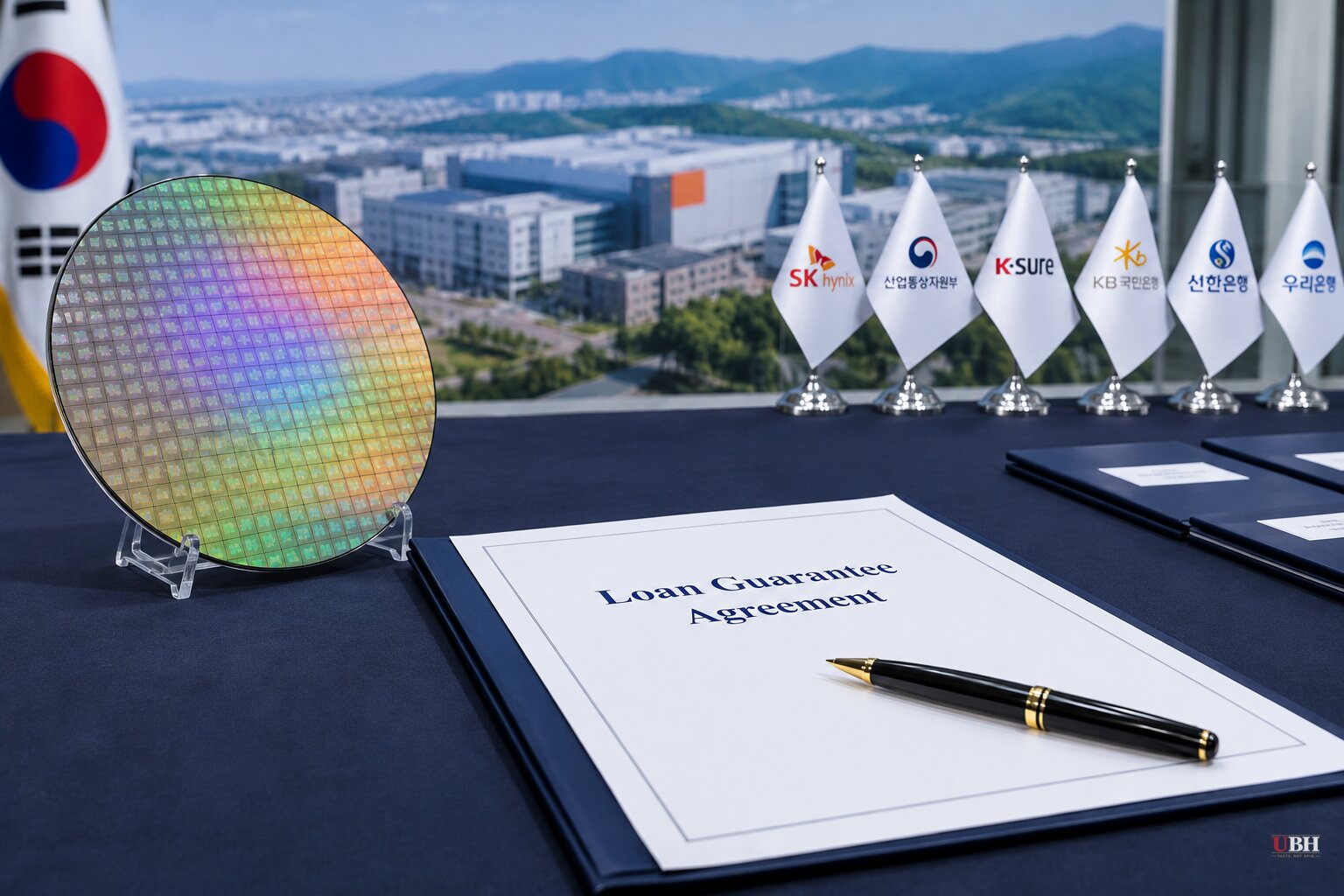
Since Seoul unveiled its 800 trillion won Gwangju memory-chip plan on June 29, the government's chip strategy has widened from building fabs to financing the small companies that supply them. On Monday, Oct. 19, SK hynix and the Ministry of Trade, Industry and Resources signed a 2 trillion won (about $1.5 billion) loan-guarantee program for domestic chip materials, parts and equipment suppliers.
The signing took place at the promotion center of SK hynix's Yongin semiconductor cluster in Gyeonggi Province. SK hynix CEO Kwak Noh-jung and Industry Minister Kim Jung-kwan attended, along with officials from KB Kookmin, Shinhan, Woori and Hana banks. The first guarantee certificates went to eligible suppliers at the ceremony.
How the money is structured
The 2 trillion won is a guarantee, not cash. SK hynix and the four banks will contribute a combined 100 billion won (about $75 million). The state-run Korea Trade Insurance Corp. (K-SURE) will back up to 2 trillion won in loans, 20 times the contributed amount.
Suppliers recommended by SK hynix get three things:
- Higher loan limits.
- Interest-rate cuts of up to 2.5 percentage points.
- A guarantee period extended from one year to three.
The guarantee ratio is also being raised to 100%, according to BigGo Finance's account of the terms.
The ministry says the target is smaller companies that struggle to borrow on their own. Kim said the government wants to speed up expansion of domestic chip production capacity, and stressed that construction safety must remain a priority.
Part of a wider government program
The chip package follows earlier guarantees. The government previously pledged 2.4 trillion won for the automotive, shipbuilding and steel industries. This is the largest package for a single sector.
Kim said the government plans to lift financial support for the chip sector to more than 5 trillion won and to add spending on research, investment and workforce training. He also said the program will extend to defense, nuclear energy and biotech. The government's goal is about 10 trillion won (roughly $7.5 billion) in total support by year-end.
The Trinity Fab
Attendees also toured the construction site of the Yongin cluster's first fab and the planned site of the Trinity Fab. The facility is being built inside that first fab with a total investment of 870 billion won (about $654 million).
Its purpose is to let suppliers validate products in a mass-production environment. Qualification is the hurdle for a small company with a new gas, chemical or tool: SK hynix has to approve it on a running line, and a bank has little basis to judge that in advance. The guarantee addresses the financing side. The Trinity Fab is meant to address the testing side.
Who decides who qualifies
The best terms run through SK hynix's recommendation. The loan limits, rate cuts and three-year guarantee period apply to suppliers the chipmaker recommends. Neither the ministry nor SK hynix has said how many suppliers will be recommended, or what criteria will govern the list.
The risk also sits with a state-run insurer. K-SURE is the guarantor on up to 2 trillion won of lending, against 100 billion won in contributions from SK hynix and the banks. The ministry has not published a default-loss estimate for the program.
The program is tied to timelines already set. SK hynix is building out Yongin, and the Gwangju hub, with SK hynix and Samsung each expected to build two memory fabs, carries a first-production target of June 2030 and site preparation due in 2027. Mass-production schedules at either site depend on suppliers delivering materials and equipment on time.
The next marker is year-end. That is when the government says chip-sector support should pass 5 trillion won and total supply-chain trade finance should reach about 10 trillion won.
Sources used for this briefing
8 links from 7 independent newsrooms (syndicated copies of the same report count once)
These are the sources it draws on, linked so you can verify.


