
Unbiased headlines. Facts, not spin.
Unbiased Headlines is an independently owned news organization. We bring you the facts, not opinions, written fresh from 110+ named sources. Sources linked so you can verify it yourself.
 tech
Major Story (7/10)
Event date: October 28, 2026 ·
SK Hynix Says Memory Demand Will Exceed Supply Through 2030 After Record 104.6 Trillion Won Quarter
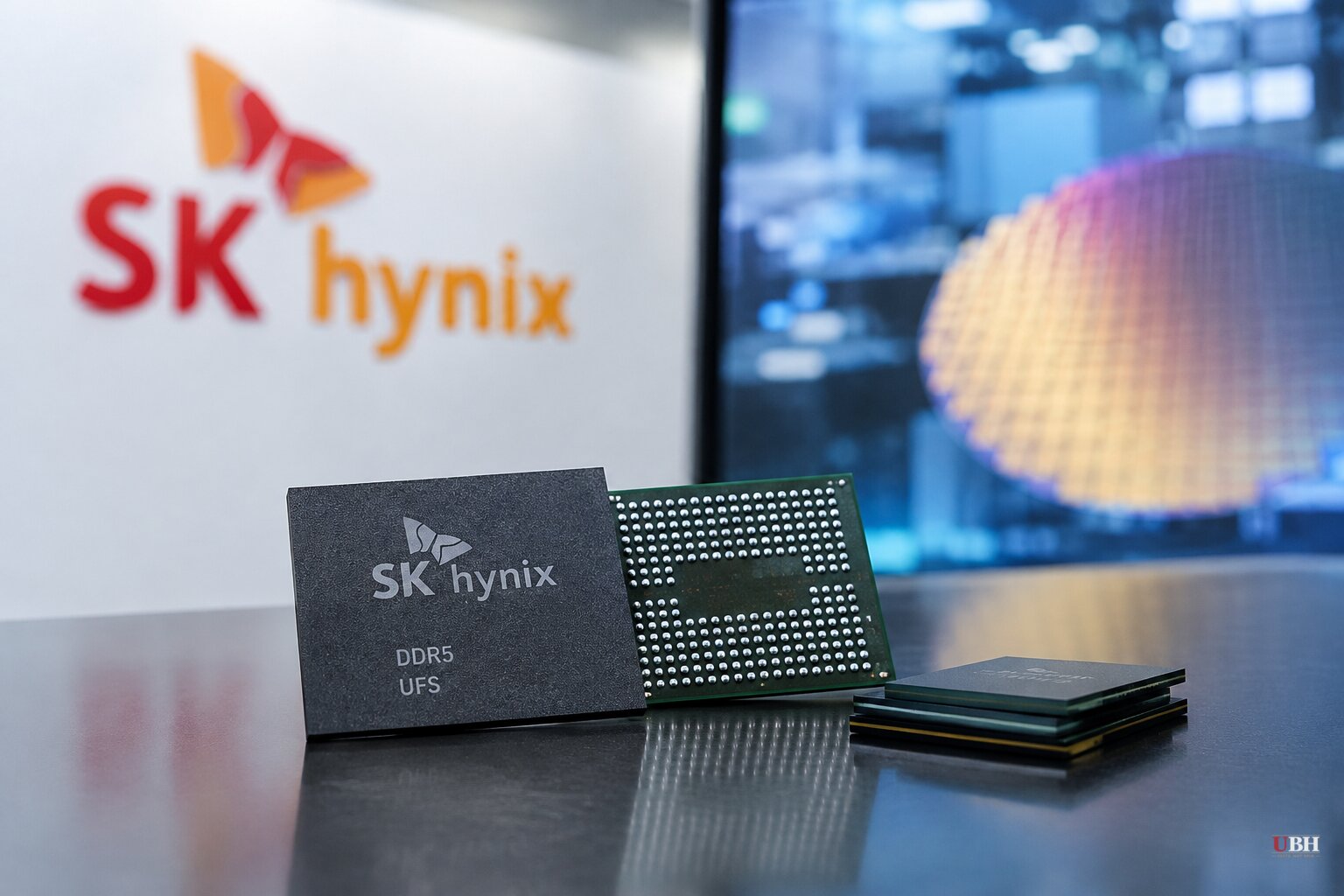
SK Hynix, the world's second-largest memory chipmaker, says the global memory shortage will last through 2030. The company made the call on Wednesday, Oct. 28, alongside the best quarter in its history.
"Given technical difficulty of leading-edge processes and the long lead time required to build new production facilities, it expects the structure in which demand exceeds supply to persist through 2030," the company said in its results release.
A record quarter
Third-quarter revenue hit 104.6 trillion won (about $78.1 billion). That is the first quarter in the company's history above 100 trillion won, and a 32% jump from the second quarter.
Operating profit reached 83.3 trillion won (about $62.1 billion), up 38% from the prior quarter and more than seven times the level a year earlier. That works out to an operating margin of roughly 80%. Analysts surveyed by FnGuide had expected 76.96 trillion won.
The company said prices of its key products rose on AI memory demand. Server DDR5 sales climbed sharply, and shipments of HBM4, its newest high-bandwidth memory for AI processors, began in earnest.
For scale: Nvidia's most recent quarter produced a margin of about 66%. Samsung Electronics, which also sells phones and TVs, posted preliminary third-quarter operating profit of about 107.4 trillion won on roughly 195 trillion won in revenue, a margin near 55%.
Customers are already locked in
SK Hynix has signed long-term supply agreements with 14 major customers, including leading cloud providers. Those deals cover more than 50% of its total production capacity for 2027 and 2028. The contracts typically run five years, and the company says it is discussing longer terms with several buyers.
Prices are not fixed. The agreements include what the company calls "a mechanism that reflects market conditions within a price range agreed upon with customers." SK Hynix says that gives it stable profitability while leaving room to respond to market swings.
CEO Kwak Noh-jung said 2027 could be the worst year in the history of memory supply because of the ongoing shortage.
The company says HBM4 will pass HBM3E in both shipment volume and revenue in the fourth quarter. Its M15X fab is expected to reach full capacity by the end of 2026.
Why relief is slow
Building more capacity takes years. SK Hynix plans to spend at least 40 trillion won (about $30 billion) on capacity this year, up from roughly 30 trillion won in 2025. It has also announced a $13 billion fabrication plant that will not be operational until 2030. Samsung has said its own shortage will last until at least 2028.
SK Hynix argues the demand side is widening. Its release describes "a virtuous cycle" in which AI productivity gains and new revenue lead to more AI adoption and more infrastructure spending. It names general enterprises and nations building sovereign infrastructure as new buyers, and points to autonomous driving and robotics as longer-term drivers.
Who pays
The shortage lands on device makers and their customers. CFO Kim Woo-hyun said on the earnings call that "shipment volumes for PCs and mobile devices are expected to decrease due to cost burdens from rising memory prices and supply shortages." Smartphone, PC and game console makers are finding it harder to avoid price hikes.
Chipmakers have an incentive to steer output toward AI server memory, which earns the most money. Consumer RAM and storage supply is likely to stay tight while that continues.
Not everyone takes the forecast at face value
TechRadar's reporter noted that memory makers "need to talk up their future profits" and reassure markets that the sector is not in a bubble. The outlet pointed out that Micron is making a similar robotics-driven demand argument, including an estimate that humanoid robots could need 200GB or more of RAM each.
Market history adds weight to that skepticism. In 2018, SK Hynix earned 20.84 trillion won on 40.45 trillion won in revenue, a margin of about 52%. A year later revenue had fallen to 26.99 trillion won and operating profit to 2.71 trillion won. The company blamed "the increase of inventory burden and conservative purchasing policies on the side of the customers." In 2023 it posted an operating loss of 7.73 trillion won.
Investors have also been jumpy. SK Hynix's Korea-traded shares rose 10.9% on the day of the results, Samsung gained 9% and the KOSPI rose 6.6%. Even so, SK Hynix shares remain down just over 50% from their mid-year peak. The slide reflects investor fears that AI spending will slow because of data center construction bottlenecks and doubts about returns.
On Oct. 22, SK Hynix postponed an IPO for Solidigm, its U.S. unit. Kwak blamed market volatility and the slump in chip stocks.
Shareholders and the Korean economy
SK Hynix plans to return about 100 trillion won to shareholders in total. Much of the cash comes from one-off gains on its stake in Kioxia, Toshiba's former memory chip division. Kwak said the company's principle is to share the majority of such gains with shareholders.
South Korea has a lot riding on the cycle. Exports from January through September topped $800 billion for the first time, already exceeding all of 2025, and are on track to pass $1 trillion. The Bank of Korea estimated on Tuesday that exports could drop by as much as $100 billion compared with earlier forecasts if U.S. Big Tech companies curb their infrastructure spending.
What to watch
Three near-term markers will test the company's story: whether HBM4 overtakes HBM3E in the fourth quarter, whether M15X reaches full capacity by year-end, and how fast the planned new fabs in South Korea and the U.S. come online. Those milestones will show whether the 2030 forecast holds up against the AI spending worries that have already cut the stock in half from its peak.
Sources used for this briefing
7 links from 7 independent newsrooms (syndicated copies of the same report count once)
These are the sources it draws on, linked so you can verify.


