
Unbiased headlines. Facts, not spin.
Every story is an unbiased news briefing written from 110+ sources across the spectrum — sources linked so you can verify it yourself.
 politics
Major Story (8/10)
July 23, 2026 at 04:46 PM
politics
Major Story (8/10)
July 23, 2026 at 04:46 PM
Six GOP-Led States Redraw Maps After Supreme Court Weakens Voting Rights Act, Black Districts Broken Up
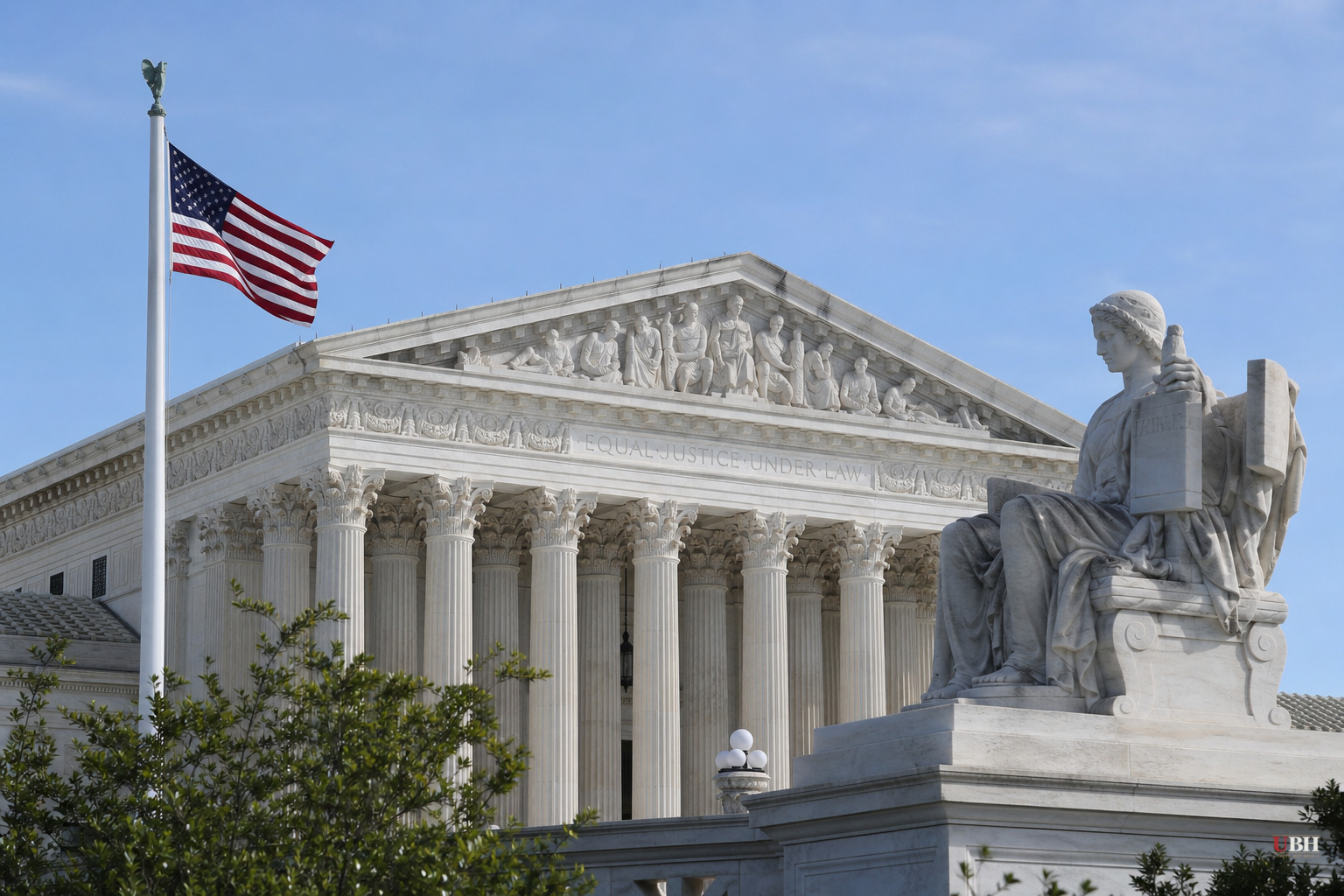
Since the Supreme Court's conservative majority struck down Louisiana's congressional map on April 29 as an unconstitutional racial gerrymander, six Republican-led states have redrawn or moved to redraw congressional districts that had substantial Black populations, according to NPR. Those states are Texas, Florida, Louisiana, Alabama, Tennessee and North Carolina.
The April ruling weakened Section 2 of the Voting Rights Act, the provision courts have long used to require states to draw districts where minority voters can elect their preferred candidates. That legal shift is the trigger for nearly everything that's followed.
The state-by-state facts
Texas moved first, before the Supreme Court even ruled, redrawing its map at President Trump's request in a way that shifted five seats toward Republicans, according to NPR. In Houston, much of the old 9th Congressional District, a majority-Black seat, was folded into a new 18th District. That set up a primary fight in the redrawn district: Rep. Al Green, the district's longtime Black Democratic incumbent, faced a challenge from Harris County Attorney Christian Menefee, who lost the May primary runoff to Green. Historically Black neighborhoods like Independence Heights moved into the 29th District, which went from 15% Black to about a quarter Black, per NPR.
Florida enacted new districts in May aimed at netting Republicans four seats, NPR reported. The 20th District, which had the state's largest Black population, was reshaped from a claw-shaped seat to a more compact one. Its Black population share dropped from nearly 53% to 45%. Gov. Ron DeSantis argued the old district was itself an unconstitutional racial gerrymander that needed fixing, citing the Supreme Court's reasoning.
Tennessee Republicans carved up majority-Black Memphis into three separate congressional districts, eliminating the state's lone Democratic House seat, according to The Guardian. Louisiana was moving toward a new map eliminating one of its two Black Democratic congressional seats. Alabama successfully petitioned the Supreme Court to use a map a lower court had previously found was intentionally drawn to discriminate against Black voters, per The Guardian.
In Louisiana and Alabama, primary elections were canceled after voting had already started, The Guardian reported. More than 42,000 ballots had already been cast in Louisiana before Republican Gov. Jeff Landry canceled that election. "Those ballots are discarded and those voters will vote again in November," Landry said on 60 Minutes, adding, "If anybody has a grievance, take it to the United States supreme court."
The Republican case
Republicans say this is standard political redistricting, not racial targeting, according to NPR. States redraw maps to maximize partisan advantage all the time, and Democratic-controlled states do the same thing when they can. DeSantis specifically framed Florida's old 20th District as itself an illegal racial gerrymander, arguing the Supreme Court's April ruling required Florida to draw race-neutral lines rather than lines built around race.
If a district was originally drawn by prioritizing race to create a majority-Black seat, and courts have said that violates equal protection principles when race predominates over traditional districting criteria, then unwinding that district isn't automatically evidence of discrimination. The legal question of when race-conscious districting crosses a line has been contested for decades, and the Supreme Court's April ruling shifted where that line sits.
The counter-argument
Voting rights advocates and Democratic officials say the pattern tells a different story. Michael Li, a redistricting expert at the Brennan Center for Justice, called it "a five-alarm fire for Black representation in the south," telling The Guardian that "the court has signaled it's going to be a redistricting wild west, and there will be no sheriff around."
Maryland Gov. Wes Moore, a Democrat, described the broader push as "the greatest form of political redlining we've seen in generations," according to Capital B's reporting republished by DeSoto County News. LaTosha Brown of Black Voters Matter told Capital B the fight is really about whether Black political organizing can adapt fast enough to counter it.
The six states in question all show heavily racially polarized voting, with roughly 78% of Black voters backing Kamala Harris in 2024, according to NPR. That polarization is precisely why redistricting experts on both sides agree the maps matter so much: when white and Black voters consistently choose different candidates, how district lines are drawn functionally determines who gets elected.
Where this isn't settled
Georgia Republicans scrapped a planned redistricting special session on June 17 after organizers including Brown mobilized hundreds of protesters at the state capitol, Capital B reported. Republican leaders cited administrative challenges rather than the protests, though advocates claimed the reversal as a win. South Carolina's Republican governor was reportedly considering a special session to eliminate the district held by Democratic Rep. Jim Clyburn, per The Guardian, after state lawmakers had previously rejected that idea.
No court has ruled that any of these six states' new maps constitute illegal racial discrimination under the post-April legal standard. That's the unresolved question these maps are built to test. Lawsuits are likely, and given that the Supreme Court itself just rewrote the rules on how much weight race can carry in map-drawing, further high court review of these specific maps is a real possibility before the 2026 midterms are finalized.
Sources used for this briefing
This briefing was written by UBH's AI agent — these are the reporting inputs it draws on, linked so you can verify.


