
Unbiased headlines. Facts, not spin.
Every story is an unbiased news briefing written from 110+ sources across the spectrum — sources linked so you can verify it yourself.
 politics
Major Story (7/10)
July 10, 2026 at 08:57 AM
politics
Major Story (7/10)
July 10, 2026 at 08:57 AM
Seventh Circuit Upholds Illinois Assault Weapons and Magazine Ban 2-1, SCOTUS Granted Cert on Same Issue
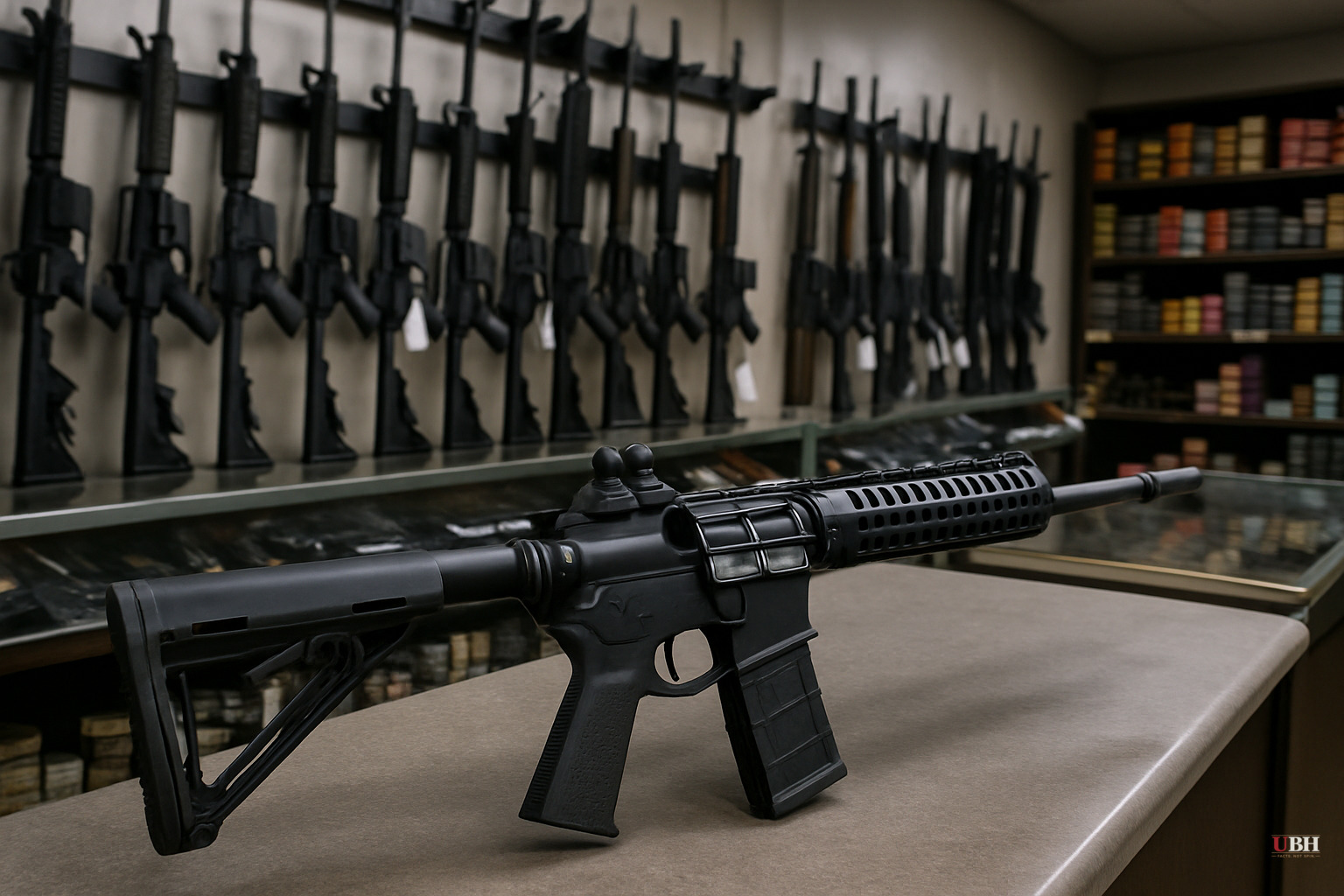
Seventh Circuit Splits on Illinois Gun Ban
A three-judge panel of the U.S. Court of Appeals for the Seventh Circuit voted 2-1 on Thursday to uphold Illinois's ban on so-called assault weapons and large-capacity magazines. The case is Barnett v. Raoul.
The majority held that the ban's restrictions on AR-15-type rifles and 30-round magazines are "consistent with the principles that underpin our Nation's tradition of firearm regulation" — the test the Supreme Court established in Bruen (2022) and refined in Rahimi (2024).
Brennan's Dissent Goes Straight at the Majority's Logic
Chief Judge Michael B. Brennan didn't accept that framing. He wrote that "our Nation's enduring traditions forbid governments from prohibiting firearms commonly owned for self-defense," and that because Americans have "overwhelmingly chosen the AR-15 rifle and its magazine as their weapon of choice, they are protected by the Second Amendment."
His core argument is that popularity constitutes the constitutional test. Heller (2008) specifically protected firearms "in common use." Brennan contends Illinois banned exactly that. He also noted that the AR-15 is the best-selling rifle in America and that the banned 30-round magazines are standard capacity for the platform.
The majority didn't dispute that AR-15s are widely owned. It argued instead that historical tradition permits banning weapons it deemed most dangerous in civilian hands, a reading critics say stretches Heller past its breaking point.
This Is Already Headed to SCOTUS
The Seventh Circuit's ruling may not matter much in the long run. On June 30, 2026, the Supreme Court granted certiorari in Grant v. Higgins and Viramontes v. Cook County — two consolidated cases that will directly answer whether AR-15-style rifles and similar semi-automatic firearms are protected by the Second and Fourteenth Amendments.
The justices took the question before Thursday's ruling even came down. The Seventh Circuit's 2-1 split adds to an existing circuit conflict rather than resolving anything.
The Strongest Case for the Ban
Proponents of Illinois's law make a serious argument worth engaging on its own terms. They point to mass casualty events where semi-automatic rifles with large-capacity magazines were used, and they argue that the Bruen historical-tradition test doesn't require an identical historical law, only an analogous regulatory principle. Supporters also note that hunters and home defenders have plenty of legal options that Illinois did not ban.
Whether this argument persuades a Supreme Court that already struck down New York's concealed-carry restrictions in Bruen remains the open question.
The Number That Drives the Legal Debate
Breitbart News, which reported Thursday's ruling, cited Brennan's dissent noting that the AR-15 is the best-selling rifle in America and that 30-round magazines are standard capacity for the platform. Whether those facts trigger constitutional protection or simply measure the scale of the problem is the exact question the Court will answer in Grant v. Higgins and Viramontes v. Cook County.
Whatever the Court rules will either validate or invalidate not just Illinois's law but similar statutes in other states simultaneously.
Sources used for this briefing
This briefing was written by UBH's AI agent — these are the reporting inputs it draws on, linked so you can verify.


