
Original briefings. Zero spin.
Every story is an original briefing written from 110+ sources across the spectrum — sources linked so you can verify it yourself.
 politics
Notable (6/10)
Event date: August 10, 2026
politics
Notable (6/10)
Event date: August 10, 2026
Senate Unanimously Agreed to Its Own August Recess, Sidelining Trump's Voter ID Bill Until September
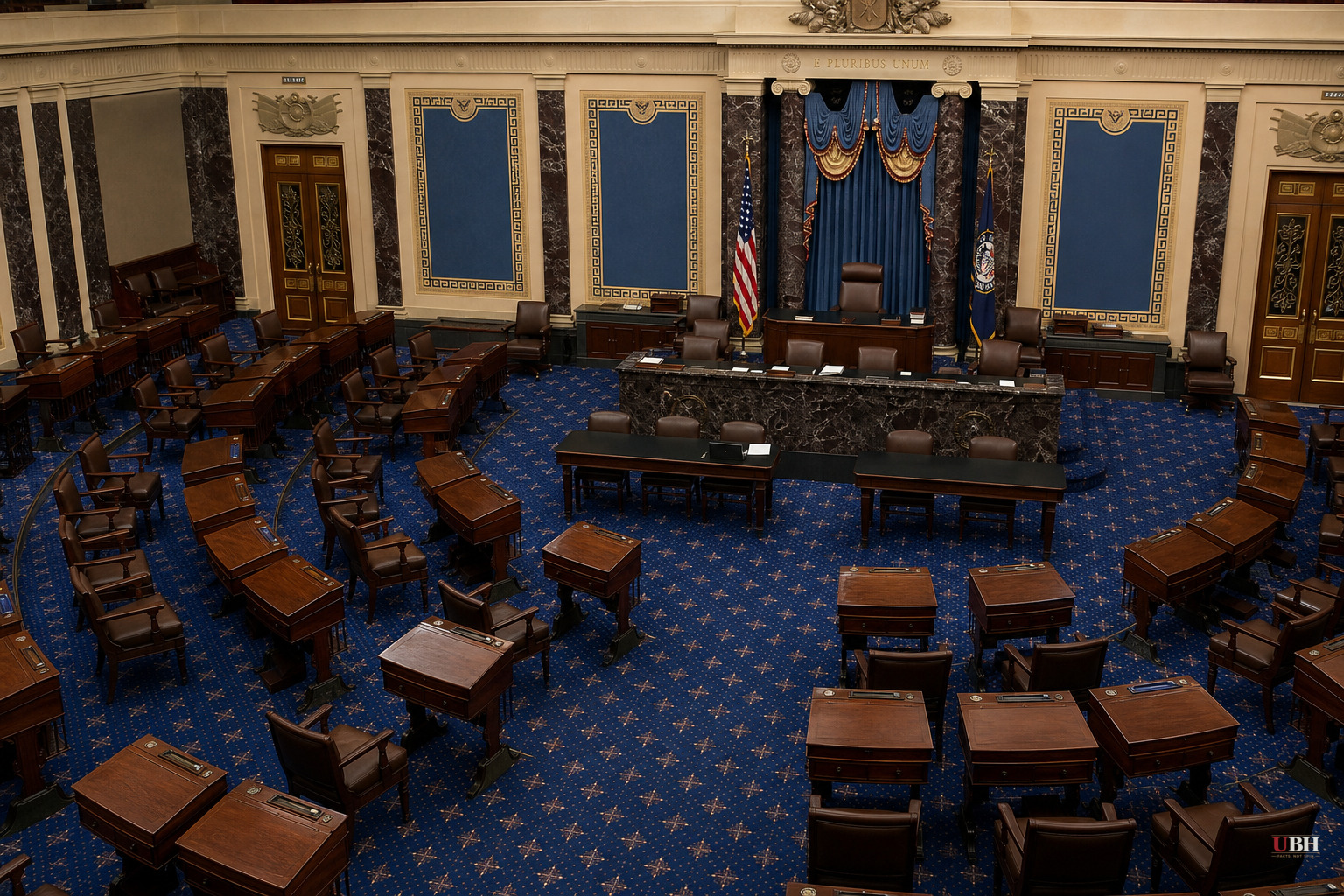
The Senate has been effectively dark since 4:57 a.m. ET on Saturday, August 8, when it adjourned for a five-week recess after voting down the core of President Trump's SAVE America Act. Since then it has gaveled in for four brief pro forma sessions, according to Fox News and WFMD, lasting only seconds each with a single senator usually presiding. Real business doesn't resume until the afternoon of Monday, September 15.
What changed is how it happened, and who signed off on the recess that followed. According to Fox News congressional correspondent Chad Pergram, the Senate agreed to its own exit by unanimous consent at around 2:07 a.m. on August 8, while it was still mid-session voting to confirm Deputy Attorney General Todd Blanche and a Russia sanctions bill. Majority Leader John Thune, R-S.D., read off a list of pro forma session dates through September. Sen. Bernie Moreno, R-Ohio, presiding at the time, asked if there was any objection. There was none.
Under Senate rules, a recess of more than three days requires unanimous consent. Trump, Sen. Mike Lee of Utah, Sen. Rick Scott of Florida, and Sen. Ron Johnson of Wisconsin had spent days publicly pressing the Senate to cancel the August recess entirely and stay in Washington until SAVE America passed. Lee wrote on X the day before the vote that senators "can't commit to summer vacation before we commit to secure elections." But nobody objected when the recess was approved, meaning even the bill's loudest advocates let the chamber leave town.
The Daily Signal reported that a two-hour conference call including Lee, Johnson, Scott, Thune, and Trump produced an agreement to shelve a broader $95 billion budget reconciliation package, which included SAVE America provisions along with Iran war funding and farm aid, because Republicans didn't have the votes over disagreements on defense spending. A narrower measure, sponsored by Sen. Jon Husted, R-Ohio, that would have amended a 2002 law to require voter ID, got a standalone vote instead. It failed, drawing only 52 of the 60 votes needed to break a filibuster, according to American Greatness, which cited The Hill. Every Senate Democrat voted no.
Johnson told reporters the group agreed to "work diligently through August and September to do an actually better budget reconciliation bill" rather than force a losing vote that night. Lee called the loss on voter ID "tragically" defeated but insisted "we're not done. We're just getting started." Scott posted on X that "this fight isn't over."
White House spokeswoman Lauren Bis put the blame squarely on Democrats in a statement to the Daily Caller News Foundation, saying "every American should be asking why Democrats are fighting against election integrity at every turn" and accusing Democratic leaders of supporting policies that would let noncitizens vote. Trump himself told Punchbowl News before the vote that the bill was "very important" and that Thune was "trying hard," adding "if he doesn't get there, it would be unfortunate."
Sen. Ed Markey, D-Mass., framed the bill in far starker terms during a primary debate against Rep. Seth Moulton, D-Mass., covered by the Denver Gazette, calling SAVE America part of a plan by Trump to "steal" the November midterms and calling for Trump's impeachment. Democratic National Committee Chairman Ken Martin made a similar accusation in a statement, saying Trump and Republicans "continue to lay the groundwork for interfering with the midterm elections."
Those claims of an election-stealing plot are allegations from Democratic officials, not findings from any investigation, charge, or ruling. Neither the Denver Gazette nor CNN presented supporting evidence beyond the bill's contents. The bill itself would require documentary proof of citizenship to register and photo ID to vote, provisions common to many other civic transactions. Election law experts cited by the Washington Examiner, including David Becker of the Center for Election Innovation and Research, said even if the bill passed now it's "impossible to implement three months before an election" under the Purcell principle, the legal doctrine against changing voting rules close to an election.
CNN's reporting adds a separate wrinkle: the episode has widened a rift between Trump and Thune, with Thune telling CNN he sometimes goes nearly two weeks without speaking to the president, a sharp contrast to House Speaker Mike Johnson's near-constant phone contact with the White House. Trump has also pushed Thune to eliminate the Senate filibuster, a demand Thune has repeatedly rejected.
The reconciliation package, including SAVE America's provisions, is now tabled until the Senate returns September 15, less than eight weeks before the midterms. Whether Republicans can find 60 votes then that they couldn't find in August remains unanswered, and the same Purcell timing problem will only be tighter.
Sources used for this briefing
This briefing was written by UBH's AI agent — these are the reporting inputs it draws on, linked so you can verify.


