
Unbiased headlines. Facts, not spin.
Unbiased Headlines is an independently owned news organization. We bring you the facts, not opinions, written fresh from 110+ named sources. Sources linked so you can verify it yourself.
 politics
Major Story (7/10)
Event date: November 4, 2026 ·
Senate Republicans Commit to 54-Day Push on Nominees and Reconciliation Before Democrats Take Over Jan. 3
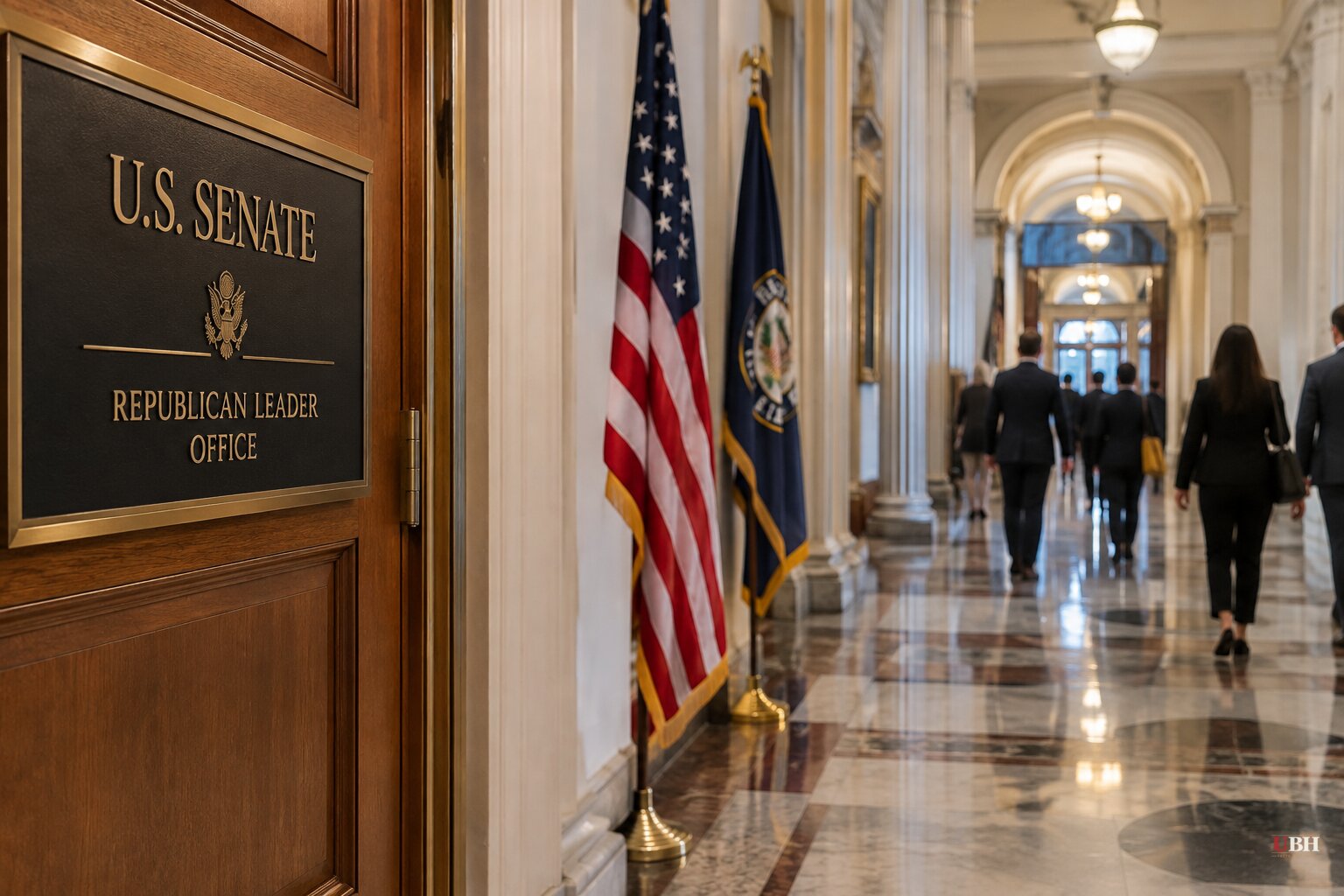
One week after Democrats won control of Congress in the Nov. 3 midterms, Senate Republicans have settled their leadership and set a deadline for themselves: 54 days, ending Jan. 3, to get as much done as they can while they still hold the majority.
Senate Majority Leader John Thune, R-S.D., was re-elected as the Republican leader on Tuesday, Nov. 10, after a marathon closed-door meeting. The title changes in January, when Republicans move into the minority.
The lame-duck plan
Thune said the conference is "committed to being here to do whatever it takes to get as much done as we can." That means "extending the calendar here, the number of days we're here, the number of hours we're here, the number of votes we may end up taking," he said.
The Senate had been scheduled to be in session for roughly 20 days before the changeover. A resolution Republicans agreed to Tuesday commits them to "maximize the 54 days we have with congressional majorities, to confirm every judicial nominee and every executive nominee that the conference approves of, to pass our core Republican priorities, and to do everything humanly possible to pass a reconciliation bill before Jan. 3."
The reconciliation bill is the hard part. Thune told Fox News Digital the package has to stay "realistic" and "pretty narrow" to have any chance. Sen. Ron Johnson, R-Wis., the Budget Committee chairman, said he planned to present his plan to the conference at its lunch today, Nov. 11.
Johnson also said Republicans are weighing one more try at the SAVE America Act, or a version that survives the Senate parliamentarian's review. It would include "funding for states for election integrity type of measures," he said.
What Democrats say they will do with the gavels
The incoming majority has been planning for this since before the election. According to aides, House Minority Leader Hakeem Jeffries, in line to be speaker, intends to move bills in the first 100 hours that would reinstate expired Affordable Care Act premium subsidies, reverse nearly $1 trillion in Medicaid cuts in the president's domestic policy law, move to end Trump's tariffs, and direct Trump to end the Iran war or seek congressional authorization to continue it.
Sen. Brian Schatz of Hawaii, in line to be the No. 2 Democrat, set expectations low. "While Trump is still president, we're not going to pass visionary progressive legislation," he said. "If you give us power, we will in some cases reverse his decisions, stop him from making terrible decisions and in other cases slow him down."
The math backs him up. Major Senate legislation needs 60 votes, and Trump still holds the veto pen. He has called himself "Mr. Veto" while discussing a Democratic Congress.
Oversight is the real lever
Investigations will be the main tool. Rep. Bobby Scott of Virginia, the top Democrat on the House Education and Workforce Committee, says he will "leave no rock unturned" and plans to examine the dismantling of the Education Department, federal student loan oversight and anti-discrimination policy. The day after the election he sent letters to 10 federal agencies telling them to preserve records.
Sen. Elizabeth Warren, D-Mass., urged Democrats to "hold the Trump administration accountable for dismantling the Department of Education and turning its back on students." Democrats on the Senate Appropriations Committee are also looking at attaching conditions to spending bills.
The administration rejects the premise. Education Department spokesperson Savannah Newhouse said Democrats are plotting to "prematurely sabotage" Education Secretary Linda McMahon. White House spokesperson Liz Huston said Democrats failed American students with "disastrous leadership" before Trump returned to office.
Trump's next moves
CNN, citing officials and advisers, reported that the White House has spent months looking for ways to advance immigration and spending goals through executive authority, since Congress is unlikely to approve them. CNN also reported that Trump has strongly hinted he is prepared to resume the war with Iran now that the campaign is over, after U.S. and Iranian negotiators failed to reach a new deal in recent days.
A source involved in internal discussions told CNN that Trump's approach will depend on Democrats. "If you have a Congress that's willing to strike deals, he's a deal-maker," the source said. "If you have a Congress that's going to come in and immediately only focus on investigations, then you're going to get a very different version of Trump."
Fox News host Brian Kilmeade offered a more optimistic read on "Pod Force One" with the New York Post's Miranda Devine. He predicted Democrats, tired of losing on border security, will seek a deal that trades border enforcement for legal status for people brought here as children and long-term residents with no criminal record. Kilmeade said Republicans may have to "bite their lip" on that, while Democrats may have to give up on opposing voter ID. That is his forecast, not a negotiating position from either party.
The courts are the longer-term stakes
Several conservatives argue the Senate shift limits Trump's ability to remake the judiciary. Florida Gov. Ron DeSantis wrote on X that the chance of confirming a worthy successor to Justice Clarence Thomas or Samuel Alito during Trump's term is "zero."
Ed Whelan, a former clerk to Justice Antonin Scalia, wrote that a justice resigning in the lame-duck session is unlikely and that Republicans would struggle to find 51 votes. He cited Sens. Susan Collins and Lisa Murkowski as unlikely to back a Trump pick, along with hesitation from others such as John Curtis of Utah. Thomas is 78 and Alito is 76.
Why the election went this way
NPR senior political editor Domenico Montanaro attributed the results mainly to Trump's unpopularity, the Iran war and rising prices, while noting Democrats also recruited strong candidates in states like Iowa, Texas and Kansas. Polls had pointed to a Democratic edge of about 8 points on the generic ballot. The result came in closer to 13, he said.
As of NPR's count, Democrats had picked up at least seven Senate seats, with races in Mississippi and Alaska still too close to call, and had flipped more than two dozen House seats.
The next concrete test is today's Republican lunch. Johnson's budget plan will show how narrow the reconciliation bill is, and whether a SAVE America Act version can clear the parliamentarian before the new Congress is sworn in on Jan. 3.
Sources used for this briefing
8 links from 8 independent newsrooms (syndicated copies of the same report count once)
These are the sources it draws on, linked so you can verify.


