
Unbiased headlines. Facts, not spin.
Unbiased Headlines is an independently owned news organization. We bring you the facts, not opinions, written fresh from 110+ named sources. Sources linked so you can verify it yourself.
 politics
Notable (6/10)
Event date: November 5, 2026 ·
Postal Inspection Service Tracked Protests From the Million MAGA March to Save the Post Office Rallies, Records Show
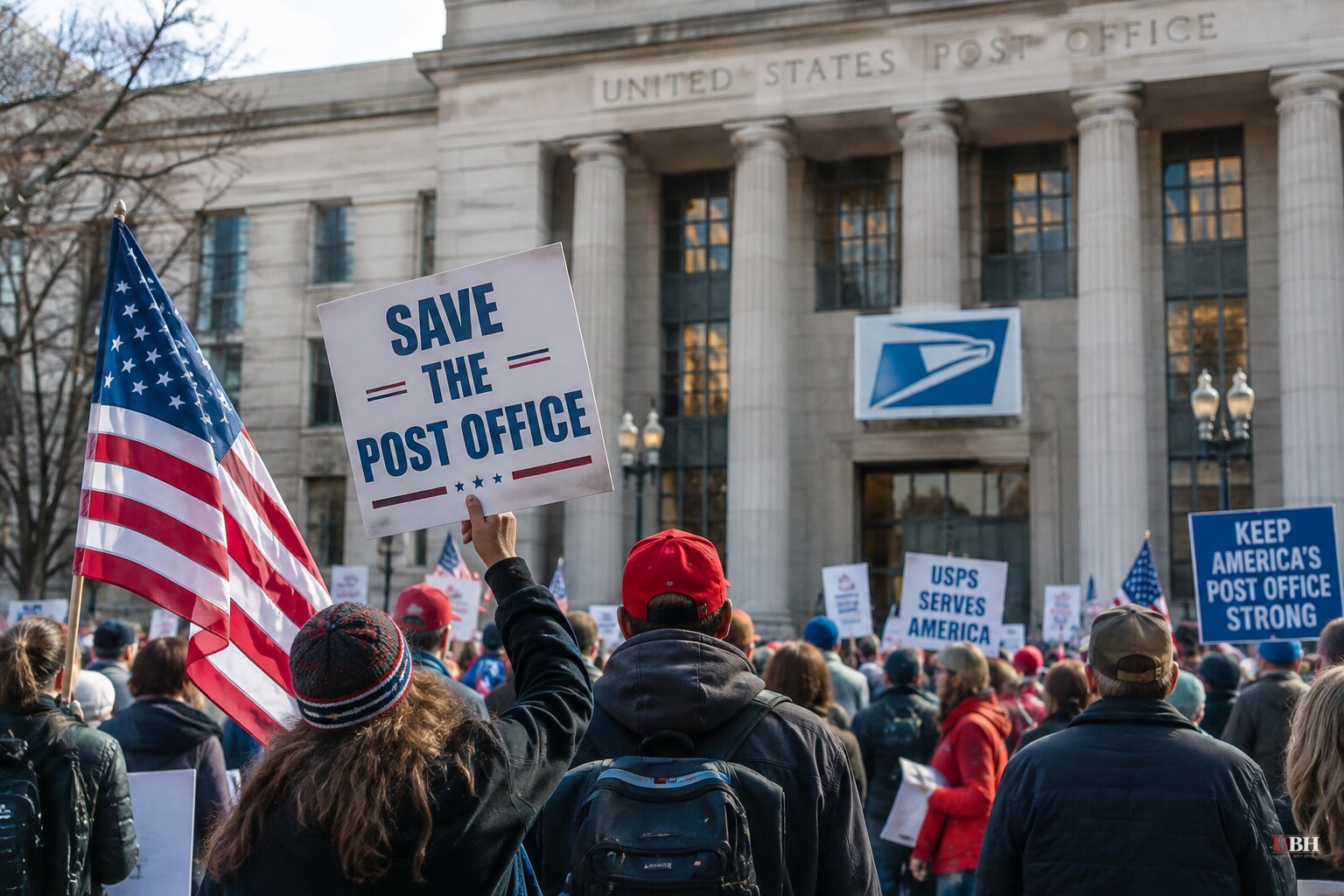
The U.S. Postal Inspection Service used a social media monitoring program to track and circulate information on planned protests of nearly every stripe, according to government records released to the Electronic Frontier Foundation this fall.
The program is the Internet Covert Operations Program, known as iCOP. The documents came out as part of a settlement of EFF's Freedom of Information Act lawsuit, filed in 2021, and were also provided to several other requesters.
What the bulletins covered
The released bulletins date to 2020 and 2021. They tracked a planned "Million MAGA March," a gun rights event and counter-protest in Virginia, and a nationwide "Save the Post Office Saturday" protest. They also covered protests outside the Washington, D.C., home of then-Postmaster General Louis DeJoy and ongoing Black Lives Matter demonstrations, which one bulletin labeled a "National Civil Unrest Update."
Many of the bulletins are dry summaries of publicly posted events. Others anticipate trouble.
A bulletin on protests planned for March 20, 2021, points to potential violence given "online inflammatory material." In the same document, the agency acknowledges it has "no intelligence to suggest specific threats." That bulletin first surfaced in Jana Winter's 2021 Yahoo News story, which exposed the program. It said analysts were watching organizing on platforms including the right-leaning Parler and Telegram.
The bulletins also log threats sent to DeJoy.
Methods
Earlier reporting described postal investigators running keyword searches on social media posts and creating anonymous, untraceable email and social media accounts to monitor conversations. It also described the use of Clearview AI facial recognition software on photos scraped from online platforms.
The Postal Service also released three email chains showing how the agency queried iCOP and passed along what it found. They are heavily redacted. EFF says they are the only known materials showing how those queries worked.
The inspector general's finding
The USPS Office of Inspector General looked at the program and drew a line. "We determined that certain proactive searches iCOP conducted using an open-source intelligence tool from February to April 2021 exceeded the Postal Inspection Service's law enforcement authority," the office concluded.
The problem was not that the posts were private. The searches lacked a sufficient connection to postal crimes or Postal Service functions.
The audit did not find every iCOP activity or every bulletin unlawful. It did find that analysts stored sensitive personally identifiable information gathered from public sources on work computers. They also did not consistently record how that information was used or how it fed into finished reports.
The Postal Service's explanation
Chief Postal Inspector Gary Barksdale told Congress that iCOP "was developed around 2017 as part of our strategy to combat opioids and other illegal drugs in the mail." Postal Inspection Service officials also told lawmakers in 2021 that the program grew during a period of threats against postal leadership, employees and facilities. Analysts, they said, used open-source information to identify potential unrest.
That is a real concern. Postal workers and facilities do get threatened, and a law enforcement arm of the agency has a legitimate interest in those threats. The bulletins' record of threats to DeJoy fits that explanation.
It does not obviously cover everything in the files. A rally in Virginia over gun rights has no clear tie to parcels, stamps or mail fraud. Neither does a MAGA march. EFF says the records show iCOP "routinely sifted" through posts organizing protests "with little records of any oversight or legal justification."
The spread of targets cuts across partisan lines. Anyone who assumes this was aimed at one side of the aisle will have a hard time squaring that with the list.
Missing records and an open question
The paper trail is incomplete. EFF says that after years of delays and technical failures, the agency lost access to a trove of emails discussing the program. Others were apparently destroyed. The three released email chains are what survives of how the program was queried.
The agency has said that after the 2021 Yahoo story it renamed the program and publicly said it had stopped issuing bulletins. The released documents do not say the social media surveillance itself stopped.
The Postal Inspection Service has not said what the renamed program is called, what rules govern it, or whether analysts are still monitoring protest organizing online.
Sources used for this briefing
6 links from 5 independent newsrooms (syndicated copies of the same report count once)
These are the sources it draws on, linked so you can verify.


