
Unbiased headlines. Facts, not spin.
Unbiased Headlines is an independently owned news organization. We bring you the facts, not opinions, written fresh from 110+ named sources. Sources linked so you can verify it yourself.
 politics
Major Story (7/10)
Event date: November 10, 2026 ·
B.C. Hydro Warns Some Storm-Hit Areas Could Be Without Power for Days as Rain Totals Near 250 mm
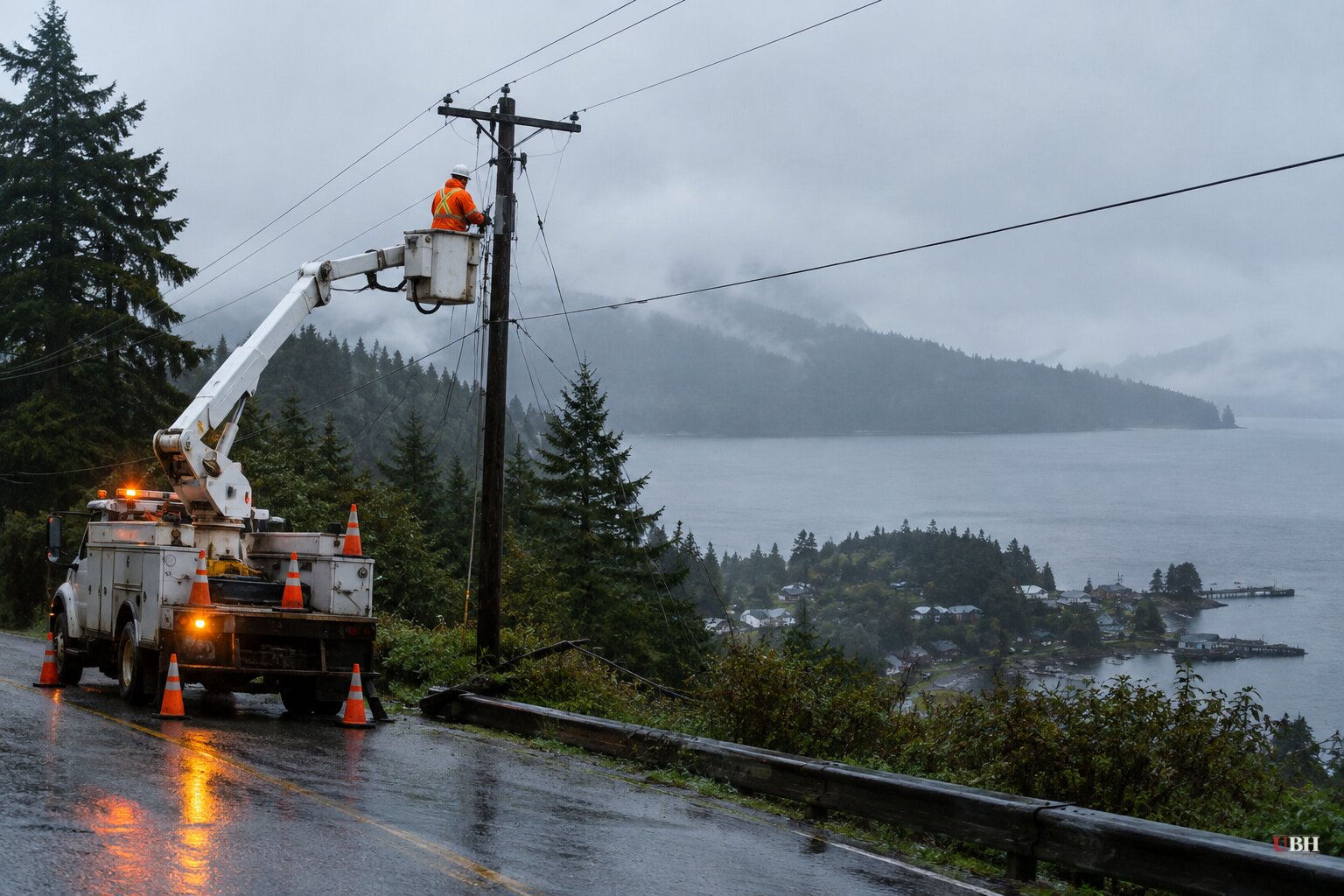
A string of storms has now battered British Columbia for nearly a week, and the utility says some of the hardest-hit places could be dark for days longer.
B.C. Hydro said almost 415,000 customers, homes and businesses, lost power over the weekend of Nov. 6 to 9. By Monday morning, Nov. 9, the utility reported more than 99 per cent of those outages repaired, with about 6,000 customers still out.
Then another system arrived. As of today, Wednesday, Nov. 11, Environment and Climate Change Canada (ECCC) is keeping rainfall and wind warnings in place across the province.
Rain totals and flood watches
ECCC says more than 250 millimetres of rain is possible in parts of western and inland Vancouver Island. Rates could hit 20 mm an hour at times today.
Up to 160 mm could fall on the Sea-to-Sky Highway by Thursday morning. Parts of Metro Vancouver could see 160 mm as well.
Flood watches cover southwest B.C. The River Forecast Centre has issued a High Streamflow Advisory for the Fraser Valley, including the Chilliwack and Hope areas, plus the Fraser Canyon and the Chilcotin. It is telling people to stay away from fast-flowing rivers and unstable banks.
The weather warnings span all of Vancouver Island and Haida Gwaii, the Sunshine Coast, the central Interior, the Prince George area and portions of Metro Vancouver and the Fraser Canyon. Haida Gwaii and north Vancouver Island could see gusts up to 110 km/h.
The Ministry of Transportation and Transit has issued a traffic advisory for the South Coast, warning drivers about wind, heavy rain and possible flooding.
The repair problem
The outages that remain are not quick fixes. B.C. Hydro said Tuesday night that restoration has been difficult because of the extent of the repairs. "Access remains challenging in some areas due to fallen trees, debris and soft ground conditions," the utility said.
The worst damage is in the Central Interior, east and north of Prince George. B.C. Hydro counted roughly 200 spans of downed wire there, along with numerous broken poles and damaged equipment. Crews are replacing poles and crossarms, restringing wire and rebuilding sections of the system.
On Tuesday the utility put the Northern and Central Interior total at about 2,300 customers still out. More than 180 workers, including crews and contractors brought in from elsewhere in the province, are on the job, with helicopter patrols assessing damage.
B.C. Hydro had expected most customers in Salmon Valley and much of Vanderhoof back by the end of Tuesday. It targeted the Chief Lake, Ness Lake, Eskers and Summit Lake areas by the end of today. The utility cautioned those times could change with the weather, and Environment Canada has an orange wind warning in place, with gusts to 90 km/h expected overnight into Wednesday before easing through the afternoon and evening.
Zeballos cut off
The village of Zeballos on northwest Vancouver Island is in the toughest spot. An evacuation order was issued last week after a landslide, and B.C. Hydro said the village will likely stay without power for a few more days.
"Specialized equipment is required and must be transported by helicopter due to the remote location and challenging terrain," the utility said. "The earliest crews can access the site is Thursday, provided weather conditions allow safe access."
Deaths and a suspended search
The storms have already been deadly. A driver in Surrey died Saturday when a falling tree crushed a vehicle. A pedestrian in Vancouver was killed Friday after being hit by a car during what police called a heavy rainstorm.
RCMP in Sayward suspended water and shoreline searches for 35-year-old Dakota Smith, reported missing last Friday after going fishing. His capsized canoe was found off the northeast coast of Vancouver Island. Police said wind, rain and frigid water had drastically reduced the chances of survival. The Ma'amtagila Nation said its members are continuing to search despite the end of the official effort.
Environment Canada meteorologist Michael Gismondi offered a less alarming read of the weather itself. Atmospheric rivers of this kind are "fairly typical for this time of year," he said in an interview Tuesday. "Typically we get a few every year, so it's not unusual for this to happen." He said he did not expect catastrophic impacts, though flooding was possible as rain continues for a day or more.
That sits next to B.C. Hydro's own warning that outages may stretch for days. The two statements don't conflict: a routine-looking storm pattern still landed on ground already saturated by the previous round, and the utility is describing the slow work of rebuilding line in remote, soft terrain.
B.C. Hydro has told customers to keep 72-hour emergency kits stocked and phones charged. It says anyone who sees a downed line should treat it as live, stay at least 10 metres back and call 911.
Crews could first reach the Zeballos site by helicopter on Thursday, Nov. 12, if conditions allow.
Sources used for this briefing
7 links from 7 independent newsrooms (syndicated copies of the same report count once)
These are the sources it draws on, linked so you can verify.


