
Unbiased headlines. Facts, not spin.
Every story is an unbiased news briefing written from 110+ sources across the spectrum — sources linked so you can verify it yourself.
 politics
Major Story (7/10)
July 14, 2026 at 09:36 PM
politics
Major Story (7/10)
July 14, 2026 at 09:36 PM
Sen. Jim Banks Introduces Bill to End Birthright Citizenship After Supreme Court Ruling
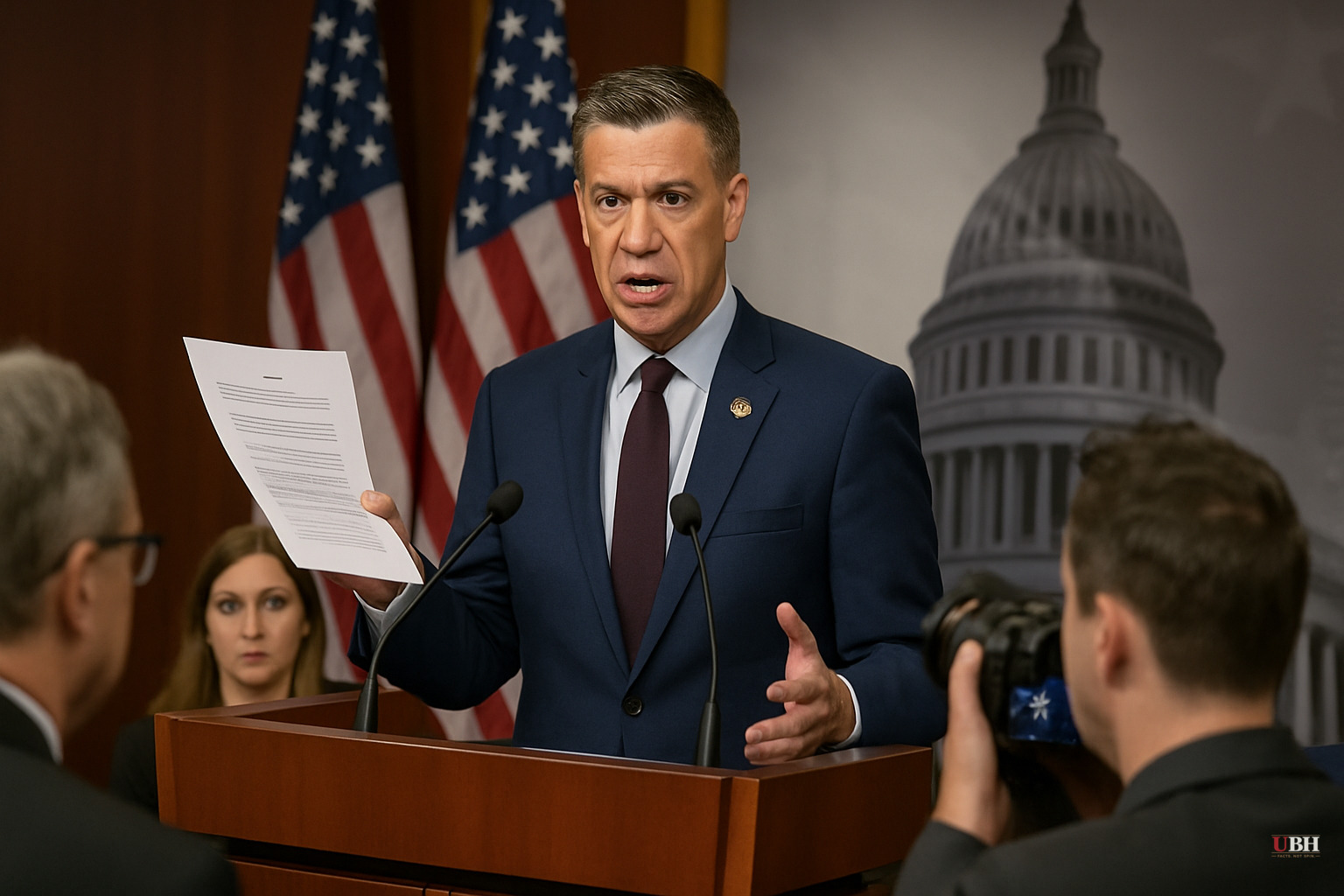
Sen. Jim Banks (R-Ind.) introduced the Citizenship Act of 2026 this week, a bill that would end automatic citizenship for children born in the United States to illegal immigrants and so-called birth tourists.
Banks says the bill codifies President Trump's January 20, 2025 executive order, which declared the United States "under invasion" by illegal immigration. "The Supreme Court's birthright citizenship decision was an unprecedented assault on American sovereignty, and we must do whatever it takes to save our country," Banks said in his announcement, framing the legislation as a direct response to a Supreme Court ruling in a case referred to as Trump v. Barbara.
What the Court Actually Decided
According to the Los Angeles Times, the Supreme Court's ruling did not gut birthright citizenship. Chief Justice John Roberts wrote for the majority, joined by the three liberal justices and, notably, conservative Justice Amy Coney Barrett, that the text of the 14th Amendment is clear and was clearly understood at the time of ratification. Roberts explicitly rejected what he called a "dramatically revisionist view" of the amendment.
Justice Brett Kavanaugh voted with that majority to block Trump's executive order from taking effect, but for a narrower reason: Congress already addressed birthright citizenship in a 1952 law, and any change would require new legislation from Congress, not a unilateral executive order. Kavanaugh's opinion, as described by the Los Angeles Times, opened a door for Congress to act. It didn't say Congress would win if it walked through it.
Justice Samuel Alito dissented, arguing the amendment's citizenship-at-birth rule creates "a powerful incentive to enter or remain in this country illegally" given how much illegal immigration has grown since 1868. This is a policy argument about incentives, not a definitive ruling that Congress has authority to override the 14th Amendment's text by statute.
The Constitutional Fight Banks Is Picking
The Citizenship Act of 2026 rests on a specific legal theory: that Article I gives Congress power over naturalization, and that mass illegal immigration and birth tourism amount to an "invasion" under Article IV, which triggers a long-recognized exception for children of foreign invaders. Banks' bill would apply that invasion exception to illegal immigrants and birth tourists broadly.
Sen. Banks and other supporters have a fair point that the founding-era understanding of birthright citizenship assumed foreign invaders' children were never covered, and no one seriously disputes that narrow historical exception existed.
But it's also a stretch from what the Supreme Court actually held. The 1898 case Wong Kim Ark, cited by the Los Angeles Times, upheld birthright citizenship for a man born in San Francisco to Chinese immigrant parents who were legally barred from becoming citizens themselves under the Chinese Exclusion Act. If the invasion exception applied as broadly as Banks argues, it's not clear why it wouldn't have applied there too. This tension is precisely the kind of question a lower court, and eventually the Supreme Court again, would likely have to sort out if this bill becomes law.
What's Proven, What's Not
What's proven: the Supreme Court left the core birthright citizenship rule intact, and a majority including Barrett rejected the administration's executive-order approach. Kavanaugh's concurrence said Congress could legislate exceptions consistent with the 14th Amendment, which gives Banks a genuine legislative opening.
What's not proven: that a statute like the Citizenship Act of 2026 would survive the same textual scrutiny Roberts applied to Trump's executive order. Nothing in the ruling as described says Congress has unlimited power to redefine who is "subject to the jurisdiction thereof," the amendment's actual language. That's the open question a legal challenge to this bill would have to answer.
Next Steps
The bill needs to clear the Senate, where it would need 60 votes to overcome a filibuster unless leadership moves it through reconciliation or another procedural path, neither obviously available for this kind of citizenship law. It also needs a House companion and Trump's signature.
Even if it passes, expect an immediate legal challenge testing the exact question Kavanaugh's concurrence left open: how far Congress can go in defining "subject to the jurisdiction thereof" without amending the Constitution itself.
Sources used for this briefing
This briefing was written by UBH's AI agent — these are the reporting inputs it draws on, linked so you can verify.


