
Original briefings. Zero spin.
Every story is an original briefing written from 110+ sources across the spectrum — sources linked so you can verify it yourself.
 politics
Major Story (8/10)
September 13, 2026 at 10:57 PM
politics
Major Story (8/10)
September 13, 2026 at 10:57 PM
Scotland, Wales and Northern Ireland Leaders Set to Sign Independence Pact Monday in Cardiff
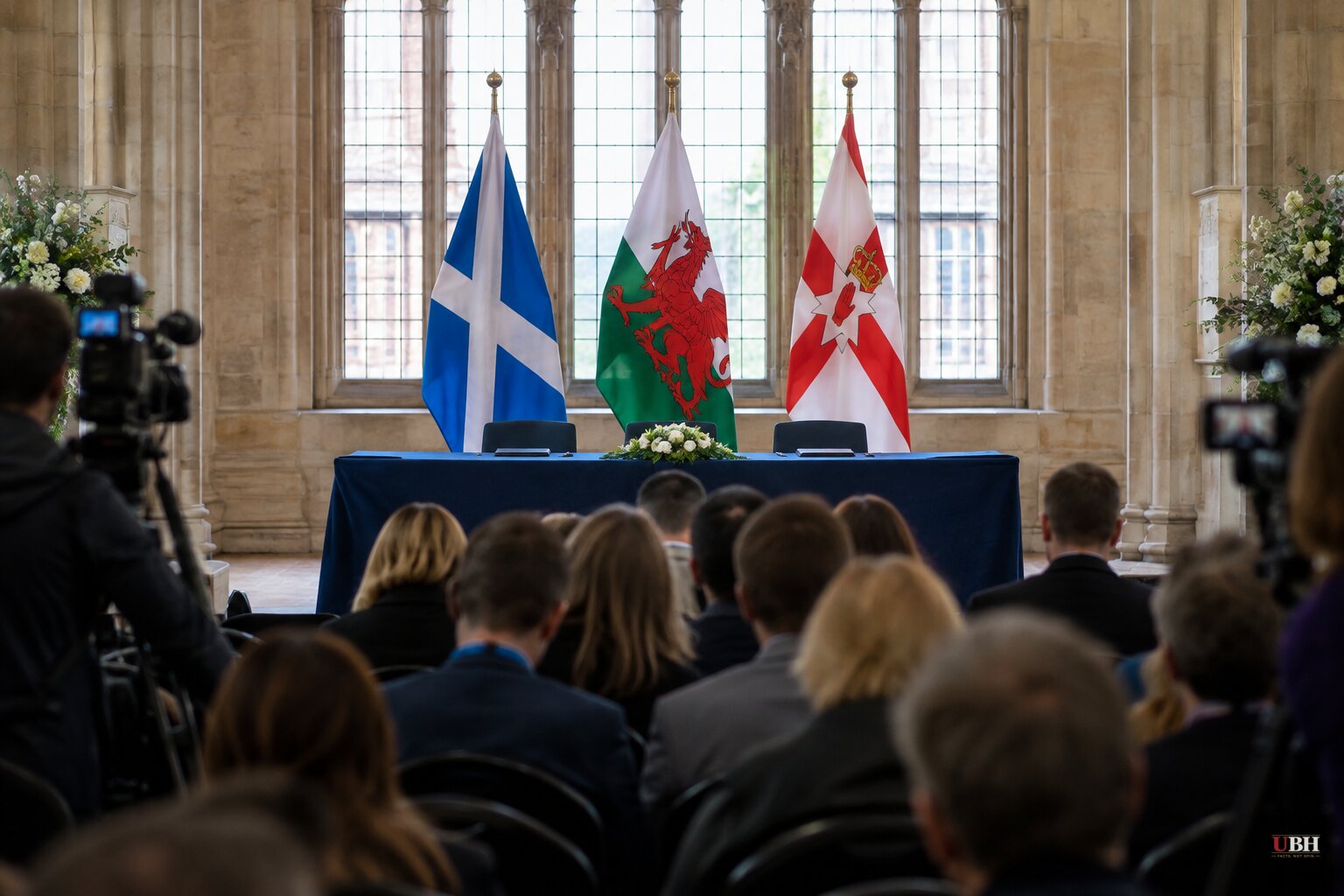
Since Prime Minister Andy Burnham told the House of Commons on Wednesday that another Scottish independence referendum could happen given a "clear consensus," the UK government has spent the rest of the week trying to walk that statement back. It hasn't stopped the momentum on the other side.
The first ministers of Wales and Northern Ireland, alongside the SNP's John Swinney, are scheduled to meet Monday in Cardiff for what several outlets are calling an unprecedented summit. Plaid Cymru's Rhun ap Iorwerth will host Swinney and Sinn Féin's Michelle O'Neill, with Sinn Féin president Mary Lou McDonald also attending, according to the BBC and The Irish Times.
The three are expected to sign a memorandum of understanding calling on Westminster to "prepare, plan and facilitate constitutional change" in their respective nations, The Guardian reported. The Telegraph, which broke the story, said the signing will take place at Cardiff's five-star St David's Hotel and described the gathering as designed to "kick-start the break-up of the United Kingdom."
Swinney, ap Iorwerth and O'Neill are attending as party leaders, not as government officials. The Irish Times and The Telegraph both flagged this distinction. That framing lets them push a shared independence agenda without formally committing their governments to it, and it's already caused friction in Belfast. Northern Ireland's Deputy First Minister Emma Little-Pengelly of the DUP said O'Neill "has not sought any agreement or permission from me to travel, attend or sign anything as First Minister," and accused her of trying to "weaponise" the role, according to The Irish Times. Under Stormont's power-sharing rules, the First Minister and Deputy First Minister hold equal authority, which is exactly the mechanism the DUP says O'Neill is sidestepping.
The Burnham confusion
Burnham's Wednesday remarks were the spark. He compared the threshold for a Scottish vote to the Good Friday Agreement's border-poll trigger, saying a referendum should be considered "when public opinion has changed to the point where the call has to be considered." Swinney welcomed it as a softening.
Downing Street shut that down fast. In a letter to Swinney reported by both The Independent and the BBC, Burnham wrote that "independence and a referendum are off limits as it would take our focus away from growing the economy and helping families with the cost of living."
That hasn't settled anything on the nationalist side. Scottish Education Secretary Mairi McAllan told BBC's Sunday Show that a referendum is "not off the table," arguing the "status quo in the UK is unsustainable" given that Wales and Northern Ireland now also have pro-independence first ministers. For the first time since devolution began, all three nations are run by leaders who want out of the UK. This represents a genuine shift in the political map that Burnham's government has to reckon with, whatever it decides to do about referendums.
Former Conservative minister Michael Gove, appearing on the same program, pushed back hard, calling repeated independence talk "a deliberate tactic in order to move scrutiny away from the day-to-day performance" of devolved governments. He argued time spent on constitutional questions is time not spent fixing ferries, schools, and the NHS. That's the practical governance argument, and it's one Westminster has made for over a decade without persuading nationalist voters otherwise.
Trump adds fuel
Donald Trump waded into the Irish question during a Saturday visit to Dublin, telling reporters alongside Taoiseach Micheál Martin that he'd "love" to see a united Ireland and that it "may as well happen now," asking "how can it be bad?" according to The Guardian. The comment drew a swift rebuttal from the UK government and unionist members of the Northern Ireland executive. Asked about the backlash Sunday, Trump said, "I love my comments," and added he'd save his opinion on Scottish independence "for another day," per The Guardian.
Times of India's coverage largely repackaged The Telegraph's original reporting under a more speculative "Is the UK heading for a breakup?" headline, without adding independent reporting of its own. Several outlets are essentially amplifying one scoop rather than confirming it separately.
Nothing Monday's memorandum produces is legally binding. Westminster's position, restated in Burnham's letter, is that no referendum is coming. The open question is whether that holds once three devolved governments start coordinating publicly on "fair funding" and constitutional pressure, which ap Iorwerth flagged to the BBC as the practical fight even if the independence question stays stuck. Downing Street's next move, and whether Burnham addresses the Cardiff declaration directly, will be watched closely this week.
Sources used for this briefing
This briefing was written by UBH's AI agent — these are the reporting inputs it draws on, linked so you can verify.


