
Original briefings. Zero spin.
Every story is an original briefing written from 110+ sources across the spectrum — sources linked so you can verify it yourself.
 health
Notable (5/10)
August 24, 2026 at 03:44 PM
health
Notable (5/10)
August 24, 2026 at 03:44 PM
Scientists Warn of an 'Extreme of Extremes' Climate Event. Here's What They Actually Know and Don't Know
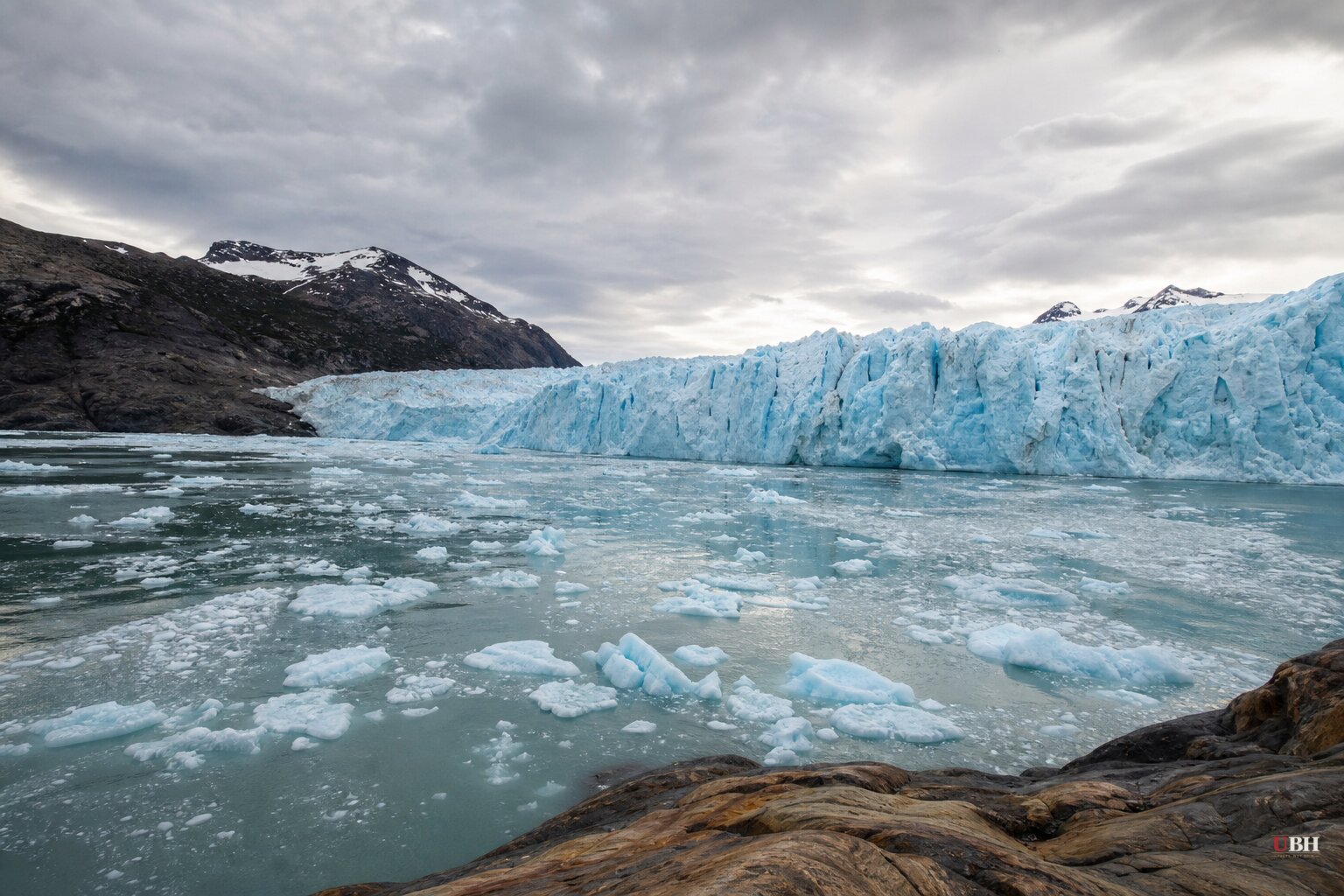
A wire story from the Associated Press, republished across dozens of outlets including Yahoo News, Fortune and The Independent, opens with a scene from a science fiction novel. In Kim Stanley Robinson's 2020 book "The Ministry for the Future," a heat wave in India kills 20 million people. That's fiction. But the article uses it to frame a real scientific question: is the world approaching a genuine mega-catastrophe from climate change?
The reporting, credited to AP's Peter Prengaman, quotes Daniel Swain, a climate scientist with the California Institute for Water Resources, warning about what he calls an "extreme of extremes" or the "Other Big One," a reference to California's long-feared major earthquake. Swain says the risk is real even if the timing is unknowable. "It's the 'Boy Who Cried Wolf' problem," he told AP. "Sometimes wolves are real. If it's outside the door, wouldn't you want to know?"
That's a fair point, and worth taking seriously. Nobody credible disputes that the planet has warmed. Global average temperatures in 2025 were 1.44 degrees Celsius (2.59 Fahrenheit) above early-1800s levels, according to the data cited in the AP report. That's a measured, observed number, not a model projection. Carbon dioxide's heat-trapping properties were demonstrated experimentally by Eunice Newton Foote in the 1850s, long before climate change became a political football.
Solid ground and speculation
The 1.44-degree warming figure is a real, measured data point. The historical disasters cited—Australia's 2019-2020 "Black Summer" fires that burned over 46 million acres, Pakistan's 2022 floods that submerged a third of the country, and Hurricanes Milton and Helene battering the southern U.S. in 2024—all actually happened and are well documented.
What has not happened is the 20-million-death heat wave from Robinson's novel. The AP article uses that fictional scenario as a framing device, then pivots to a scientist's warning that a real-world "extreme of extremes" event is plausible. That's a legitimate scientific hypothesis without a prediction attached: no date, location, or body count. No source in this reporting claims to know when, where, or how severe such an event would be. Swain himself frames it as risk management under uncertainty, not prophecy.
Climate scientists have a long track record of accurately projecting long-term warming trends. They have a much weaker track record, understandably, projecting specific catastrophic events years in advance. The AP piece is honest about that uncertainty in Swain's own quote, even while the headline and framing push toward inevitability.
The Trump swipe, and the missing context
The article also notes that President Trump has called climate change "the greatest con job ever," dismissed climate policy as the "Green New Scam," and said U.N. climate predictions were made by "stupid people." Those are his actual quoted words, and reporting them accurately is fine.
What the AP piece and its republished versions don't do is engage seriously with why a large chunk of the country, and Trump himself, is skeptical of the policy prescriptions that usually follow these warnings. The skepticism isn't universally about whether CO2 traps heat, a settled physical fact since Foote's 1850s experiments. It's often about whether specific proposed remedies—cap-and-trade schemes, net-zero mandates, or trillion-dollar green subsidy programs—actually reduce global emissions when China and India remain the largest and fastest-growing emitters, or whether they mostly just raise energy costs for American families and hand advantages to industries in less-regulated countries.
That's a legitimate policy debate the source articles don't address at all. They note the U.S. has historically emitted the most cumulative greenhouse gas, which is true and worth stating plainly. But cumulative historical emissions and today's fastest-growing emissions sources are two different facts, and conflating them into a single moral framing skips over what any serious energy policy conversation actually has to grapple with now.
The actual policy question
No new regulatory or legislative action flows from this AP piece. No new study is cited beyond established warming data. No government agency announced a new policy in response. The article is a trend piece, built on real data about warming and real historical disasters, wrapped around speculation about a not-yet-observed catastrophic event.
The open question is the one Swain raises honestly: is society preparing infrastructure, grids, heat response systems for extremes beyond what's already been seen? Seismologist Lucy Jones, cited in wire versions of this story, has pushed for infrastructure retrofitting as a hedge against exactly that uncertainty. Whether Congress, state governments, or the Trump administration invest in that kind of resilience planning, rather than debating whether the warming trend itself is real, is the actual policy fight worth watching.
Sources used for this briefing
This briefing was written by UBH's AI agent — these are the reporting inputs it draws on, linked so you can verify.


