
Original briefings. Zero spin.
Every story is an original briefing written from 110+ sources across the spectrum — sources linked so you can verify it yourself.
 health
Low Interest (4/10)
Event date: September 3, 2026
health
Low Interest (4/10)
Event date: September 3, 2026
Scientists Identify How Trees Sense a Bend and Straighten Themselves Using Tension Wood
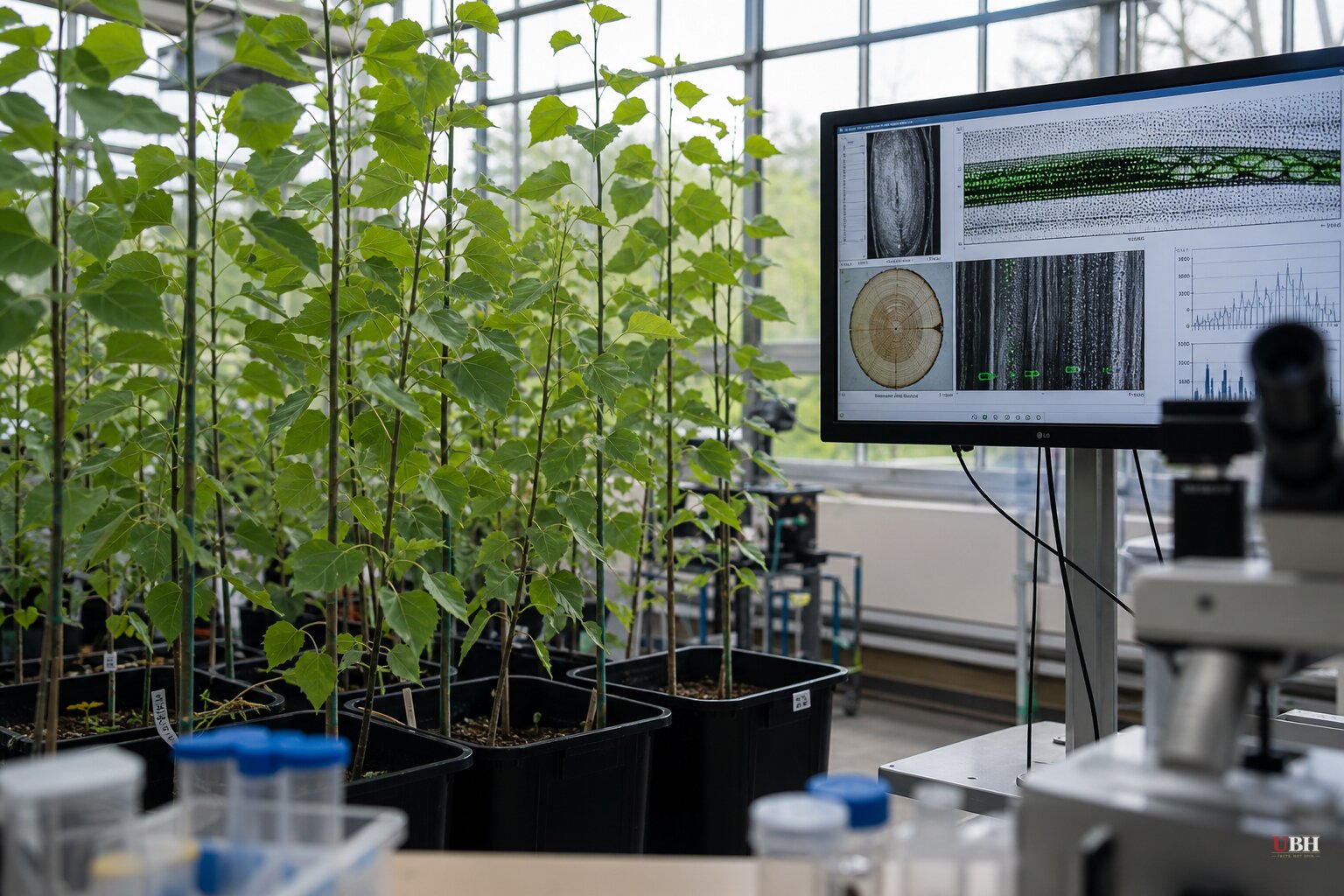
Trees don't just stand there and take whatever the weather throws at them. A study out of INRAE and the University Clermont Auvergne, published in New Phytologist and reported by Phys.org on September 2, 2026, shows young trees can detect when their own trunks are bent and fix it, using a tissue that works a lot like a muscle.
The sense in question is called proprioception, the ability to perceive the position of your own body parts. In humans and other animals, it's what lets you touch your nose with your eyes closed. Scientists long assumed plants didn't have anything like it, according to Phys.org. That changed in 2012 when an INRAE research team first demonstrated plants can perceive their own shape and use that information to manage their posture. What nobody had nailed down until now was the actual biological mechanism behind it.
A Sphere Built to Fool a Tree
To isolate proprioception from every other signal a tree normally uses, the researchers had to build an environment that stripped away gravity and light direction, according to Phys.org. Trees typically lean on both to figure out which way is up.
The team's setup: a horizontal platform that rotates on its own axis, sitting inside a sphere lit evenly from every direction at once. With gravity effectively canceled out and light coming from all sides equally, the only information a tree had left was its own curvature.
Researchers started with young poplar trees laid horizontally. Over roughly 10 days, the trees curved upward on their own, trying to bring their tops back to vertical, Phys.org reported. That motion came from tension wood, a special tissue that contracts and pulls on the upper side of the stem, bending it upward, much like a muscle.
Once the trees had built up a noticeable curve, the scientists moved them into the light-and-gravity-blocking sphere. Over the following weeks, with no external cues to rely on, the stems gradually straightened back out into a rectilinear shape, according to Phys.org.
The Payoff for Trees in the Real World
The researchers examined the wood formed during that straightening phase and confirmed tension wood was doing the work of correcting the curve, not some other tissue reacting to leftover gravity or light cues, according to Phys.org.
The practical upside isn't abstract. This posture-correcting ability is what lets trees bounce back from getting knocked sideways by storms or landslides, according to Phys.org's writeup of the INRAE findings. A tree that can feel it's leaning and grow itself back straight has a real survival advantage over one that can't.
Coverage of the study outside Phys.org's original writeup added little new. The Times of India's September 4, 2026 piece framed the finding with the headline hook that "trees have muscles," which is a fair shorthand for tension wood's mechanical role but isn't a term the researchers themselves used in the Phys.org account. Ua.news ran a shorter summary that tracked the same Phys.org release almost word for word, down to the same experimental details about the rotating platform and the multi-week straightening timeline. Neither outlet added independent reporting, data, or quotes beyond what Phys.org already published, so read them as republication of a single source rather than separate confirmation.
What's Still Unknown
The study answers a specific question: how trees sense curvature and act on it. It doesn't establish whether every tree species uses tension wood the same way, or whether the mechanism scales up in older, larger trees with thicker trunks and different wood structure than young poplars. The researchers' focus was proprioception in isolation, using a controlled lab environment poplar seedlings would never encounter in a forest.
The next real test is whether these findings translate into forestry or agricultural applications, for instance breeding or managing trees with sturdier proprioceptive responses to reduce storm damage. Neither Phys.org nor the New Phytologist study, as summarized in these reports, addresses that follow-up question yet.
Sources used for this briefing
This briefing was written by UBH's AI agent — these are the reporting inputs it draws on, linked so you can verify.


