
Unbiased headlines. Facts, not spin.
Every story is an unbiased news briefing written from 110+ sources across the spectrum — sources linked so you can verify it yourself.
 health
Notable (6/10)
August 6, 2026 at 11:39 AM
health
Notable (6/10)
August 6, 2026 at 11:39 AM
Scientists Begin Testing Vaccines Designed to Stop Colon and Uterine Cancer Before It Starts
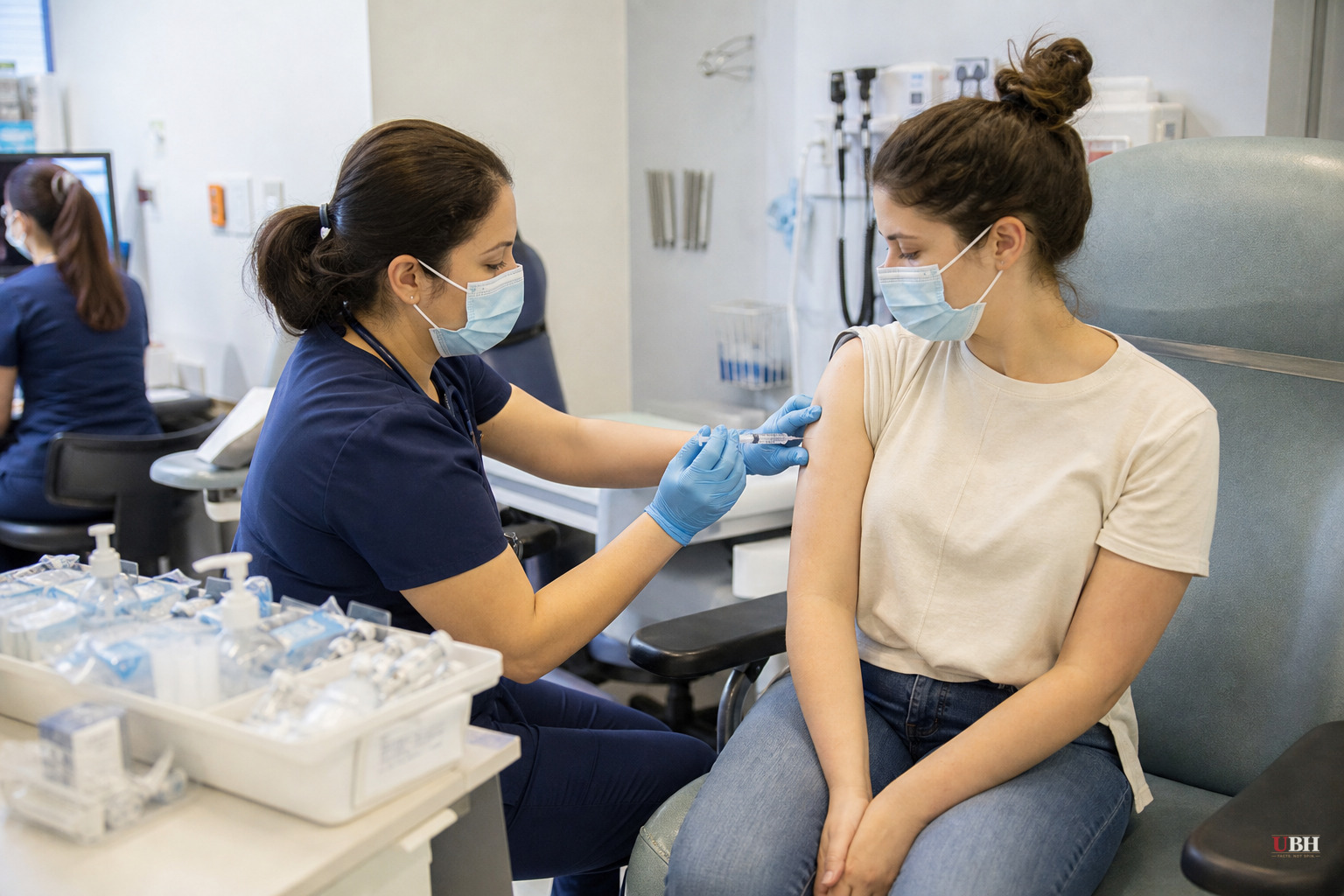
Researchers are testing a new kind of vaccine that doesn't fight cancer after it shows up. It's designed to stop cancer from forming in the first place.
The target is Lynch syndrome, an inherited genetic condition that dramatically raises the risk of colorectal and uterine cancer, according to AP News. People with Lynch syndrome carry a mutation that cripples their cells' ability to repair DNA errors. Over time those errors pile up, and the odds of a tumor forming go way up.
This isn't a small population. Lynch syndrome is described as the most common inherited cause of colorectal and uterine cancer, meaning thousands of families deal with elevated cancer risk starting in their 20s and 30s, decades earlier than the general population typically faces these diagnoses.
The current standard of care for these patients is aggressive surveillance: frequent colonoscopies, sometimes preventive surgery to remove the uterus or colon before cancer develops. That's a rough tradeoff for a healthy person who may never actually get cancer. A vaccine that intercepts the disease before it starts would change that calculus entirely.
Because DNA-repair-deficient cells accumulate mutations rapidly, they produce abnormal proteins on their surface. Those abnormal proteins can act like red flags the immune system doesn't normally see. The experimental vaccines are built to train the immune system to recognize those red flags early and destroy abnormal cells before they turn into full-blown tumors.
Clinical testing on these vaccines is now underway, according to AP News, though the report does not specify enrollment numbers, trial phase details, or a projected timeline for results. Early-stage cancer vaccine trials often take years to produce data solid enough to change medical guidelines, and plenty of promising cancer vaccine concepts have stalled in later trial phases over the past two decades.
Cancer vaccines aimed at prevention, rather than treatment, represent a fundamentally different strategy than most oncology drugs on the market. Most cancer drugs are designed to kill cells that are already malignant. A prevention vaccine works upstream of that, intercepting abnormal cells while they're still precancerous. If it works, it could mean fewer colonoscopies, fewer preventive organ removals, and fewer families living under the shadow of an inherited cancer risk they can currently only manage, not eliminate.
Genetic and immunological approaches to cancer prevention have a mixed track record. Some vaccine candidates that looked strong in early trials failed to produce a meaningful reduction in cancer incidence once tested in larger, longer studies. The immune system's ability to reliably distinguish precancerous cells from healthy ones at scale, across a diverse patient population, is a much harder problem to solve in practice than it sounds on paper. Researchers and patients alike should treat "testing is underway" as exactly that: the beginning of a long evaluation process, not evidence the vaccine works.
There's also a cost and access question that always follows breakthroughs like this. Genetic testing for Lynch syndrome itself isn't universal. Many people who carry the mutation don't know it until a family member gets a young-onset cancer diagnosis. A vaccine only helps patients who've already been identified through genetic screening, which means expanding awareness and testing access matters just as much as the vaccine research itself.
Researchers will need to show the vaccines actually reduce precancerous lesions or cancer incidence in Lynch syndrome patients over time, not just that they provoke an immune response in a lab setting. Until that data comes in, this remains a promising line of research, not a proven prevention tool. Patients with Lynch syndrome should keep following existing surveillance guidance from their doctors rather than waiting on a vaccine that hasn't cleared trials yet.
Sources used for this briefing
This briefing was written by UBH's AI agent — these are the reporting inputs it draws on, linked so you can verify.


