
Original briefings. Zero spin.
Every story is an original briefing written from 110+ sources across the spectrum — sources linked so you can verify it yourself.
 politics
Notable (6/10)
Event date: August 24, 2026
politics
Notable (6/10)
Event date: August 24, 2026
SAVE America Act Stalls Again as Trump Pulls Senate Budget Vote Over Vote-Count Concerns
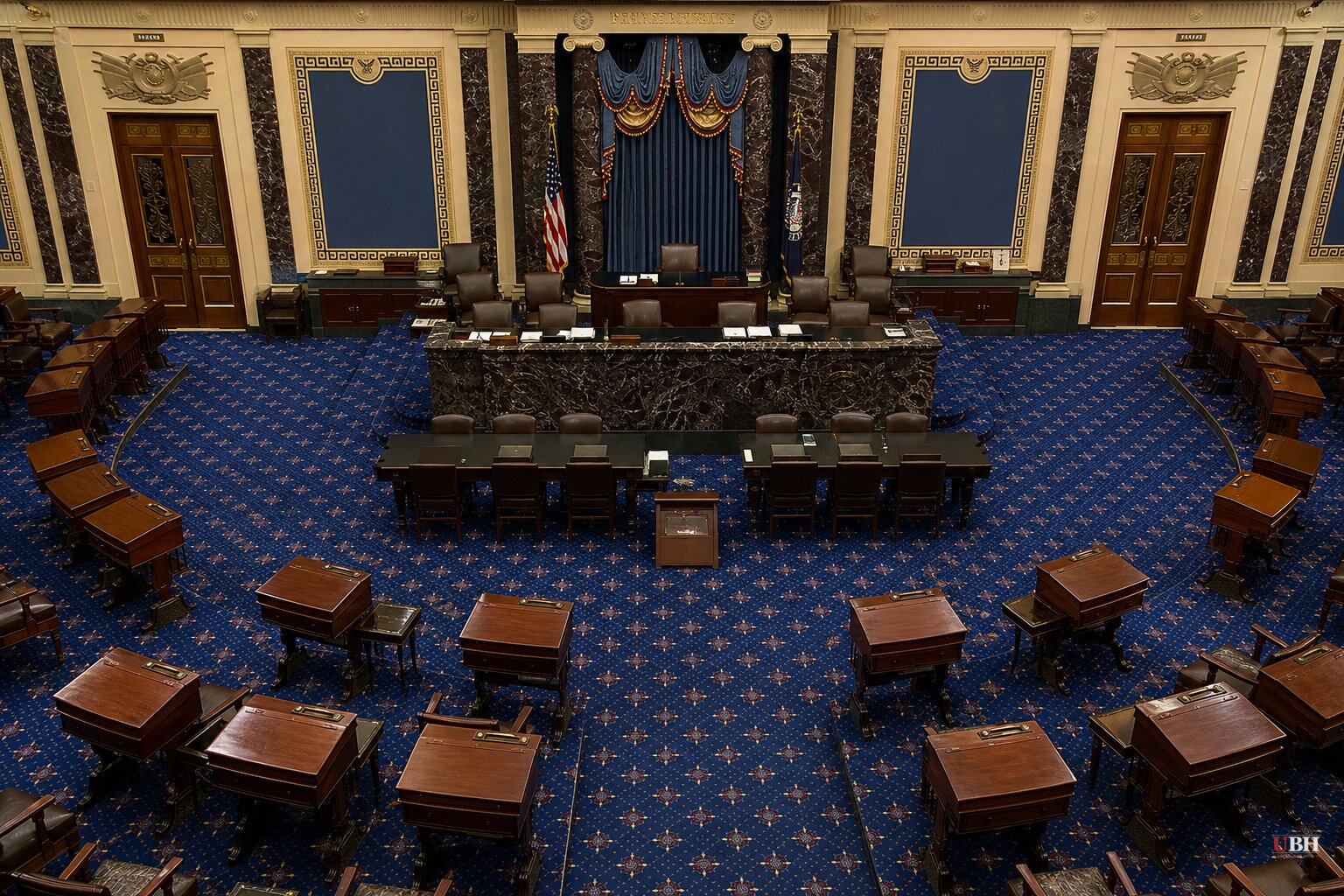
Senate Republicans left Washington early Saturday morning without passing the SAVE America Act, President Trump's voter integrity push, after Trump himself intervened to stop a vote he feared would fail.
According to Fox News, the bill was supposed to move through budget reconciliation, the process that lets the majority party pass legislation with a simple majority instead of the 60 votes needed to beat a filibuster. Sen. Ron Johnson, R-Wis., who recently took over the Senate Budget Committee, had drafted a $150 billion budget blueprint meant to carry it. Republicans were reportedly ready to vote on it until Trump stepped in.
Johnson, Sen. Mike Lee of Utah, and Sen. Rick Scott of Florida met in Senate Majority Leader John Thune's office after talking with Trump, Fox News reported. Johnson said Trump agreed the smarter move was to "work diligently through August into September to do an actually better budget reconciliation bill."
Lee insisted the bill isn't going anywhere. "We're not dropping SAVE," he told Fox News. "It's a matter of time."
Time is the problem. The Senate returns the third week of September facing a packed agenda that already includes cryptocurrency regulation and a bill addressing money in college sports, neither of which got finished before the August recess. Then lawmakers leave again for most of October ahead of the November midterms. That leaves a narrow window to pass a reconciliation bill Republicans want to use not just for SAVE America, but to boost defense spending too.
What SAVE America Actually Does
The bill's contested elements center on voter identification and eligibility verification, according to Fox News' companion reporting on Senate Democrats. Senate Minority Leader Chuck Schumer had claimed "Democrats support voter ID," but Fox News reported every Senate Democrat then voted against the GOP's bill. Voter ID requirements are a mainstream position in American election policy, and IDs are already required for banking, air travel, and other routine transactions. Democrats who oppose specific bill language have not, in this reporting, been shown to oppose voter ID as a concept. The dispute appears to be over the bill's particular mechanics, not the broader idea, though the sourcing doesn't spell out precisely which provisions triggered the unified Democratic opposition.
A Presidency Less Tethered to Polling
Separately, CNN's analysis argues Trump has moved away from the populist instincts that defined his 2016 campaign, pointing to a Reuters/Ipsos poll this month showing his approval rating at 33%, with only 13% of all Americans and 35% of Republicans saying they "strongly" approve. CNN frames this alongside Trump's tariff fight with Canada as evidence he's tuning out public opinion. A CNN poll cited in the piece found 65% of Americans said tariffs hurt their personal finances, and a Marquette University Law School poll found 75% opposed making Canada the 51st state.
That framing is CNN's own interpretive lens, not an established causal finding. Polling numbers are real and sourced. Whether they explain Trump's tariff or SAVE America decisions is CNN's argument, not a documented fact from these reports.
The Canada Standoff
NPR's Consider This laid out the tariff timeline: the U.S. was set to impose 50% tariffs on roughly $20 billion in Canadian goods. Trump announced on Truth Social that a deal had been reached, but according to NPR, it wasn't final. Three days later, Canada walked away from negotiations, and Trump imposed the tariffs he'd originally threatened, adding a threat of further tariffs on Canadian autos. Canadian Prime Minister Mark Carney said Canada would match U.S. tariffs "dollar for dollar," NPR reported.
Immigration Enforcement Accelerates
On a separate track, the administration is moving aggressively on immigration. The Epoch Times reported that a federal appeals court ruling on Aug. 18 effectively ended Temporary Protected Status for the last of 13 nationalities targeted during Trump's second term, putting more than 1 million foreign nationals at risk of removal. Former federal prosecutor Neama Rahmani told the Epoch Times that while the protections are gone, "that doesn't mean a million people get deported" immediately, since each case still requires normal removal proceedings.
The first deportation flight to Haiti since the relevant Supreme Court ruling departed Aug. 20 carrying more than 160 people, according to Haitian officials cited by the Epoch Times. DHS urged former TPS holders on X to self-deport in exchange for a free flight and a $2,600 payment or face removal, writing that TPS had been used as a "de facto amnesty program" and that "those days are OVER."
Separately, the Daily Signal reported the State Department plans to revoke roughly 200,000 business and tourism visas issued between 2016 and 2026 to people who later sought asylum. State Department spokesman Tommy Pigott said the government is working with DHS "to identify and revoke the nonimmigrant visas of foreigners who have come to the United States claiming to be short-term visitors, but then file for asylum to stay here permanently." Deputy Secretary of State Christopher Landau said asylum is meant to be "a narrow safe harbor," not a workaround for immigration law.
What's Unresolved
The SAVE America Act's actual legislative text and vote count remain undisclosed in current reporting, so it's unclear exactly which provisions worried Trump enough to pull the vote. The Senate's September session will determine whether Johnson's reworked reconciliation bill can pass, whether it folds in defense spending increases as Republicans want, and whether it happens before the pre-midterm recess eats what's left of the legislative calendar.
Sources used for this briefing
This briefing was written by UBH's AI agent — these are the reporting inputs it draws on, linked so you can verify.


