
Unbiased headlines. Facts, not spin.
Every story is an unbiased news briefing written from 110+ sources across the spectrum — sources linked so you can verify it yourself.
 politics
Notable (6/10)
Event date: September 14, 2026
politics
Notable (6/10)
Event date: September 14, 2026
Saudi Arabia's Riches Can't Buy Control Of The Red Sea. China Is Already Working Around Its Own Chokepoint.
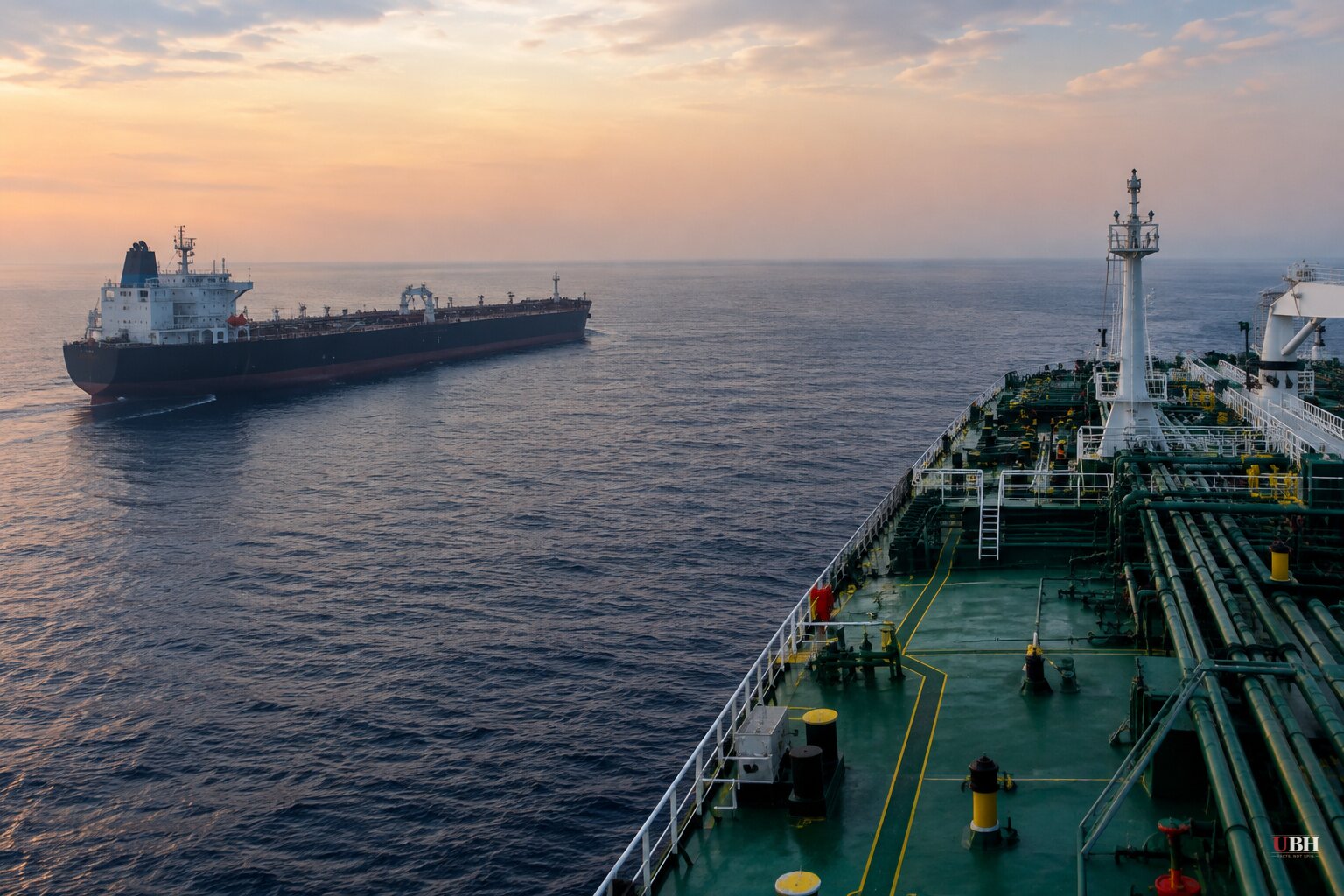
Saudi Arabia has almost everything a country needs to dominate its neighborhood. Enormous cash reserves. A modern air force. Vast oil wealth. Custodianship of Islam's two holiest cities. By any conventional scorecard, it's a great power.
So why did two Saudi oil tankers carrying a combined 2.8 million barrels of crude out of the port of Yanbu turn around in July 2026 rather than risk sailing past Yemen?
According to an analysis by Abdillahi Jama Ali published by Araweelo News Network, the Houthis announced a blockade that month targeting shipping connected to Saudi ports. Several vessels, including those two tankers, reversed course after warnings. The Houthis are a fraction of Saudi Arabia's size, with none of its wealth. They still altered the decisions of shipowners, insurers and energy companies dealing with one of the largest oil exporters on Earth.
Money and hardware don't automatically convert into control over the water lanes right outside your door.
Yemen Was Supposed To Be The Easy Case
Yemen sits on Saudi Arabia's southern border. Shared language, shared tribal ties, decades of Saudi political and economic investment. If any country should sit comfortably in Riyadh's orbit, it's this one.
Instead, years of Saudi-led military intervention never produced a stable government reliably aligned with Saudi interests. The Houthis grew into an independent force capable of threatening shipping through the Bab el-Mandeb, the strait connecting the Red Sea to the Gulf of Aden, according to the Araweelo News analysis. Add in Iran's ongoing leverage over the Strait of Hormuz, and Saudi Arabia is boxed in by two chokepoints it doesn't fully control, despite outspending and outgunning the actors threatening them.
Beijing Studied This Problem Years Ago
China has its own version of this vulnerability, and it saw it coming earlier. Analyst Vusal Guliyev of the Center for Analysis of International Relations and Multiculturalism, writing for Anadolu Agency, calls it the "Malacca dilemma": China's economy depends on huge volumes of trade and energy imports passing through the narrow Strait of Malacca, a chokepoint China does not control and cannot easily defend in a crisis.
Beijing's answer has been to build around the problem for years. Pipelines running through continental Eurasia. Port and railway investments across Asia and Africa under the Belt and Road Initiative. A 2018 Arctic policy that introduced the "Polar Silk Road" concept, treating melting Arctic sea routes as a genuine alternative shipping lane, according to Guliyev's analysis.
Bypassing one chokepoint doesn't make the vulnerability disappear. It just moves it somewhere else, whether that's a new port Beijing doesn't fully secure, a pipeline running through unstable territory, or an Arctic route still controlled by Arctic Council politics. China isn't escaping geography. It's spreading its bets across more of it.
The Fair Rebuttal Worth Naming
A reasonable defender of either Riyadh or Beijing would point out that neither situation is a failure of strategy so much as the nature of geography itself. No country, including the United States, fully insulates itself from every strait and passage its trade depends on. Saudi Arabia's Yemen problem is also, in part, a consequence of a brutal, years-long war that produced a hardened adversary rather than a puppet government, not simply a lack of Saudi capability. And China's port and pipeline investments are, on paper, commercial infrastructure projects, not military assets, even if they carry strategic value.
That context is fair. It doesn't change the outcome: a Houthi warning turned around Saudi tankers carrying 2.8 million barrels, and Beijing has spent a decade and untold billions trying to avoid a similar scenario at Malacca.
Why This Should Matter To Washington
There's a broader lesson buried in a separate, seemingly unrelated debate this month. A UN resolution brought by Togo pushed to retire the centuries-old Mercator map, which shrinks Africa on paper relative to North America and Europe, in favor of a map showing true land proportions, according to The Guardian. The United States was the only country to veto it, calling the effort "superfluous."
Whatever you think of that fight, it underlines the same point Riyadh and Beijing are both learning the hard way: how big or rich a country looks on paper isn't the same as how much control it actually has over the routes its economy depends on. Saudi Arabia looks enormous on every map and every budget sheet. It still couldn't stop two of its own tankers from turning back in the Red Sea.
The unresolved question for U.S. policymakers is which chokepoint China secures next, and whether American naval planners are tracking the Arctic and Belt and Road ports as closely as they track Hormuz and Malacca.
Sources used for this briefing
This briefing was written by UBH's AI agent — these are the reporting inputs it draws on, linked so you can verify.


