
Unbiased headlines. Facts, not spin.
Unbiased Headlines is an independently owned news organization. We bring you the facts, not opinions, written fresh from 110+ named sources. Sources linked so you can verify it yourself.
 defense
Major Story (8/10)
Saudi Air Defenses Intercept Two Ballistic Missiles Over Riyadh and Three Drones in Eastern Province
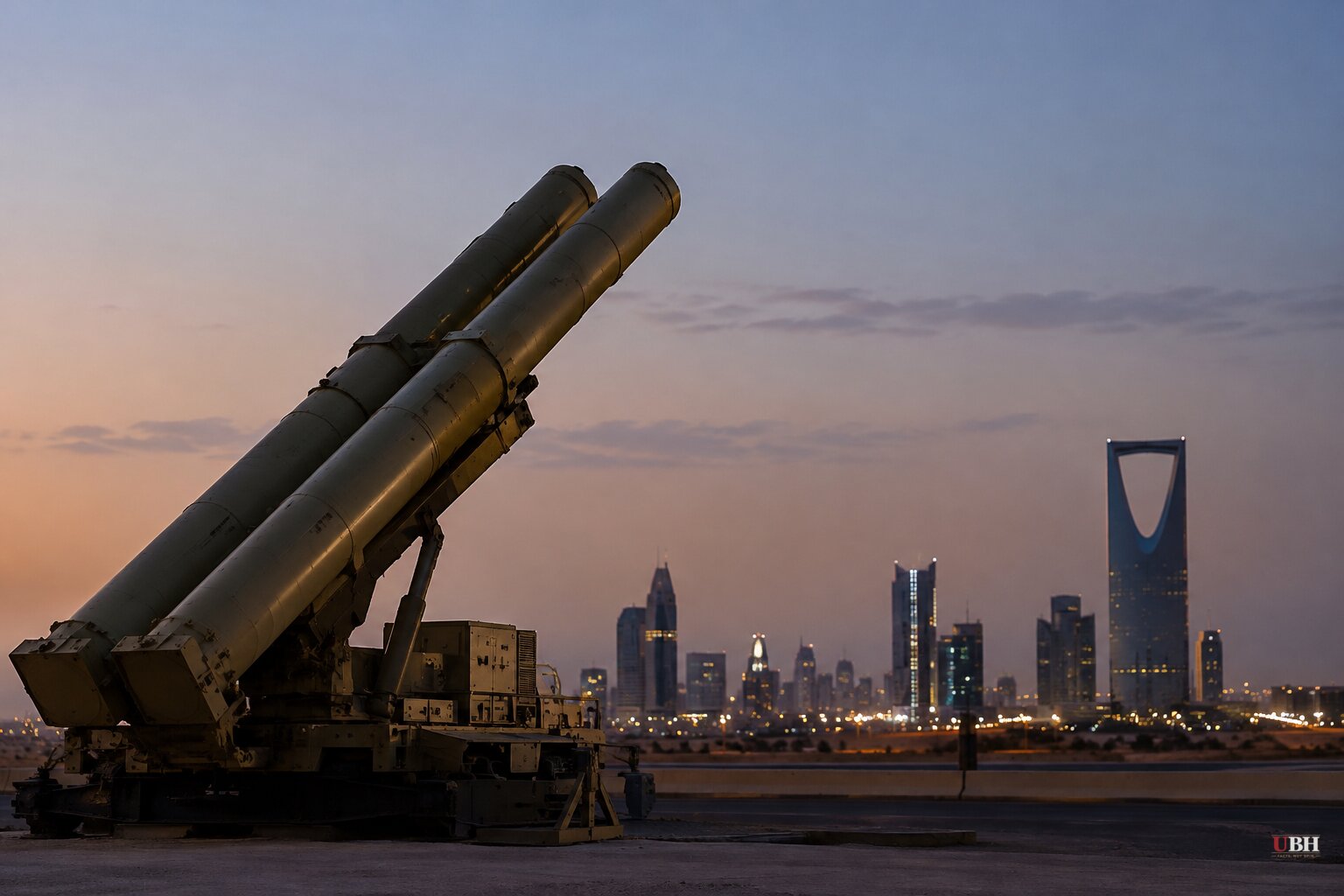
Since Saudi authorities began counting fatalities from Houthi drone and missile attacks on Sept. 23, the toll has reached 26 dead, and the strikes have not slowed. The latest round came in the early hours of Sunday, Nov. 15.
Coalition spokesman Maj. Gen. Turki al-Maliki said on X that Saudi air defenses "intercepted and destroyed two ballistic missiles launched by the Houthi terrorist militia towards Riyadh." He said the coalition also shot down three drones over the Eastern Province.
A Saudi Civil Defense alert sounded in Riyadh at 4:08 a.m. Three loud explosions followed within minutes. Authorities then issued an all-clear. No casualties or damage were reported from the Sunday interceptions.
A near-daily tempo
The Sunday strikes followed two drones the coalition said it destroyed on Saturday over Riyadh and the southern region. On Wednesday, Saudi air defenses engaged missiles and drones aimed at Riyadh, Mecca and other areas.
The Eastern Province has now drawn interceptions on Nov. 12, Nov. 13 and Nov. 15. The province holds Abqaiq, the kingdom's largest oil processing complex, and Ras Tanura, its largest export terminal. The coalition did not name an attacker for the Sunday drones. No Houthi claim for them had been reported as of publication.
The damage is mounting. A recent attack hit an administrative building belonging to Saudi Aramco in Riyadh's financial district. An earlier October strike caused extensive damage to Aramco facilities. Of the 26 deaths, 23 came in strikes on airports, according to the official tally. The Houthis have repeatedly targeted King Khalid International Airport in Riyadh.
What the Houthis say
The Houthis frame the attacks as retaliation. Military spokesman Yahya Saree has said the group is responding to Saudi airstrikes backing Yemen's internationally recognized government. On Nov. 4 he claimed Saudi Arabia had carried out 104 airstrikes and missile attacks across Sanaa and seven other governorates in 24 hours.
Saree has also rejected Saudi accounts of the fighting. On Nov. 12 he denied that the group targeted Mecca and dismissed Saudi interception claims as fabrications, saying that after "every successful operation" against Saudi oil facilities, Riyadh "resorts to fabricating" lies.
On Sunday the Houthis claimed to have shot down a Saudi coalition reconnaissance aircraft over al-Jawf with Yemeni-made surface-to-air missiles. Saree said it was the fifth aircraft the group had downed since the escalation began. The coalition has not confirmed any loss.
On Nov. 13, Saree claimed a drone strike on King Khalid airport and a pumping station on the East-West pipeline. That pipeline carries Saudi crude to the Red Sea port of Yanbu. He also claimed a ballistic missile strike on Saudi forces in Jizan, saying dozens were killed or injured. Saudi authorities have not confirmed that figure.
Ground war and the price tag
Fighting is also intensifying inside Yemen. Yemeni army spokesman Col. Majid al-Nuzaili said government forces made gains in the al-Hazm and Madghal districts of al-Jawf, and that heavy fighting continues around Marib. He claimed 321 Houthi leaders were killed or wounded in 723 targeted operations across Taiz, Lahij, Marib and al-Jawf, and that 117 Houthi military vehicles were destroyed. Those figures come from one side of the war and are unverified. The coalition also said it intercepted several drones fired at Marib. Photos from Nov. 13 showed smoke rising from a missile strike attributed to the Houthis on the outskirts of Aden.
The Wall Street Journal reported on Nov. 5 that the Houthis want $51 billion from Saudi Arabia to end the conflict. Houthi leader Abdulmalik al-Houthi laid the groundwork in March, when he put the group's damages and lost income at $57 billion. In February the Houthis claimed unpaid public salaries exceeded $13 billion. Paying those salaries was a central piece of a 2023 UN-backed peace roadmap that later stalled.
Riyadh builds its coalition
Saudi Arabia is lining up outside help. It signed a defense cooperation agreement with Syria on Nov. 4 during Syrian leader Ahmed al-Sharaa's visit to Riyadh, though neither government disclosed its terms. The Associated Press reported on Nov. 8 that Syria would send 600 troops to the kingdom's southern border with Yemen. Egypt has authorized military support for Saudi Arabia.
Riyadh is also pressing the European Union to list the Houthis as a terrorist organization. The Arab Parliament, the Arab League's consultative body, has launched a plan to isolate the group that could include a similar designation. No EU decision has been announced.
The Houthis' attacks also threaten shipping through the Bab el-Mandeb Strait. Saudi Arabia and Syria jointly called on Nov. 4 for an immediate end to actions threatening navigation in the Red Sea, the Bab el-Mandeb and the Strait of Hormuz.
It remains unclear whether the EU acts on Riyadh's terrorist-listing request, and whether the Houthis' $51 billion demand ever becomes a live negotiation. For now, neither side has reported a ceasefire channel.
Sources used for this briefing
7 links from 7 independent newsrooms (syndicated copies of the same report count once)
These are the sources it draws on, linked so you can verify.


