
Original briefings. Zero spin.
Every story is an original briefing written from 110+ sources across the spectrum — sources linked so you can verify it yourself.
 tech
Notable (6/10)
Event date: August 14, 2026
tech
Notable (6/10)
Event date: August 14, 2026
Satellite Companies Say They Cannot Book Enough Rockets, Even As Launch Prices Hit Record Lows
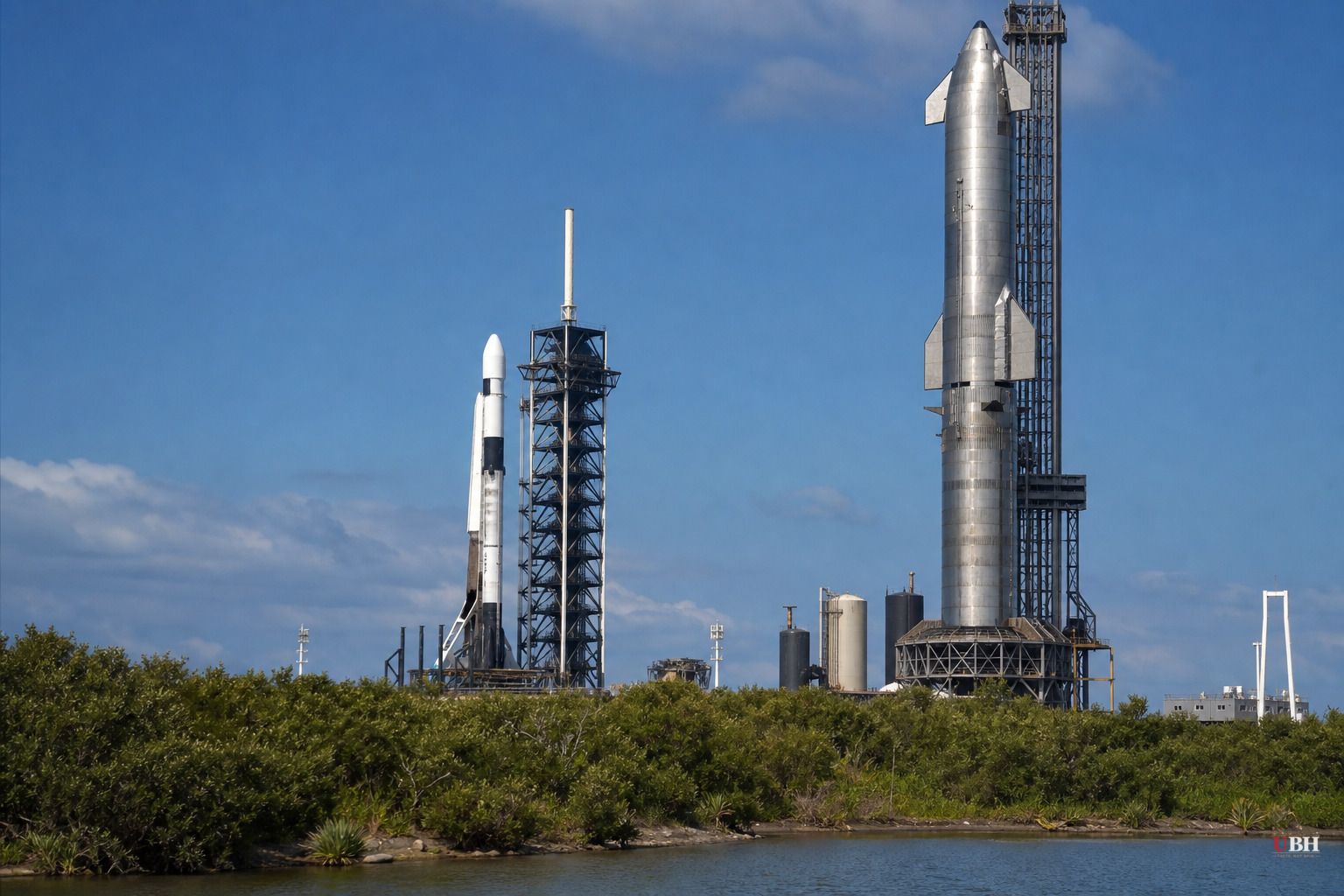
The launch industry just posted its best numbers in history. Prices are down. Launch cadence is up. And satellite operators are, in the words of one industry analyst, panicking.
Caleb Henry, director of research at Quilty Space, told Ars Technica he hears the same complaint from satellite companies constantly: they cannot get enough rockets. "What we have is an industry in panic," Henry said.
The numbers back up the paradox. Over the past three years, an average of 270 orbital rockets have launched annually, more than triple the pace of a decade ago, according to Ars Technica. Prices have never been more competitive. Yet the crunch is real and getting worse.
Ars Technica reported that Canadian satellite company Telesat has fielded requests from other firms hoping to buy into some of the 11 Falcon 9 launches Telesat already has booked for its new constellation. Telesat is saying no. Amazon has had to slow production of satellites for its Kuiper LEO constellation because so few of the dozens of launches it booked years ago are actually ready to fly, Ars Technica reported. On an earnings call last week, AST SpaceMobile executives said launch availability, not satellite manufacturing, is now the bottleneck holding back their constellation.
The demand side of this equation is not slowing down. The Commercial Space Federation projects thousands of satellite launches annually within a decade, according to Ars Technica, and market research firm Analysys Mason has forecast more than 37,000 satellites will need to reach orbit between 2023 and 2033.
SpaceX Is Both The Cause And The Bottleneck
SpaceX built this golden era almost single-handedly. It is also the company customers now worry will strangle it.
SpaceX has signaled it wants to wind down Falcon 9 operations in favor of Starship, its much larger next-generation rocket, according to Ars Technica. That should be good news given Starship's payload capacity. But there's a real concern in the industry that SpaceX will prioritize Starship flights for its own payloads, mainly next-generation Starlink satellites and orbital data centers, because those are more profitable than selling rides to competitors.
The financial numbers explain why. In the second quarter of 2026, SpaceX pulled in $7.8 billion in total revenue, and $4.3 billion of that came from Starlink, according to Ars Technica. Space services, the category that includes commercial launch, made up less than 12 percent of the total. Starship's satellite dispenser is reportedly built around Starlink's needs specifically, which Ars Technica cites as a signal of where the company's priorities lie.
SpaceX is a private company with no obligation to subsidize competitors' constellations at the expense of its own bottom line. But it leaves the rest of the launch market exposed, because no other provider has come close to matching Falcon 9's combination of price and flight frequency. If SpaceX throttles back Falcon 9 before Starship can absorb commercial customers at scale, operators like Telesat and AST SpaceMobile have few alternatives.
Rocket Lab Moves Into Europe While It Waits
While American operators wait on SpaceX, Rocket Lab is making a play for market share overseas. During its Q2 2026 earnings call, Rocket Lab announced a new German subsidiary, Rocket Lab Germany GmbH, aimed at both building satellite components domestically and offering launch services on its Electron and forthcoming Neutron rockets, according to Payload.
The timing is pointed. At least a dozen European launch startups are racing to debut new rockets before the end of the decade, largely to reduce the continent's reliance on Arianespace's Ariane 6 and Avio's Vega-C, and to build sovereign launch capability independent of SpaceX. Those efforts have been slowed by pad construction delays and on-the-pad anomalies, Payload reported.
Rocket Lab, meanwhile, has already flown 13 times this year counting its Electron rocket and suborbital HASTE variant, compared to just four combined launches from Arianespace and Avio, according to Payload.
The money gap is stark too. The European Space Agency's member states committed a combined €902.2 million in November to five launch startups under the European Launcher Challenge, intended to help those companies reach a first flight in 2027, according to Payload. Rocket Lab ended Q2 2026 with $2.13 billion in cash on hand, according to Payload, more than double that entire ELC fund by itself.
That cash advantage sets up a potential price war. ELC awardees are expected to get priority access to institutional government contracts, but Europe's commercial market may be more price-sensitive, and smaller startups not ready to compete with Rocket Lab on cost could lose out, Payload reported.
Not everyone in Europe is rattled. A spokesperson for German launcher HyImpulse told Payload, "We welcome every contribution to Europe's space ambitions," adding that its business model is built on competitive, responsive launch service for a market with strong demand across Europe. French startup HyPrSpace pushed back on the idea that Rocket Lab automatically wins a price fight, telling Payload there's no guarantee a price war benefits Rocket Lab specifically.
The open question is whether Starship reaches a commercial cadence fast enough, and with enough spare capacity beyond Starlink, to close the gap Falcon 9 leaves behind. Until then, operators with satellites built and no ride to orbit are absorbing the cost of an industry that grew faster than its own launch capacity could keep up.
Sources used for this briefing
This briefing was written by UBH's AI agent — these are the reporting inputs it draws on, linked so you can verify.


