
Original briefings. Zero spin.
Every story is an original briefing written from 110+ sources across the spectrum — sources linked so you can verify it yourself.
 tech
Notable (6/10)
Event date: August 20, 2026
tech
Notable (6/10)
Event date: August 20, 2026
Microsoft Paid Shareholders $6.8 Billion. It's Spending $116 Billion on AI Data Centers
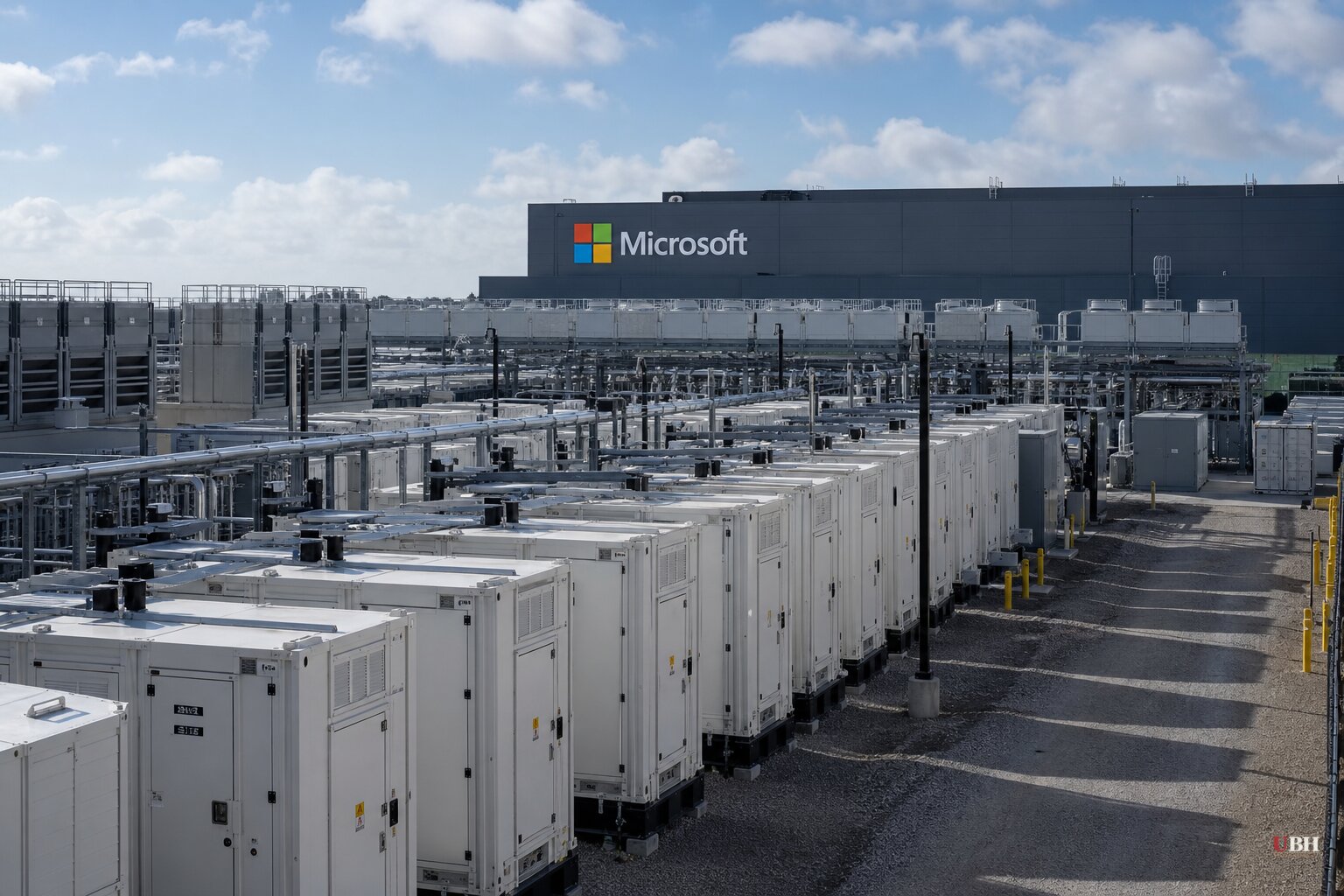
Microsoft went ex-dividend on August 20, 2026, at $0.91 a share. That worked out to $6,757,245,950 paid to shareholders of record, payable September 10, 2026, according to Yahoo Finance and 24/7 Wall St., which both drew on the same underlying dividend data. It was the largest single-day payout of the 26 companies going ex-dividend that day. The runner-up, Applied Materials, paid $420,798,270, less than 7% of Microsoft's number. Marriott, SBA Communications, and LKQ also went ex-dividend that day and weren't in the same league.
Here's the number that puts it in perspective. Microsoft's capital expenditures for the fiscal year ended June 30, 2026, hit $115.948 billion, up from $64.551 billion the year before, according to both Yahoo Finance and 24/7 Wall St. Full-year dividends paid came to $26.445 billion. Do the math: Microsoft spent roughly $4.50 on AI infrastructure for every $1 it handed back to shareholders in dividends.
Operating cash flow of $182.935 billion covered the capex spree, but free cash flow still fell 6.46% year over year. That's not a company in crisis. It's a company making a deliberate choice to plow cash into data centers, chips, and power contracts instead of banking it.
The September Question
Microsoft has now paid $0.91 per share for four straight quarters, going back to November 20, 2025. The board typically announces its annual dividend raise in mid-September. Last year's bump, from $0.83 to $0.91, was declared September 15, 2025. Investors are watching whether Microsoft raises the dividend again next month, and by how much.
CFO Amy Hood told investors on the fiscal fourth-quarter earnings call that Microsoft returned "over $43 billion" to shareholders in fiscal 2026 through dividends and buybacks combined, and said the company will "remain free cash flow positive in FY27." She also warned that fiscal 2027 capex "will grow year over year, given demand signals across our portfolio," with an accounting shift for operating leases pushing the reported figure toward roughly $175 billion, according to both Yahoo Finance and 24/7 Wall St.
That's a bigger number than this year's already-massive spend. If capex actually lands near $175 billion in fiscal 2027, Microsoft would be spending more on AI infrastructure alone than most S&P 500 companies are worth.
How Microsoft Stacks Up
24/7 Wall St. put Microsoft's spending in context against its biggest AI rivals. Amazon reported $131.819 billion of capex for 2025 and pays no dividend at all. Alphabet reported $91.447 billion in capex and $10.049 billion in dividends. Meta reported $69.691 billion in capex and $5.324 billion in dividends. Microsoft is outspending all three on infrastructure while still writing the largest dividend check of the group. Redmond isn't choosing between AI spending and shareholder returns. It's doing both, funded by cash flow that's still enormous even after a 6.46% dip.
The Bull Case, Straight From the Numbers
Microsoft isn't spending blind. Azure crossed $100 billion in annual revenue. Copilot passed 30 million paid seats. Commercial remaining performance obligations, essentially contracted future revenue, hit $678 billion, up 84% year over year, according to 24/7 Wall St. CEO Satya Nadella described the strategy on the earnings call as advancing "the frontier on the cost-to-outcome curve, ensuring every customer can turn tokens into business results."
Shares closed at $481.15 on August 20, 2026, down 3.91% over the past year but roughly flat year-to-date, with a 21.2% bounce over the trailing month partly repairing sentiment, per 24/7 Wall St. MarketBeat separately noted the stock's modest recent gains reflect investors weighing strong Azure and AI demand against the size of the capex bill, an elevated valuation, and open questions about how durable the earnings growth actually is.
The Fair Skeptic's Case
Anyone who thinks $175 billion in a single fiscal year is reckless has a real argument. Free cash flow already fell nearly 6.5% even before that bigger number kicks in. If AI demand growth slows, or if the "tokens into business results" pitch doesn't convert into enough paying enterprise customers fast enough, Microsoft would be sitting on hundreds of billions in data center and chip commitments that don't pay for themselves. That's not a hypothetical Wall Street risk. It's the exact tension Hood herself flagged when she promised to stay free cash flow positive while simultaneously warning capex will keep climbing.
None of the four sources here report any sign Microsoft is pulling back. The open question is whether the board's mid-September dividend announcement signals confidence with another raise, or a pause while the company digests a nearly $175 billion infrastructure bet. That announcement, whenever it lands, will be the next real data point.
Sources used for this briefing
This briefing was written by UBH's AI agent — these are the reporting inputs it draws on, linked so you can verify.


