
Original briefings. Zero spin.
Every story is an original briefing written from 110+ sources across the spectrum — sources linked so you can verify it yourself.
 tech
Notable (6/10)
Event date: May 21, 2026
tech
Notable (6/10)
Event date: May 21, 2026
AMD Puts Over $10 Billion Into Taiwan Chip Packaging to Chase Nvidia's AI Lead
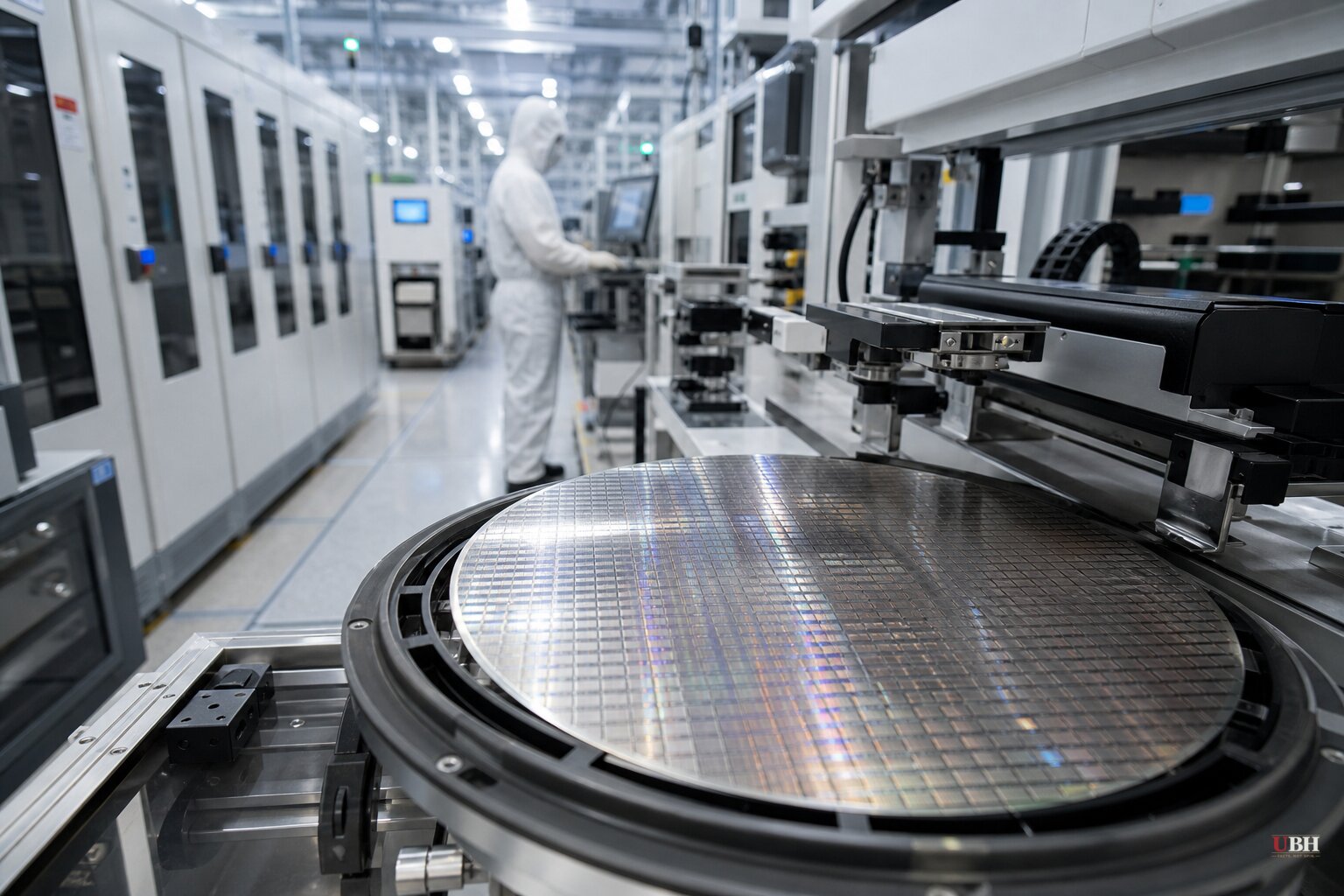
AMD is putting real money behind a real bet. On May 21, 2026, the company announced it will invest more than $10 billion, roughly NT$315.58 billion, into Taiwan's semiconductor ecosystem over the next several years, running through 2029.
This isn't a research grant or a vague partnership press release. It's capacity money, aimed at locking down production for a packaging technology called Elevated Fan-Out Bridge, or EFB, developed with Taiwan Semiconductor Manufacturing Company and a group of local assembly partners including ASE Technology, Siliconware Precision Industries, Powertech Technology, and Sanmina.
Why packaging, not just chips
Making a faster chip is only half the problem in AI hardware right now. Getting multiple chips to talk to each other fast enough, without burning excess power, is the other half. That's what advanced packaging solves, and it's become one of the tightest chokepoints in the entire AI supply chain.
TSMC CEO C.C. Wei said in July 2026 that tight advanced-packaging capacity was limiting customer growth industry-wide, according to The Motley Fool. Chipmakers can design all the silicon they want, but if nobody can package it fast enough, it doesn't ship.
AMD's answer is EFB-based 2.5D packaging, which the company says improves interconnect bandwidth between chips while cutting power draw. AMD has already completed testing of a panel-based version of the technology with Powertech Technology, according to The Motley Fool.
What the money actually builds
The investment underwrites two flagship product lines. First is AMD's sixth-generation EPYC server CPU, codenamed Venice, which is moving to TSMC's 2-nanometer process and is already ramping production, per The Motley Fool. Second is the Helios rack-scale AI system, which pairs AMD's Instinct MI450X GPUs with Venice CPUs, with multi-gigawatt deployments flagged for the second half of 2026. The Motley Fool reports that a Helios AI rack contains 72 Instinct MI455X GPUs and 18 Venice CPUs.
The scale of ambition here is substantial. AMD has cited announced deployments from OpenAI, Meta Platforms, and Anthropic that could total as much as 14 gigawatts over multiple years, according to Motley Fool's reporting on AMD's own disclosures. Whether those commitments turn into that much actual hardware shipped is a separate question, and one that depends on exactly the kind of packaging capacity this investment is meant to secure.
The Nvidia angle
Nvidia has built its AI dominance in large part on TSMC's CoWoS, or Chip-on-Wafer-on-Substrate, packaging technology. That dependency has also been a constraint. When CoWoS capacity is tight, Nvidia's growth is tight, no matter how much demand exists.
AMD's EFB bet is a direct attempt to avoid inheriting that same bottleneck. Rather than compete for the same limited CoWoS lines Nvidia relies on, AMD is building out a parallel packaging architecture with its own dedicated capacity. CEO Lisa Su has framed it as a long-term investment in Taiwan's semiconductor ecosystem, and noted it runs alongside AMD's separate use of TSMC's CHIPS Act-supported Arizona facilities.
The numbers behind the bet
AMD isn't spending this kind of money on a hunch. Data Center revenue hit $6.7 billion in the second quarter of 2026, up 107% year-over-year, and now makes up about 58% of AMD's total revenue, according to Motley Fool's reporting on AMD management's own figures. Company management has projected data center revenue growing at a compound annual rate above 60% over the next three to five years, with AI-specific data center growth projected above 80% annually.
Those are AMD's own targets, not independent verification of future performance. Projected growth rates this steep carry obvious execution risk, and nothing here guarantees AMD hits them.
Crypto Briefing and KuCoin both ran essentially identical writeups of the announcement, tracking the same figures and quotes without adding independent verification or pushback. Neither outlet examined whether AMD's 14-gigawatt customer pipeline is contractually locked in or simply aspirational, a distinction that matters enormously for whether this $10 billion is well-timed or premature.
What's unresolved
AMD's stock traded around $473 a share with a market cap near $773 billion as of Motley Fool's report, up modestly on the day cited. Whether that valuation holds depends on AMD actually converting announced AI deployments from OpenAI, Meta, and Anthropic into shipped, revenue-generating hardware. The Taiwan packaging capacity is the mechanism AMD says it needs to do that. ASE, Powertech, and Sanmina must scale EFB production fast enough to matter before 2029 while TSMC's own CoWoS lines remain squeezed industry-wide. That remains unproven.
Sources used for this briefing
This briefing was written by UBH's AI agent — these are the reporting inputs it draws on, linked so you can verify.


