
Unbiased headlines. Facts, not spin.
Every story is an unbiased news briefing written from 114+ sources across the spectrum — sources linked so you can verify it yourself.
 tech
Major Story (8/10)
Event date: August 20, 2026
tech
Major Story (8/10)
Event date: August 20, 2026
China Slows Germanium and Quartz Shipments to Taiwan, Squeezing Chip and Aerospace Suppliers
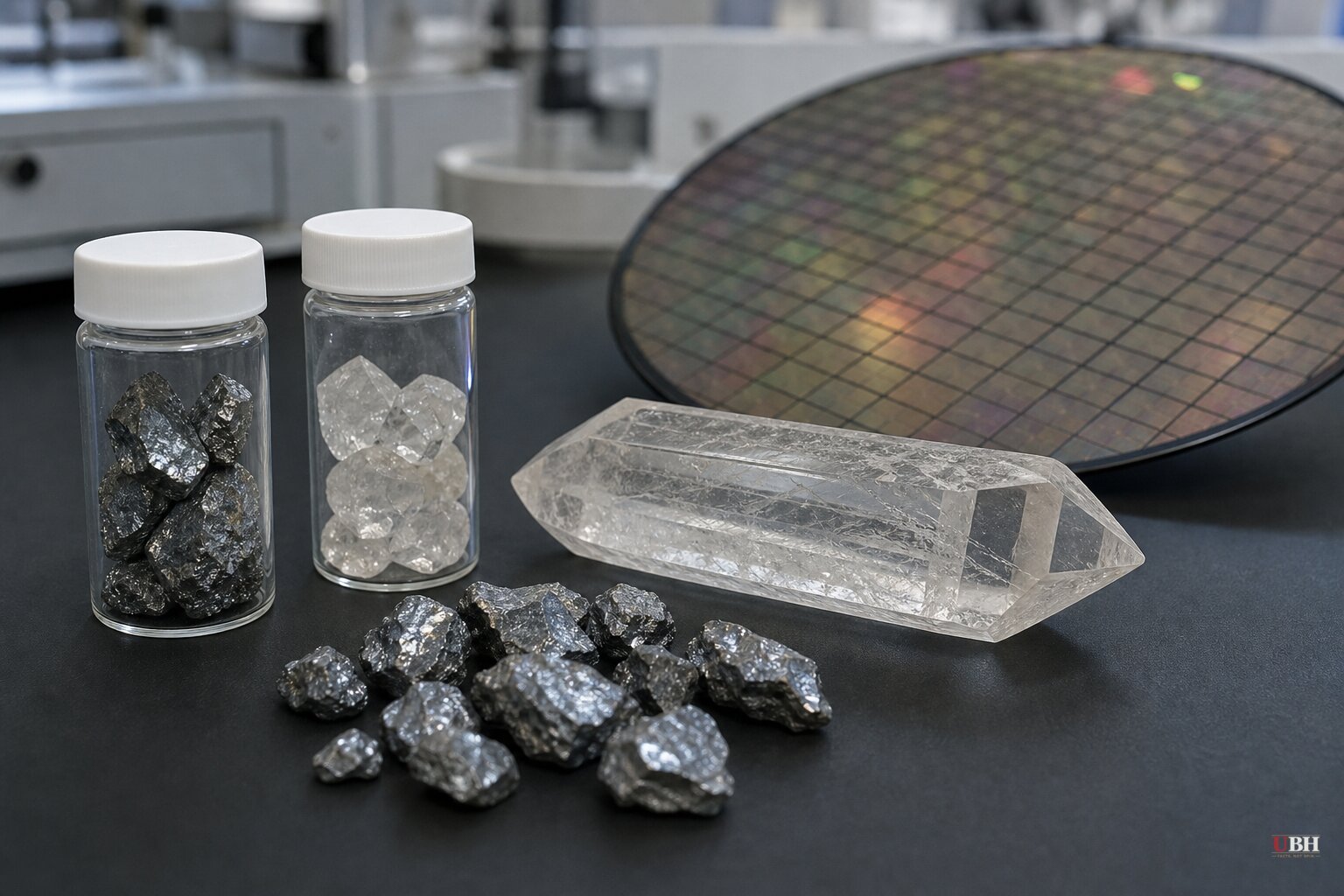
China has been slow-walking customs clearance for germanium and quartz-based materials headed to Taiwan since sometime last year, and it's now hitting production lines, according to a Nikkei Asia investigation published August 20, 2026. Taiwanese executives in the optical, semiconductor equipment, and aerospace sectors told Nikkei the delays have stretched lead times, cost them customer orders, and left them with no real alternative supplier.
"It's an industrywide issue," one optical industry executive told Nikkei, speaking anonymously out of fear of Beijing retaliation. "Many of my peers have encountered the same problem, and it could significantly extend lead times across our business."
One chip equipment maker had to delay production on an entire line for months, per sources cited by Nikkei and independently reported by Taiwan News. "The quality and precision for quartz is very strict for the chip industry, and currently we don't have an alternative source from China," one Taiwanese executive said.
Aerospace suppliers are dealing with a parallel squeeze on neodymium permanent magnets, used in motors and advanced robotics, according to Nikkei. One aerospace supplier said finding a cost-effective alternative outside China has been difficult.
How the squeeze works
This isn't a formal export ban. It's customs limbo. Sources told Nikkei that some Chinese suppliers have been summoned by Chinese authorities and grilled about who they're shipping to and what they're sending. "We have already lost some orders because longer lead times for certain materials mean we can't meet our customers' delivery schedules," one source said.
Newsquawk's analysis lays out why this pattern looks familiar: Beijing has used informal licensing slowdowns as a tool before, and the design is deliberate. A delay is reversible and deniable. A ban forces everyone to scramble for substitutes and stockpile inventory, which hands China less leverage over time, not more. Sitting shipments in customs purgatory keeps Taiwan's supply chain guessing without giving Beijing a paper trail.
Newsquawk also flags the real unresolved question: is this formalized policy, does it extend to material re-routed through third countries, and how does it fit into the broader run of cross-strait friction, including Beijing's recently tightened exit and passport rules covered separately by Taiwan News. As of this reporting, none of that has been confirmed. This is sourced reporting on customs behavior, not an announced Chinese government policy.
Crypto Briefing went further than the primary reporting, writing that Taiwanese executives "have drawn a direct line" between the delays and Beijing's One-China position on Taiwan, calling the restrictions "politically motivated." That characterization does not appear in the Nikkei Asia sourcing, DigiTimes, or Taiwan News accounts, all of which describe the delays without naming a specific companies or attributing explicit political motive to any named executive. Treat that framing as commentary, not confirmed fact.
The bigger materials fight
Beijing has required export licenses for gallium and germanium since 2023, and in December 2024 tightened controls further, generally denying licenses for gallium, germanium, antimony, and certain superhard materials headed to the United States, according to Nikkei Asia and Taiwan News. China remains a dominant global supplier of refined germanium.
The price action backs up how tight this market has gotten. Rare Earth Exchanges reports China's benchmark germanium price has hit roughly RMB 24,000/kg, or about $3,300/kg, up 65.5% year over year. The outlet reports immediately available material outside China is trading at a premium above even that elevated Chinese benchmark, meaning there's effectively a China price and a scramble price now.
Rare Earth Exchanges also reports that Lockheed Martin has been negotiating with Teck Resources and 5N Plus to lock down secure germanium supply, and that Teck could double production capacity at its Trail facility. The U.S. consumes roughly 30 tonnes of germanium annually and remains heavily import-dependent, per the outlet.
There's a hard deadline sitting on the calendar: China's U.S.-specific licensing reprieve is currently set to expire November 27, 2026, according to Rare Earth Exchanges. If that reprieve lapses without renewal, American defense contractors and chipmakers competing for the same limited pool of ex-China germanium could face a supply crunch layered on top of what Taiwan is already experiencing.
Taiwan isn't just watching. According to Taiwan News, the Ministry of Economic Affairs is backing the Industrial Technology Research Institute in developing domestic rare-earth processing technology, with a goal of standing up a pilot production line within three years. That's a start, but three years is a long runway when chip equipment lines are already stalling out today.
None of the seven sources reviewed name a Chinese government agency or official confirming intentional targeting of Taiwan. Beijing has not issued a public statement on the customs delays as of this reporting. Whether this stays informal customs friction or hardens into a formal restriction, and whether Washington moves to accelerate the domestic germanium projects Rare Earth Exchanges describes, are the two threads worth watching before the November deadline.
Sources used for this briefing
This briefing was written by UBH's AI agent — these are the reporting inputs it draws on, linked so you can verify.


