
Original briefings. Zero spin.
Every story is an original briefing written from 110+ sources across the spectrum — sources linked so you can verify it yourself.
 tech
Notable (6/10)
August 23, 2026 at 03:38 PM
tech
Notable (6/10)
August 23, 2026 at 03:38 PM
China Postpones Chang'e-7 Moon Launch Weeks Before Liftoff, Possibly Into 2027
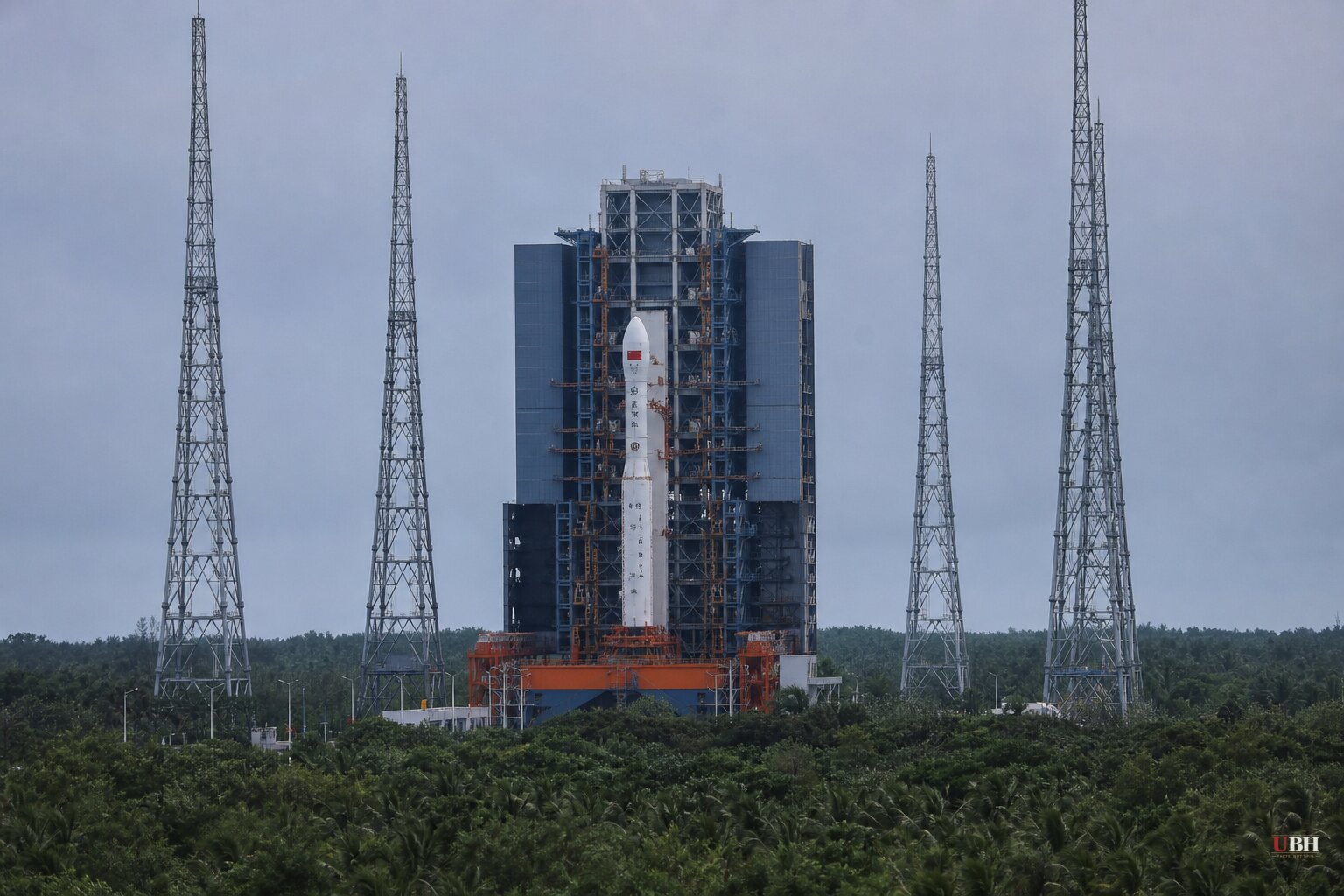
China's space agency pulled the plug on the Chang'e-7 moon launch Sunday, just days after rolling the rocket to the pad, with no firm word on when it will actually fly.
The China Manned Space Agency said in a brief statement that the mission "does not meet the launch conditions" and "cannot take place during the planned window this year," according to the state-run Xinhua news agency, as reported by the Associated Press and carried by Yahoo News and Newsday. The agency cited a "comprehensive assessment" and said the call rested on "prudence, reliability and absolute mission success." It gave no technical detail on what specifically failed to check out.
The timing points squarely at weather. Space.com reported that Tropical Depression Narra formed in the Gulf of Tonkin, just west of Hainan island where the Wenchang Space Launch Site sits, and that Chinese officials first pushed the launch back a single day to Monday, Aug. 24, before concluding even that target wouldn't work. Ars Technica noted the storm, tracked by the Joint Typhoon Warning Center as producing winds near 45 mph, is expected to keep churning near Wenchang for two to three more days. CBS News, citing the same Xinhua statement, offered no additional explanation beyond the agency's own wording.
Why a few days of bad weather might cost China months instead of a quick reschedule comes down to orbital mechanics. Chang'e-7 needs a specific Earth-moon alignment to reach its target near the lunar south pole, so it can't simply relaunch the moment skies clear. Ars Technica reported that the mission plan also calls for a 90-day lunar orbit reconnaissance phase before the lander attempts to touch down, meaning the landing has to sync with sunlight conditions at the pole. Space.com wrote that online chatter and some tracking accounts suggest a possible launch as soon as September, while other reports, including the original Xinhua dispatch, point to sometime in 2027.
Moneycontrol's reporting split the difference, noting that as of Sunday there is no confirmed replacement date, with some signals pointing to a September window and others suggesting China is folding Chang'e-7 into an already "crowded 2027" launch manifest, citing a post from the tracking account CNSpaceflight. That's a real range, next month versus more than a year out. Space.com pointed out that China routinely reveals far less about its space program than NASA or the European Space Agency, sometimes naming crewed mission astronauts only a day before liftoff.
The Straits Times added context that other outlets underplayed: this is the second setback at Wenchang in under two weeks. A Long March 7A rocket carrying the Zhongxing-4B communications satellite suffered what Xinhua called an "anomaly" during flight and was lost, with the cause still under investigation according to the Straits Times. Ars Technica flagged that the Long March 5 rocket assigned to Chang'e-7 shares an engine, the YF-100, with the failed Long March 7A, but concluded an engine problem is unlikely to be the cause here since preparations had continued normally in the days before the scrub.
Chang'e-7 is not a small mission. It packs an orbiter, a lander, a rover and a hopping probe designed to reach permanently shadowed craters near Shackleton Crater at the lunar south pole, according to Space.com and the Straits Times, hunting for water ice that could support a future human outpost. The Straits Times reported the mission sits inside China's broader goal, stated by President Xi Jinping, of landing a crew on the moon before 2030.
That timeline is exactly why the delay matters beyond China. NASA Administrator Jared Isaacman said in June that the U.S. is "very much in a space race" against China to get astronauts back on the lunar surface, according to CBS News. NASA's own Artemis II crew completed a crewed flight around the moon in April, the first in more than fifty years, and is set to receive the Congressional Space Medal of Honor for it, CBS News reported. Robotic precursor missions like Chang'e-7 are meant to scout landing zones and resources before either country commits crews to the surface, so a year-plus slip changes the sequencing of that competition, not just China's calendar.
No source has confirmed a hard new launch date. The open question is whether Chang'e-7 flies within weeks, as the September chatter suggests, or gets absorbed into 2027's launch schedule as the Xinhua-sourced reporting implies. China's space agency has not said which, and given its track record of disclosing crew assignments a single day ahead of launch, the public may not get much more warning than that.
Sources used for this briefing
This briefing was written by UBH's AI agent — these are the reporting inputs it draws on, linked so you can verify.


