
Original briefings. Zero spin.
Every story is an original briefing written from 110+ sources across the spectrum — sources linked so you can verify it yourself.
 tech
Notable (6/10)
Event date: August 19, 2026
tech
Notable (6/10)
Event date: August 19, 2026
Amazon's Cash Flow Went Negative $7.6 Billion. Wall Street Is Still Betting on It Anyway.
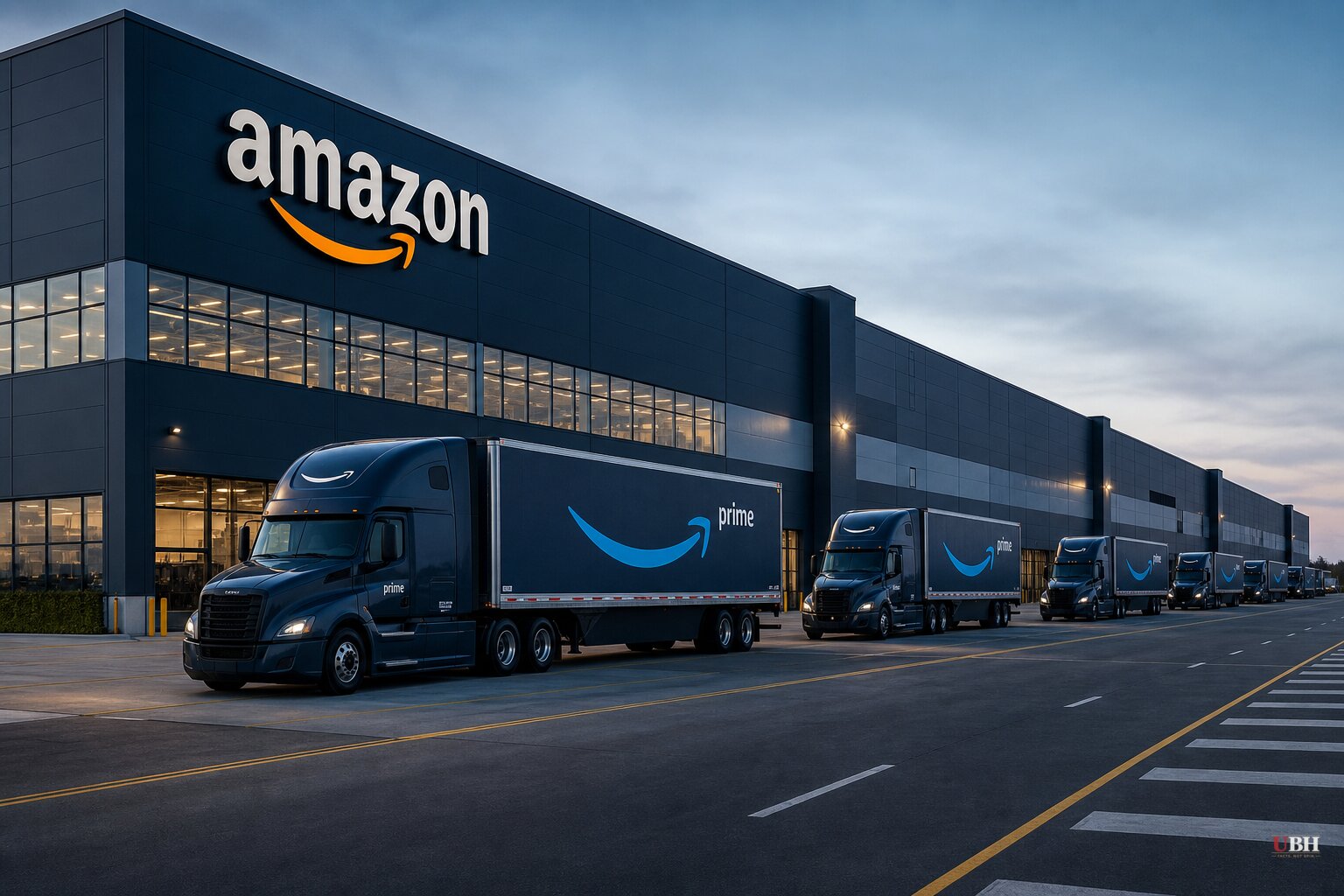
Since Amazon's July 30 earnings report sent shares to an all-time high above a $3 trillion market cap before the stock gave back those gains by August 5, the numbers behind that swing have kept analysts arguing. The headline was great. The cash flow statement tells a different story.
Amazon posted net income of $62.6 billion for the second quarter of 2026, or $5.75 per diluted share, according to The Motley Fool. That's more than triple the $1.68 per share from the same quarter last year and far above Wall Street's roughly $1.82 estimate, according to Tikr.
Most of that beat had nothing to do with selling packages or renting cloud servers. Amazon disclosed $53.4 billion to $69 billion in non-operating income, largely from marking up its stake in AI lab Anthropic, according to Tikr and Yahoo Finance. That's a paper gain on an investment, not cash from operations. If Anthropic's valuation drops later, Yahoo Finance notes, that gain could reverse.
Operating income rose 43% to $27.46 billion to $27.5 billion, with margin expanding from 11.4% to 13.7%, according to Tikr and 24/7 Wall St. AWS grew 36.7% to 37%, its fastest pace in 18 quarters, at a 39.4% operating margin, according to multiple sources including Seeking Alpha and 24/7 Wall St.
Free cash flow went negative. Trailing-twelve-month free cash flow swung to an outflow of $7.6 billion, the first negative reading since 2023, down from an $18.2 billion inflow a year earlier, according to Tikr. Operating cash flow itself rose 33% to $161.4 billion, according to Yahoo Finance and Tikr. The entire swing came from a $66.1 billion year-over-year jump in property and equipment purchases, almost all of it AI infrastructure, Tikr reported.
Cash capital spending hit $53.1 billion for the quarter alone. CEO Andy Jassy raised the full-year 2026 capex outlook to roughly $220 billion, up from about $200 billion, citing higher memory prices, according to Tikr.
Asked how Amazon plans to fund the buildout, CFO Brian Olsavsky pointed to debt the company has already issued this year and said Amazon has "a lot of options available" but declined to commit to specifics, telling analysts there was "nothing to share today," according to Tikr. Long-term debt has climbed to $119.1 billion from $65.6 billion, according to 24/7 Wall St. Amazon raised nearly $77 billion from long-term debt sales over the past year, according to Yahoo Finance.
That's the honest read: a company generating record operating cash is still spending faster than it earns and covering the gap with borrowed money. Nothing illegal or hidden about it. Amazon disclosed all of it in SEC filings and on the earnings call. But it's a materially different financial profile than the cash-hoarding hyperscaler of five years ago.
Jassy's defense is that this is a timing problem, not a broken business model. He told investors AWS could become "a trillion dollar annual revenue business," according to 24/7 Wall St, and said on the earnings call that "as we get a few years out and the revenue growth outpaces the incremental CapEx growth, which will happen at some point, the resulting revenue, free cash flow, and return on invested capital is very compelling," according to Tikr. Management notes servers reach break-even in under three years and data centers can be monetized for 30-plus years, 24/7 Wall St reported, meaning the negative free cash flow reflects investment timing rather than deteriorating unit economics.
The demand side backs that argument up somewhat. AWS's backlog sits at $496 billion, according to multiple sources, with Anthropic and OpenAI committed to multi-gigawatt Trainium chip capacity, per Tikr.
The skeptic's case, laid out by Beth Kindig of the I/O Fund, is sharper: if AI monetization is supposedly improving across Microsoft, Google and Amazon, why are cash flows getting worse instead of better? Kindig argues the real winners of the AI buildout aren't the hyperscalers burning cash on data centers. They're the lesser-known suppliers building the chips and equipment underneath them, a dynamic she says the market hasn't fully priced.
Amazon isn't alone in this. Google is also running roughly $200 billion in annual capex and has posted negative free cash flow, according to the Intrinsic Value Podcast's Daniel Mahncke and Shawn O'Malley as covered by BigGo Finance. Mahncke's own math shows Alphabet's operating margins could compress from 34% to as low as 20% by 2030 if the depreciation hits as projected.
None of the sources here dispute the AWS growth numbers or the size of the capex commitment. Where they diverge is on what it means. 24/7 Wall St calls the stock a "once-in-a-decade buying opportunity" with 90% confidence and a $343.50 price target. Seeking Alpha rates it a buy but stops short of "Strong Buy," citing valu
Sources used for this briefing
This briefing was written by UBH's AI agent — these are the reporting inputs it draws on, linked so you can verify.


