
Original briefings. Zero spin.
Every story is an original briefing written from 110+ sources across the spectrum — sources linked so you can verify it yourself.
 tech
Notable (6/10)
Event date: August 20, 2026
tech
Notable (6/10)
Event date: August 20, 2026
Schools Are Spending Billions on AI Tools Nobody Has Proven Actually Work
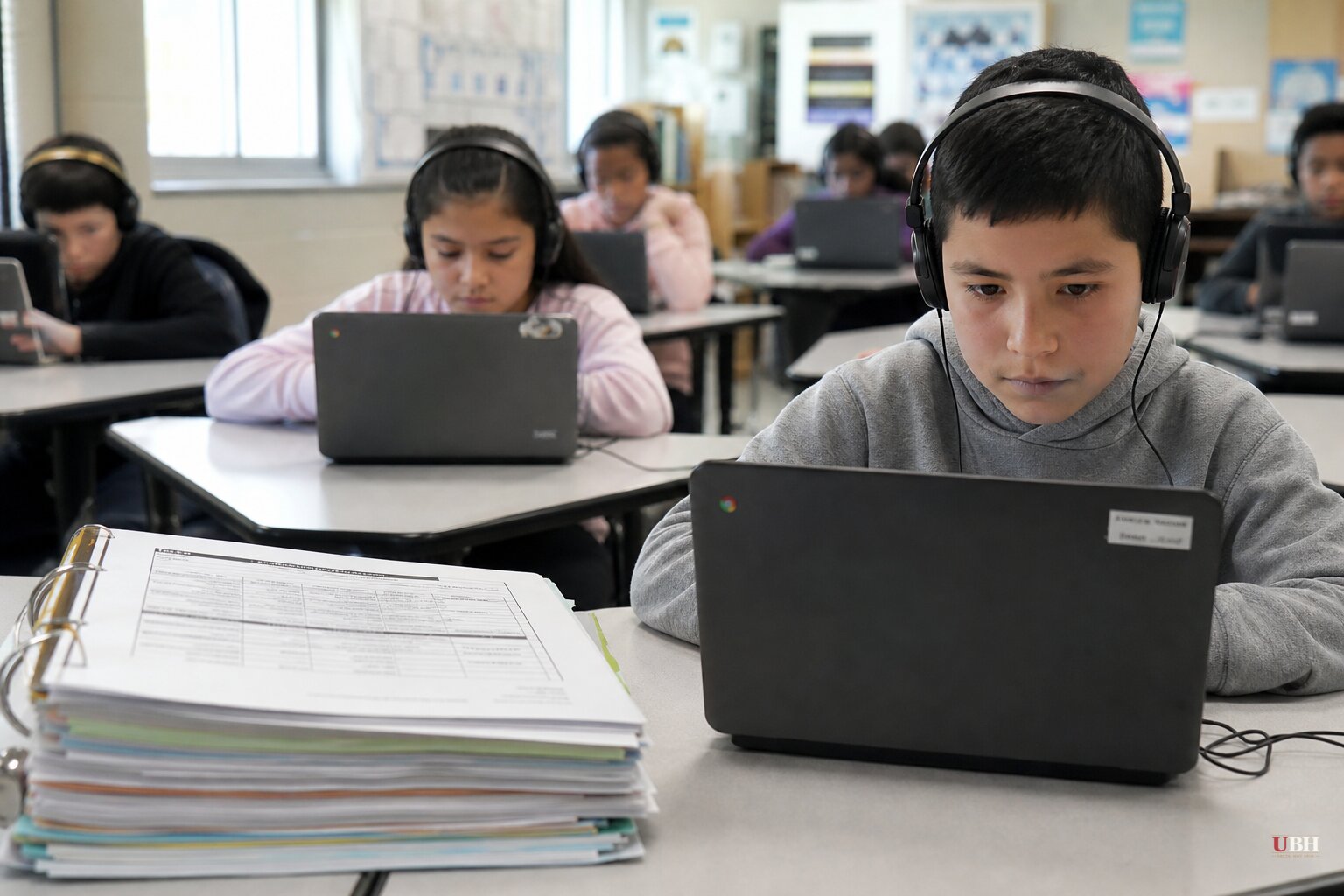
The U.S. education technology market pulled in almost $48 billion in 2024 and is projected to top $90 billion by 2030, according to Grand View Research. The AI slice of that alone generated about $2.5 billion last year and is expected to exceed $15 billion by 2033. School districts are buying in fast. Whether any of it actually helps kids learn is a much murkier question.
Mark Schneider, a nonresident senior fellow at the American Enterprise Institute, told Stateline the core problem is an information gap. "There's always an asymmetry between what the providers know and what the districts know," Schneider said. Vendors know their product. Superintendents are stuck guessing.
Some districts are trying to fix that themselves. Scott Langford, superintendent of Sumner County schools in Tennessee, said his district piloted an AI literacy tool called Coursemojo after middle school reading scores plateaued. They started small: a five-day micro-pilot in one 6th grade classroom before expanding to half the grade. Langford's bar for a good tool is blunt: "Most of them don't really do much that drives any kind of change for students." Sumner kept using Coursemojo after the pilot showed enough promise.
Allentown School District in Pennsylvania, a large urban district, built a two-phase vetting process. Superintendent Carol Birks told Education Week the non-negotiables are student safety and data security, with vendors required to prove how they handle user-generated data. It's also the exception, not the rule, according to Education Week's reporting, which notes many districts are largely left to sort this out on their own.
Washington Weighs In, Sort Of
The U.S. Department of Education released a "Dear Colleague Letter" this year telling states to judge classroom technology by instructional value, not screen time or novelty. Assistant Secretary of Elementary and Secondary Education Kirsten Baesler said cell phones and "algorithm-driven social media distract students from learning," while instructional tools "should be judged by their impact on learning, not simply whether they happen on a screen."
The letter, which followed a July 2025 letter from Secretary of Education Linda McMahon laying out five principles for AI use (educator-led, ethical, accessible, transparent, and protective of student data), asks vendors to answer five straightforward questions before districts buy their product. It's guidance, not a mandate. States and districts still make the actual purchasing decisions, and the federal letter says as much.
Washington dictating which reading app a school in Tennessee should buy is not a good use of federal power, and states are closer to their own classrooms. But guidance without enforcement teeth means districts are still on their own when a vendor's sales pitch outpaces the evidence behind it.
The Bigger Pattern
A TIME essay by a longtime education historian and former public school teacher lays out the uncomfortable history here. Charter schools were supposed to close achievement gaps through competition. A 2023 Stanford University study found modest gains, nothing like the transformation promised. Teach For America was supposed to fix under-resourced schools by parachuting in elite young teachers; high turnover limited its reach. No Child Left Behind, signed in 2002, promised testing and accountability would close gaps across race and class. It mostly succeeded in exposing the gaps, not closing them, while pushing schools to teach to the test.
Now AI is the reform of the moment, championed by figures like Microsoft CEO Satya Nadella and investor Marc Andreessen, who argue a 24/7 personalized tutor for every student could finally narrow achievement gaps. There's real reason to think AI tutoring tools could help kids who don't have access to expensive human tutors today. Personalized, on-demand instruction has genuine potential.
But the pattern the TIME piece documents is real: each previous reform delivered some genuine benefit and fell well short of the transformation it was sold on. Schools alone have never solved problems rooted in poverty, housing instability, and unequal access to opportunity outside the classroom. There's no evidence yet that AI is different, because the tools are too new and the vetting process too thin for anyone to have real data.
Districts like Sumner County and Allentown are building their own evaluation processes because nobody handed them one that works. The federal guidance tells states to demand evidence, educator judgment, and transparency. It doesn't supply a national list of what's proven effective, doesn't require vendors to publish independent study results, and doesn't stop the next school year from starting the same way this one did: districts writing checks for tools nobody has proven work, in a market moving faster than anyone can audit it.
Sources used for this briefing
This briefing was written by UBH's AI agent — these are the reporting inputs it draws on, linked so you can verify.


