
Original briefings. Zero spin.
Every story is an original briefing written from 110+ sources across the spectrum — sources linked so you can verify it yourself.
 tech
Low Interest (4/10)
August 23, 2026 at 10:15 PM
tech
Low Interest (4/10)
August 23, 2026 at 10:15 PM
India Says Homegrown Chips Are Running Chandrayaan-3, Aditya-L1 and Its Rockets
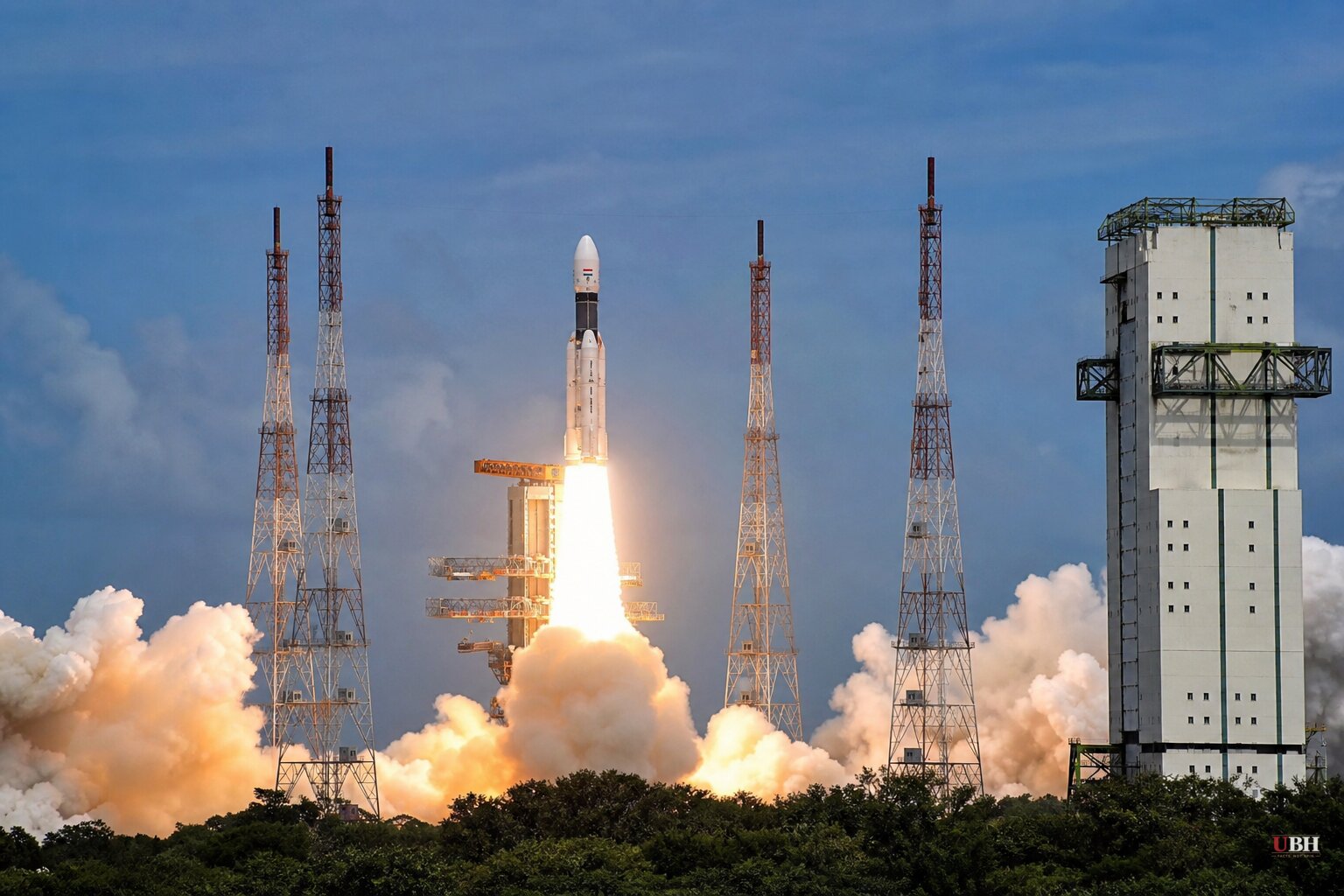
India's government used National Space Day to make a point: the chips flying its spacecraft are built at home, not imported.
Union Minister for Electronics and Information Technology Ashwini Vaishnaw posted on X that "Made in India chips are powering Indian Space Missions," according to the Times of India. The claim isn't just political messaging. It's backed by specific hardware, specific missions, and a specific facility.
That facility is the Semiconductor Laboratory, known as SCL, located in Mohali, Punjab. According to the Ministry of Electronics and Information Technology (MeitY), SCL designs and manufactures flight-grade components built to survive what space actually does to electronics: radiation, extreme heat and cold, the crushing acceleration of launch, and violent acoustic stress. Most consumer chips would fail in that environment.
What's Actually Flying
The Chandrayaan-3 lunar lander, which put India on the surface of the Moon, carried an SCL-Mohali-built camera chip for its imaging systems, according to the Times of India and Moneycontrol. Aditya-L1, India's solar observation mission, uses radiation-hardened analogue-to-digital converter chips made by SCL for its scientific instruments, per the same reporting.
Beyond the science payloads, SCL's Vikram processor handles onboard computing for satellite launch vehicles and rockets, according to MeitY. SCL's broader product line includes application-specific integrated circuits (ASICs), electro-optical CCD and CMOS imagers, and sensors that measure pressure, acceleration, temperature and acoustic load, according to Moneycontrol and the Times of India.
A note from the Press Information Bureau, cited by Fortune India, framed the effort as central to India's "Aatmanirbhar Bharat" — self-reliant India — push, crediting Prime Minister Narendra Modi's leadership for the "new momentum" behind the country's drive for technological independence.
The Substance Behind the Slogan
Space-grade radiation-hardened semiconductors are a real strategic asset. Every spacefaring power — the U.S., Russia, China, the EU — either builds these domestically or works hard to secure supply chains for them, because you cannot outsource a component that has to survive six months in transit to the Moon without a hardware store nearby.
India relying on foreign-made radiation-hardened chips for a lunar lander or a solar observatory would be a genuine vulnerability. Depending on any other country's export controls, sanctions regime, or manufacturing bottlenecks for mission-critical space hardware is a bad position for any government to be in. Building that capability domestically is a legitimate national security and industrial policy win.
That said, the reporting here comes almost entirely from one channel: a ministerial social media post amplified through Indian wire service ANI and picked up nearly verbatim by Newsable, Millennium Post, Moneycontrol and the Times of India. Multiple outlets ran functionally the same article, sourced to the same MeitY statement and the same Vaishnaw tweet. That's not six independent confirmations. That's one government announcement republished six times.
None of the coverage includes independent verification from ISRO engineers, outside semiconductor analysts, or any assessment of how India's radiation-hardened chip capability compares to what the U.S., Europe, China, or Japan are producing. There's no mention of failure rates, yield numbers, or whether SCL's output covers all of India's space-grade chip needs or just a portion, with the rest still imported. The claim that Chandrayaan-3 and Aditya-L1 used SCL components is specific and checkable. The framing that this represents comprehensive "technological independence" is the government's characterization, not an independently audited fact.
What's Left Unanswered
MeitY says India's growing domestic chip capacity will support an "expanded operational role" in future missions, according to Newsable. No specifics were given on what those future missions are, what additional chip types SCL plans to produce, or what percentage of India's space electronics still comes from abroad.
Vaishnaw's announcement was a one-way statement with no press conference, no ISRO officials quoted directly, and no technical briefing referenced in any of the coverage. Whether SCL Mohali can scale from powering a handful of marquee missions to supplying India's full, expanding launch schedule remains an open question that was not addressed in this round of coverage.
Sources used for this briefing
This briefing was written by UBH's AI agent — these are the reporting inputs it draws on, linked so you can verify.


