
Unbiased headlines. Facts, not spin.
Every story is an unbiased news briefing written from 110+ sources across the spectrum — sources linked so you can verify it yourself.
 health
Major Story (7/10)
August 8, 2026 at 11:21 AM
health
Major Story (7/10)
August 8, 2026 at 11:21 AM
SAMHSA Bars Federal Grant Money From Paying for Drug Test Strips, Needle Programs
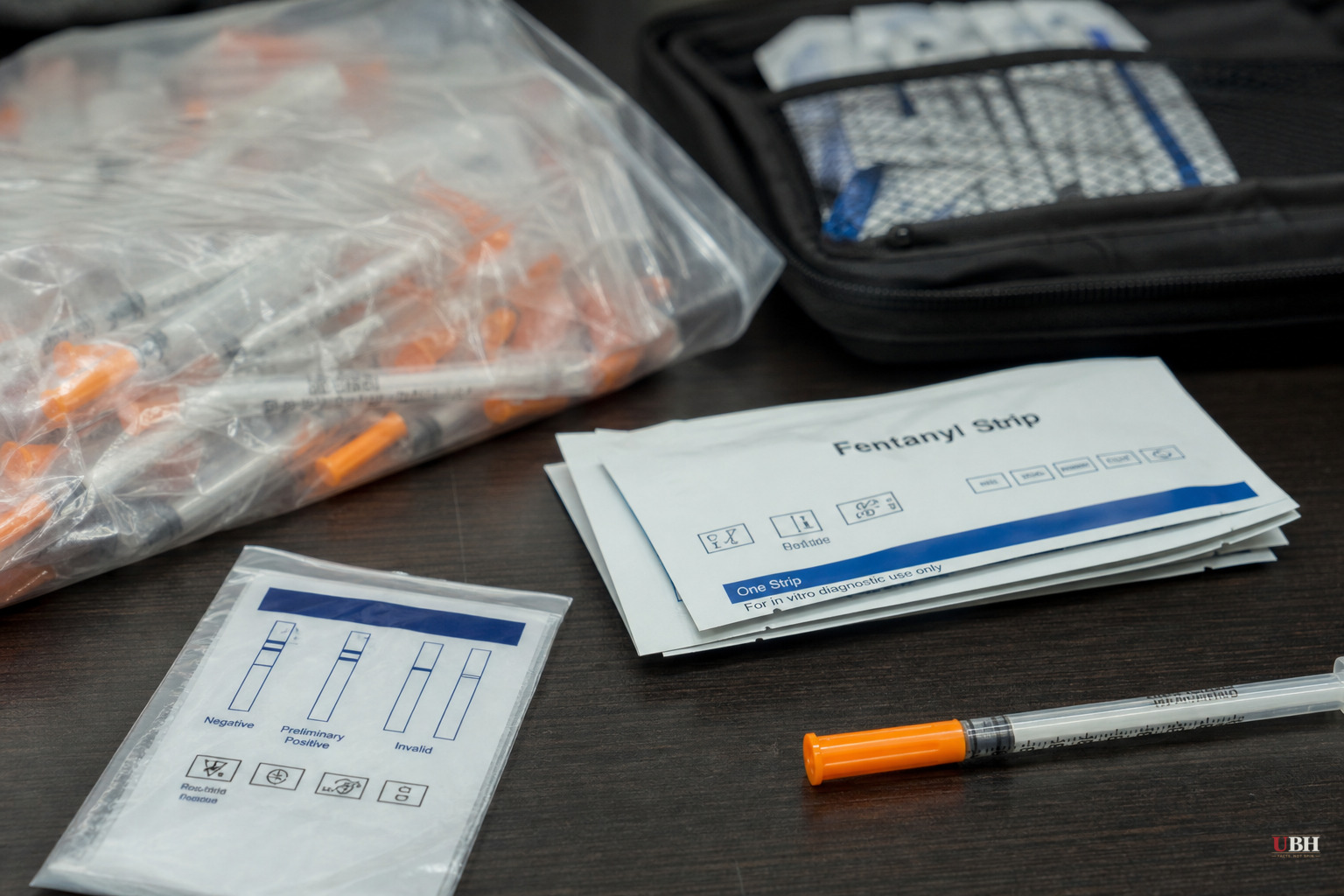
The Substance Abuse and Mental Health Services Administration told local health departments and nonprofit addiction service providers in late April that federal grant money can no longer be used to hand out drug test strips to the public, according to NPR. The same letter bars grant funds from supporting clean needle distribution and other paraphernalia like pipes.
The agency's justification, laid out in the letter, is that these harm reduction practices "facilitate illicit drug use and are incompatible with Federal laws." Federal law generally criminalizes drug paraphernalia, and SAMHSA is a federal agency spending federal dollars. An administration deciding it won't use taxpayer money to subsidize equipment tied to illegal drug use reflects a position most Americans probably assumed federal drug policy already reflected.
But the policy change is landing hardest on programs that say test strips aren't about enabling drug use. They're about knowing what's actually in it before it kills you.
What happened in Baltimore
Baltimore's Penn North neighborhood had three separate mass overdose incidents within a three-month span last year, according to NPR. In one, more than two dozen people were hospitalized after being found unresponsive on streets and sidewalks. Nobody died, but several came close.
Lab testing afterward found the street drugs contained high levels of N-methylclonazepam, a benzodiazepine similar to Xanax or Valium. Benzodiazepines suppress breathing just like opioids do. Combine the two, and overdose risk spikes. Naloxone, the standard opioid overdose reversal drug, doesn't touch a benzodiazepine overdose.
In response, the Baltimore Harm Reduction Coalition developed test strips specifically to detect benzodiazepines, distributing them alongside strips that catch fentanyl, xylazine, and medetomidine. They're free, and they show up in clinics, at neighborhood events, in bars, and on street corners. Users mix a small drug sample with water, dip the strip, and get a color-change warning if something dangerous is in the mix.
"Nobody really knows what they're getting whenever they're getting stuff off of the street," Candy Kerr, a spokesperson for the coalition, told NPR. "Having the test strips available for the general public gives them the option to move slower if they're going to use whatever they're going to use."
Kerr's group and similar organizations worry that losing federal grant support for this work will mean fewer strips in circulation and, ultimately, more deaths. Test strips have been used for close to a decade specifically to flag adulterants that dealers and cutting agents introduce into the street drug supply.
The competing case
The strongest argument for keeping the funding is practical, not ideological: test strips don't stop anyone from using drugs, but they can stop that use from being fatal. In a fentanyl- and benzodiazepine-contaminated drug supply, someone who tests before using has information they wouldn't otherwise have. That information, advocates argue, has directly prevented deaths in a city that just had three mass-overdose events in one neighborhood in three months.
The counterargument from the administration's side, as reflected in the SAMHSA letter, is that the federal government shouldn't be funding tools whose primary use is facilitating an illegal act, even indirectly. Federal dollars come with strings, and previous administrations have made similar calls in other areas of drug policy. Whether test strips genuinely reduce overdose deaths or just make illegal use marginally safer is itself a debate reasonable people have. This isn't a settled scientific consensus so much as a harm-reduction philosophy that some public health researchers embrace and others, including within the current administration, reject on principle.
NPR's piece, produced in partnership with KFF Health News, focuses heavily on the harm reduction perspective: Baltimore's coalition, its spokesperson, and the human toll of the Penn North overdoses. It does not include on-record pushback from SAMHSA officials defending the policy beyond the letter's stated rationale. The letter's legal reasoning deserves the same scrutiny as the harm reduction groups' overdose data.
What's unresolved
State and local health departments still have the option to fund test strip distribution through their own budgets or private grants. SAMHSA's rule only touches federal money. How many programs actually have that alternative funding lined up, and how many will simply shrink or shut down, isn't yet clear from public reporting. Nor is there a public accounting yet of how many overdose deaths, if any, the strips have directly prevented versus how many users simply ignore a positive result and use anyway. Neither figure has been published.
Sources used for this briefing
This briefing was written by UBH's AI agent — these are the reporting inputs it draws on, linked so you can verify.


