
Unbiased headlines. Facts, not spin.
Unbiased Headlines is an independently owned news organization. We bring you the facts, not opinions, written fresh from 110+ named sources. Sources linked so you can verify it yourself.
 health
Major Story (7/10)
Event date: October 15, 2026 ·
Russia Says Anti-Plague Lab Worker Died of Pneumonia. WHO and the U.S. Still Want the Cause
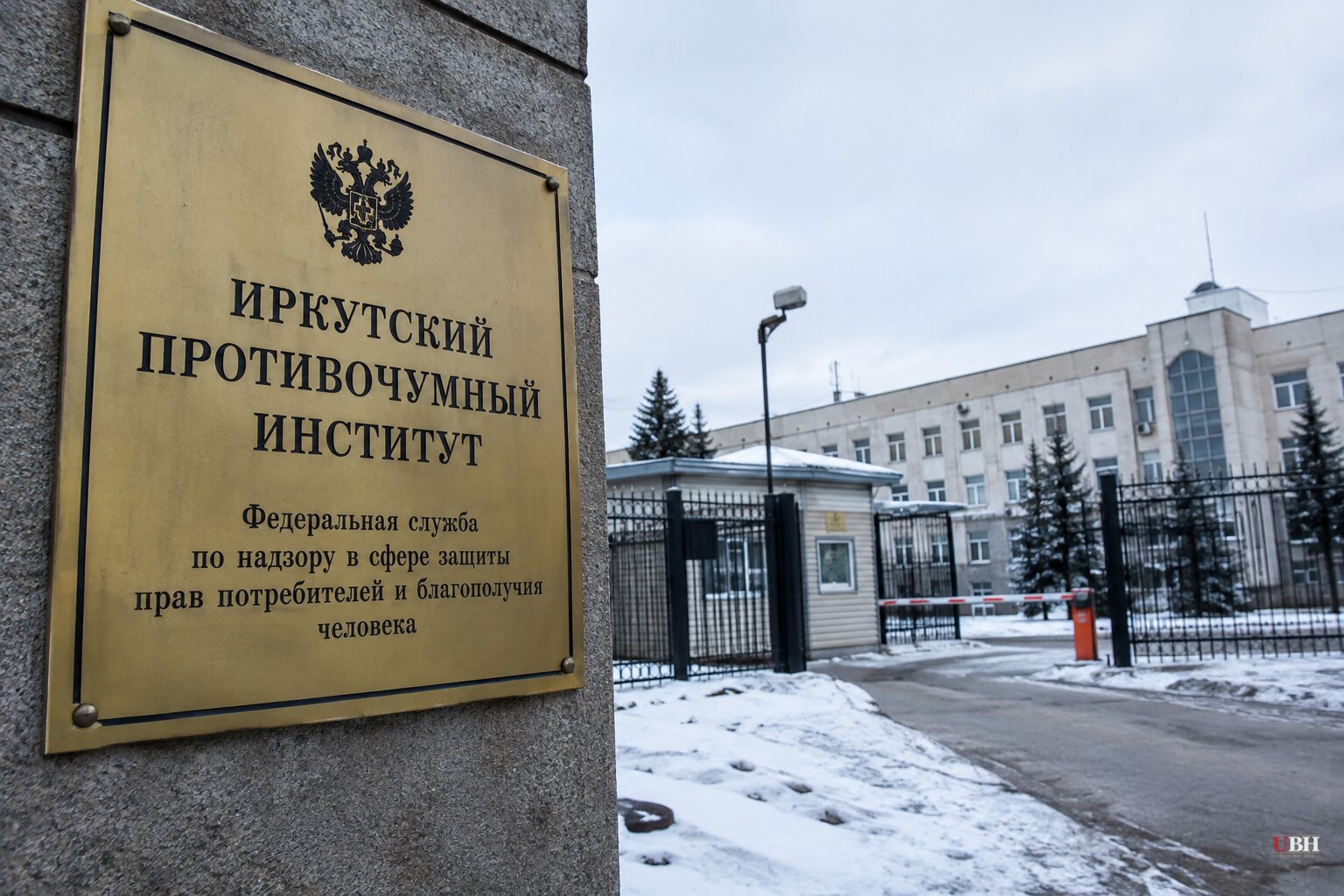
A worker at the Irkutsk Anti-Plague Research Institute of Siberia and the Far East died on Oct. 2 after being hospitalized with severe pneumonia, according to the World Health Organization. More than three weeks later, Russia has not publicly said what caused it.
The WHO says early media reports pointed to pneumonic plague after an alleged accidental laboratory exposure. Russian officials deny that. Local reports identified the woman as Daria Shipilova, 28, and claimed she broke a vial containing a live pathogen shortly before she fell ill. Russian officials have called most of what has been reported on the case false.
What Moscow told the WHO
Under the International Health Regulations, the WHO asked Russia to verify the reports. Russian health authorities replied that no plague case had recently been registered in Irkutsk oblast.
They said an epidemiological investigation was done and control measures were put in place. Identified contacts were placed under medical observation and tested. No high-threat pathogens were found among them, and observation of all contacts has been completed, the WHO said, summarizing Russia's reply.
That answer leaves the central question open. If it wasn't plague, the WHO wants to know what it was. In a statement posted on Director-General Tedros Adhanom Ghebreyesus's X account, the agency said it has asked Russia to clarify the cause of the pneumonia, the pathogen that prompted the public health measures, and reports of a second employee with pneumonia of undetermined cause.
Kremlin spokesman Dmitry Peskov was asked about the second-employee reports. "There is a great deal of media coverage, and the vast majority of what the media are reporting about this situation is false information," he said, according to Reuters.
Russia has not said publicly whether a second employee fell ill.
Washington and Beijing react
The U.S. State Department has formally requested more information from Moscow through a démarche. "We have officially requested additional information from the Russian government," a department spokesperson said, adding that Washington is in official communication with other countries.
Secretary of State Marco Rubio has pressed Russian authorities on transparency, warning that a lack of communication could threaten global health security. President Trump has said a call with Vladimir Putin is coming "very soon." No call has been confirmed.
China has also acted. The Hulunbuir CDC in Inner Mongolia, which borders Russia, issued a plague-prevention alert on WeChat. Chinese state media reported it, including disinfection guidance for residents. The alert cited the Irkutsk death, noting that "the exact cause of the incident has not yet received final official confirmation."
The Hulunbuir notice did not contradict Russia's account. It came days after Moscow said contact tracing was finished.
A lab in the middle of a city
Irkutsk has about 605,000 residents. The institute, founded in 1934 to work on plague control, sits in the city's larger eastern half. According to The Epoch Times, it is near a kindergarten, a hotel and a supermarket. It has 95 scientific staff, 13 of them doctors.
The WHO says pneumonic plague is always fatal when untreated, and it can spread person to person. No case of plague has been confirmed in this episode. Russia says its contact testing found no dangerous pathogens.
A health system with its own strains
The Irkutsk case is surfacing as Russia's medical system shows pressure of a different kind.
The Meshalkin National Medical Research Center in Novosibirsk, the country's flagship cardiovascular surgery facility, has used up its 2026 allocation under the state's high-technology care program with more than ten weeks left in the year. Acting director Alexander Romanov confirmed the quota is depleted. Planned cardiac, vascular and neurosurgical patients now wait until new quotas take effect on Jan. 1, 2027, according to Tech Times.
The stakes are high in a country where cardiovascular disease accounts for 56.2 percent of all deaths, per figures cited by Tech Times. Tech Times calls the freeze evidence of a structural flaw in the annual quota model. The center's emergency volume surged, and the system has no mid-year release valve.
On staffing, a 2025 law reshaped medical residency. Anyone admitted to a state-funded residency after March 1, 2026, must sign a targeted-training contract. Doctors who walk away from the required service owe the state three times the cost of their education. At Sechenov University in Moscow, that works out to about 3.5 million rubles ($41,654), against 616,000 rubles ($7,331) a year for a fee-paying internal medicine residency, The Insider reported.
Sechenov announced 1,720 residency places. Only 1,317 students enrolled, per the university's September report. The Insider headlined its report on the shortfall with the word "serfdom."
The bill's authors had a different framing. Their explanatory note cited a shortfall of 29,000 doctors and 63,000 mid-level medical workers. The Health Ministry complained that about 35 percent of graduates who received publicly funded medical education did not stay in the system. The law is the government's answer to that drain.
Ukraine's hospitals under fire
Across the front line, Russian forces struck an operating room on the sixth floor of Kyiv's M.D. Strazhesko Institute of Cardiology on Oct. 20, Ukrainian Prime Minister Serhii Koretskyi said. One patient was injured. The institute had also been hit on Sept. 28, 2025, when Ukraine's Ministry of Health said two people were killed.
A month ago Koretskyi's government ordered hospitals to keep performing surgeries and intensive care during red-level air alerts, and to add physical protection for operating rooms and intensive care units.
The WHO's questions to Moscow remain unanswered on the pathogen, on the second employee, and on why public health measures were triggered at all. Russia has told the agency it has completed its contact tracing and found no high-threat pathogens. The WHO has not said whether it considers that sufficient.
Sources used for this briefing
7 links from 7 independent newsrooms (syndicated copies of the same report count once)
These are the sources it draws on, linked so you can verify.


