
Unbiased headlines. Facts, not spin.
Unbiased Headlines is an independently owned news organization. We bring you the facts, not opinions, written fresh from 110+ named sources. Sources linked so you can verify it yourself.
 health
Notable (5/10)
Event date: October 17, 2026 ·
Russia Confirms Another Mpox Case Near Moscow as Chinese Border City Issues Plague Precautions After Siberian Lab Worker's Death
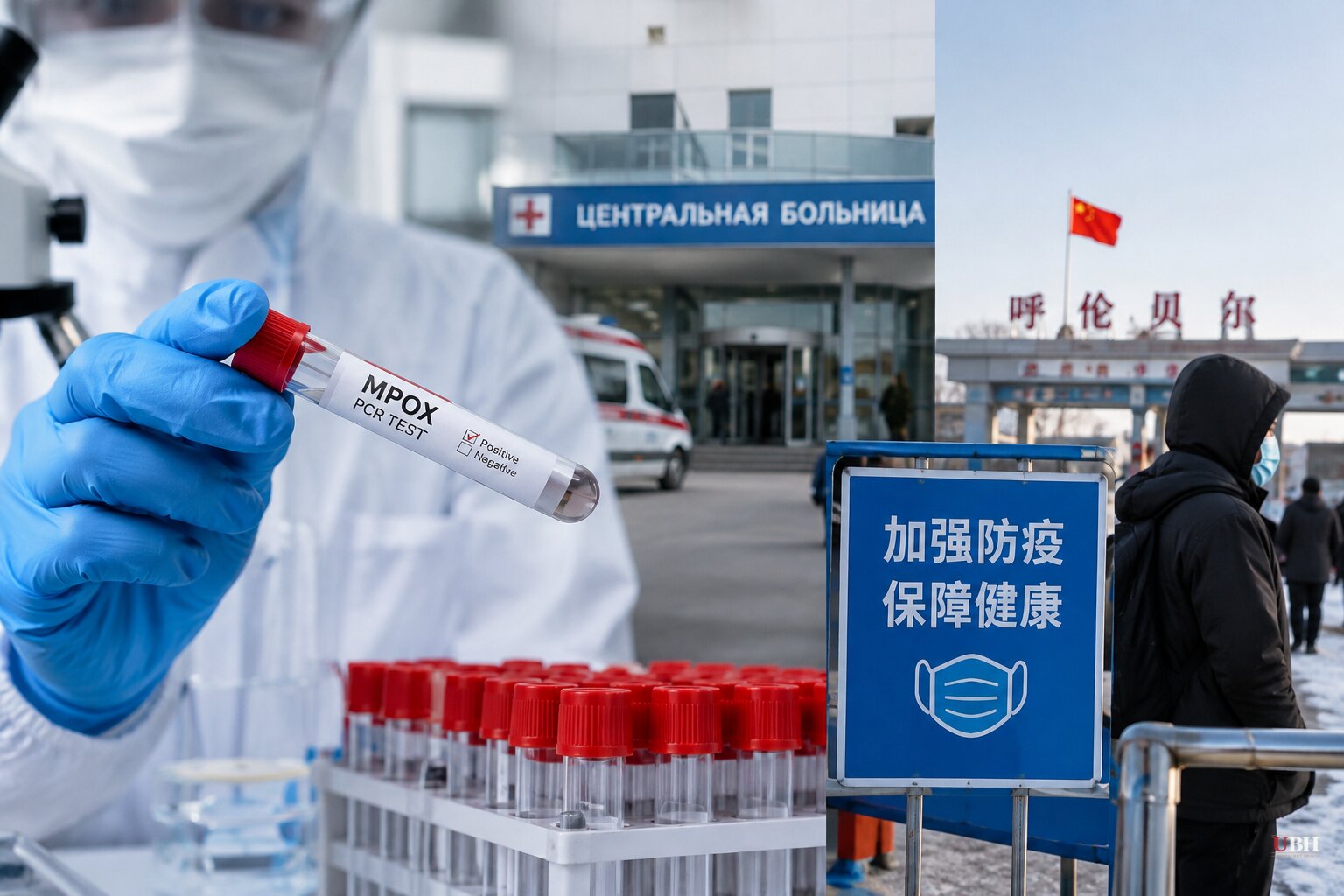
Two separate disease stories are running out of Russia right now. One is a confirmed mpox case near Moscow. The other is a plague scare in Siberia that has spilled across the Chinese border as precaution, rumor and official silence.
They are not connected. Mpox is a viral infection and plague is bacterial. They share a geography and a shortage of hard answers.
Mpox cases near Moscow
Domodedovo Central Hospital announced on Telegram today, Nov. 1, that a 38-year-old man with confirmed mpox was admitted to its infectious diseases department. He arrived with fever, a rash and swollen lymph nodes. Lab tests confirmed the virus. The hospital rates his condition as satisfactory and says he is receiving symptomatic treatment.
Rospotrebnadzor, Russia's consumer protection and public health regulator, has launched an epidemiological investigation to find the source of the infection and trace his contacts.
"We act strictly according to protocols, patients receive high-quality medical care. There is no threat to other patients and staff," said Andrey Osipov, the hospital's chief physician.
Osipov's hospital said this was its third mpox case in the past month and its eighth in two years. Russian doctors describe the infection as rare in the country, with most detected cases imported.
The case follows an Oct. 15 Rospotrebnadzor statement. That day the agency said it had opened an investigation after a suspected mpox case in the Moscow Region and hospitalized five contacts for observation and testing. Reports at the time said the five had no symptoms and their test results were pending. Disinfection measures were ordered.
Neither Rospotrebnadzor nor the hospital has said whether today's confirmed patient is linked to the October contact cluster. Russian outlets also reported on Oct. 17 that five people were hospitalized in St. Petersburg with a suspected case. That is a separate event.
The Irkutsk death
In early October, Daria Shipilova, 28, died in Irkutsk, Siberia. She worked at the Irkutsk Anti-Plague Research Institute. Russian authorities said she died of pneumonia of unknown origin and have offered no further explanation.
Local reports claimed she broke a vial or test tube containing a live pathogen shortly before she died. Russian government officials denied that, calling most of the information in circulation false. Russia later said it had completed contact tracing and monitoring and found no new cases in the affected area.
That leaves a real gap. A young employee of a plague research institute died, the stated cause is "unknown," and the only public account of how comes from officials who also dispute the rumors around it. Russian authorities have not published any findings that would settle the question either way.
China's reaction
The Hulunbuir Center for Disease Control and Prevention in Inner Mongolia, which borders Russia, put plague prevention protocols in place. Its notice, posted on WeChat, said the reports of the Irkutsk death had drawn "widespread international attention." It added that the exact cause "has not yet received final official confirmation." It cited the institution involved and the area's natural plague background as reasons for the public health risk discussion.
Chinese state media outlet Global Times reported that the city issued guidelines for residents, including disinfection in public places. Global Times also noted that Hulunbuir has documented no human plague case since 1927.
The notice does not contradict Moscow. It does name the Shipilova case as the trigger. It came after Russia said its contact tracing was finished, and no Chinese outlet has explained the timing.
Rumors and a confidentiality policy
Further south, the picture is murkier. Social media posts in China have claimed that two people died of pneumonic plague in Shanghai and Chongqing after arriving from Russia this month. The most widely shared post came from someone who says he works at a Chinese P4 laboratory. No health authority has confirmed any such cases, and no verified evidence for them has been presented.
The Epoch Times spoke with a Chengdu resident, Sun Jingyang, who used a pseudonym out of fear of reprisal. He said a doctor at a fever clinic in Shuangliu District on Oct. 11 mentioned a person who returned from Russia, fell ill and died, and said the case "might be related to the plague." Sun said the local CDC later phoned him to ask about symptoms. This is one man's account, and the Epoch Times has not independently confirmed it.
A male staff member at the Shuangliu District CDC denied that a plague investigation was underway there and called the online claims rumors. He acknowledged that phone screening was being conducted, mainly asking people whether they had a fever.
He also said that if someone contracts plague, is hospitalized or dies of it, the policy requires confidentiality, which he called "an official secret."
That policy is the problem. A rule that treats confirmed plague cases as state secrets makes it impossible for the public to tell a rumor from a cover-up. The denial and the confidentiality policy came from the same staff member in the same conversation. Nobody has presented evidence that plague has reached China, and there is no way for outsiders to check.
What is still open
Two things are outstanding. Rospotrebnadzor has yet to report what its investigation finds about the source of the Domodedovo patient's infection and who he contacted. Russian authorities have also yet to publish a definitive cause of death for Shipilova. Until they do, the plague rumors in China have nothing official to answer them.
Sources used for this briefing
7 links from 7 independent newsrooms (syndicated copies of the same report count once)
These are the sources it draws on, linked so you can verify.


