
Unbiased headlines. Facts, not spin.
Unbiased Headlines is an independently owned news organization. We bring you the facts, not opinions, written fresh from 110+ named sources. Sources linked so you can verify it yourself.
 health
Major Story (8/10)
Event date: October 26, 2026 ·
Congo Ebola Outbreak Passes 10,000 Confirmed Cases in Under 200 Days, Health Ministry Data Shows
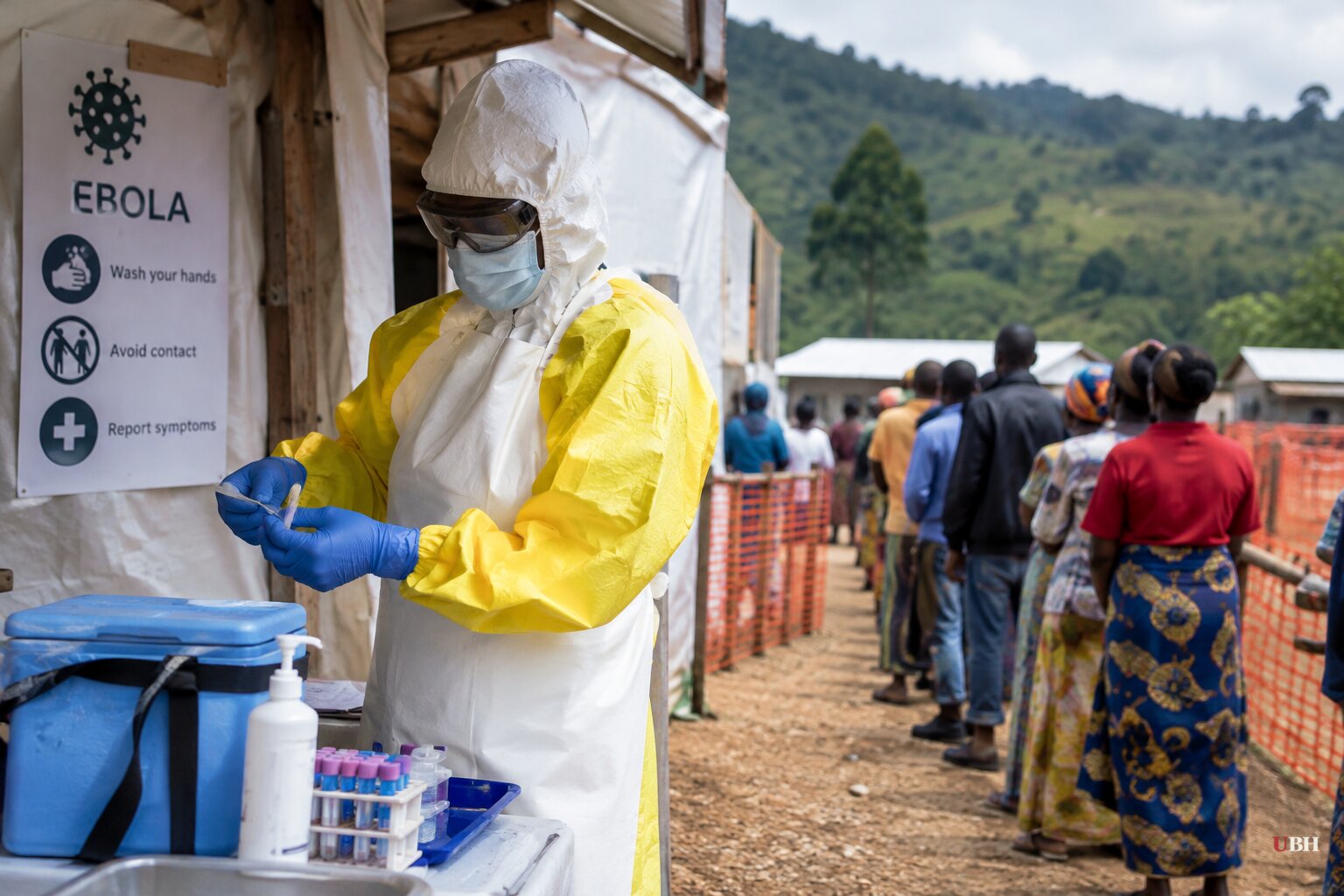
The Ebola outbreak in the Democratic Republic of the Congo has passed 10,000 confirmed cases since May, according to data from the country's Ministry of Health released last Tuesday, Oct. 27. Nearly half of those infected have died.
On day 187 of the outbreak, the official count stood at 10,060. For comparison, the West Africa epidemic of 2014 to 2016, the deadliest on record, produced 28,000 cases and 11,000 deaths over more than two years. On day 186 of that epidemic, just 544 cases had been recorded.
A different virus, and no vaccine yet
This outbreak is not caused by the virus behind the West Africa epidemic. It is the Bundibugyo virus, one of six known species in the Ebola genus and one that has caused only two other known outbreaks.
The West African epidemic was driven by the species now simply called Ebola virus, and an effective vaccine was developed and deployed to help end it. Experts quoted by The Associated Press are hopeful a vaccine for this outbreak will become available next year. Nothing is available now.
Cases are flat, not falling
About 400 to 500 new confirmed cases are being reported in Congo each week, and that figure appears to be holding steady. Dr. Boghuma Titanji, an infectious disease specialist at Emory University, said it is good news that "cases are not rising exponentially," at least for now.
"But they're not coming down, either," she said. "It's at a plateau. And the plateau is at a very, very high set point."
The cumulative numbers still climb every week. A flat line at 400 to 500 cases a week keeps adding thousands of infections over a month or two.
Contact tracing is not keeping up
Public health authorities consider an outbreak under control when 95% of new cases come from people already known and monitored as contacts of earlier cases. Congo is nowhere near that. Roughly 80% of new cases are emerging from unknown sources, and fewer than a quarter come from people known to have been in contact with an infected person.
At least half of all deaths have been among people who were never admitted to a treatment center, according to The Associated Press. Health workers sometimes spend more time persuading local communities to cooperate than providing care. Distrust of the government is part of the problem.
Unidentified chains of transmission mean people are spreading the disease while no one is watching them.
Spread beyond Congo
About 30 confirmed cases have already appeared in other countries. France, Kenya, Nigeria and Uganda have all reported cases tied to the Congo outbreak.
At a virtual summit of African health ministers last Wednesday, Africa CDC Director-General Dr. Jean Kaseya said the continent is "not winning" the fight against Ebola and needs to do more. He wrote on X that ministers agreed to "prepare every country, coordinate across our borders and keep those borders open while watching them closely."
Projections differ. Some experts say there are reasons to worry this could become the worst Ebola outbreak in history. Others do not think it will reach that level. Researchers are working on updated projections.
Justin Lessler, a University of North Carolina researcher who studies outbreak dynamics, said the risk of cases outside Congo will grow if the outbreak is not tamed. Some researchers say current circumstances make significant problems unlikely in most other countries. Travel restrictions like those imposed by the United States can make it harder for the virus to leave Africa, and experts say many places where an infected traveler surfaces should be able to isolate the patient and trace contacts quickly.
Nigeria's imported case
Nigeria confirmed its first case of the current outbreak on Oct. 20, when laboratory tests detected the Bundibugyo virus in a woman who had traveled from Uganda. The Nigeria Centre for Disease Control and Prevention (NCDC) has identified 62 contacts.
In its latest situation report, the NCDC said those contacts are scheduled to finish follow-up on dates ranging from Oct. 31 to Nov. 13. The agency has tested 18 samples since confirmation. One was positive, from the index case. The other 17 were negative: 15 from contacts and two from suspected cases.
The NCDC said it has mapped and trained additional contact tracers and plans to assess more contacts for possible evacuation to a quarantine facility. It has expanded its contact-identification strategy and reviewed its case definitions. The National Incident Management System has been activated under Coordinating Minister of Health Prof. Muhammad Ali Pate, and an Incident Action Plan has been finalized.
Nigeria's contact monitoring runs through Nov. 13. Congo's weekly count over the same stretch will show whether the plateau holds, and the updated projections researchers are preparing will show how large the outbreak could still get.
Sources used for this briefing
7 links from 7 independent newsrooms (syndicated copies of the same report count once)
These are the sources it draws on, linked so you can verify.


