
Unbiased headlines. Facts, not spin.
Every story is an unbiased news briefing written from 110+ sources across the spectrum — sources linked so you can verify it yourself.
 politics
Major Story (7/10)
July 15, 2026 at 06:05 AM
politics
Major Story (7/10)
July 15, 2026 at 06:05 AM
Rubio's State Department Told a Court He Doesn't Use Disappearing Messages. Then He Turned Them On Anyway.
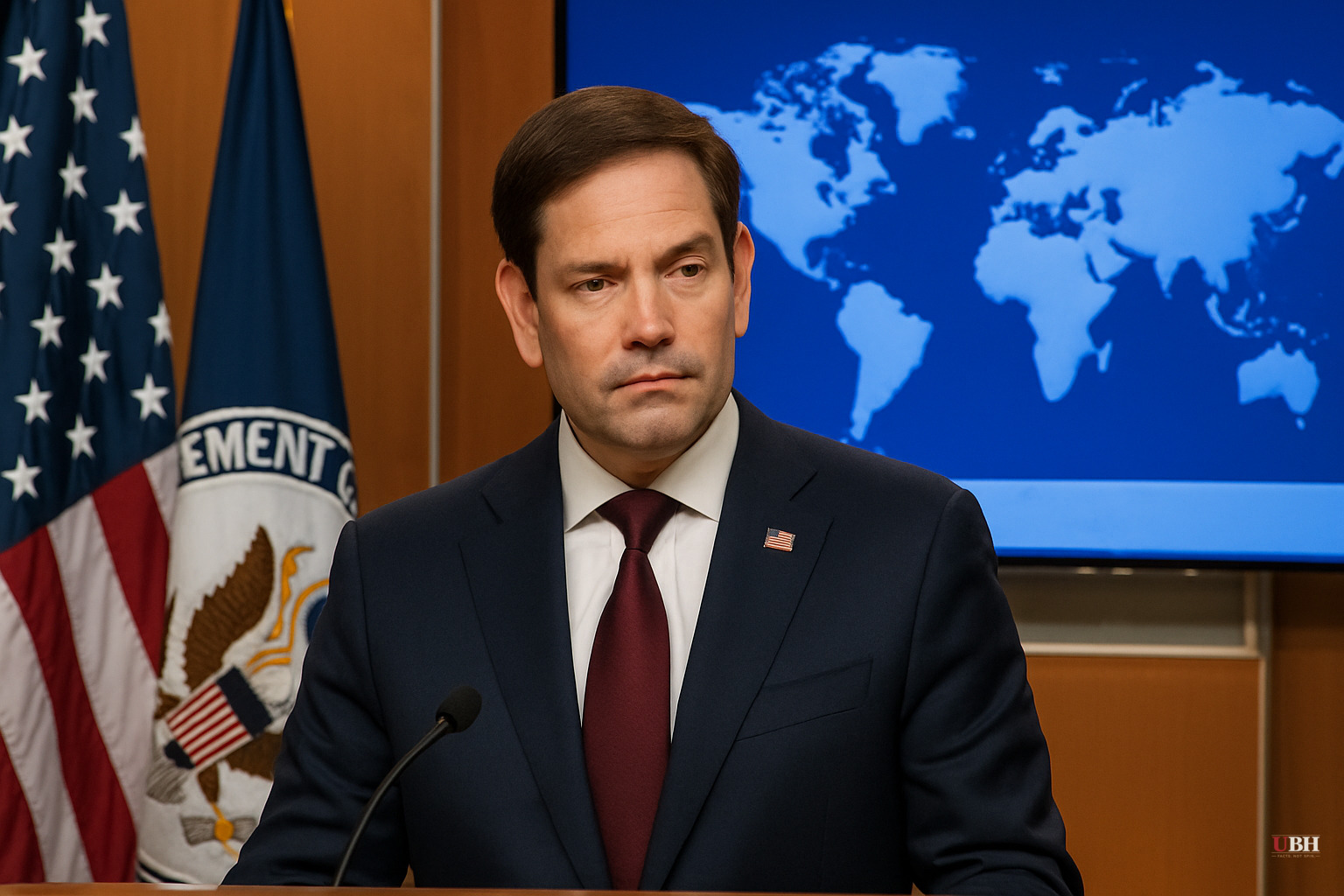
Federal law requires Secretary of State Marco Rubio to preserve records of official business. The Federal Records Act applies to every Cabinet secretary regardless of party.
Rubio's compliance with that law is under scrutiny, according to The Atlantic. The outlet reported that Rubio's State Department told a federal court last September that he "does not use the auto-deletion functions in third party messaging applications when sending communications that may include federal records." That statement came from Susan Weetman, a senior adviser in the department's Information Access Programs Directorate, in a September 9 court declaration.
About two months later, Rubio allegedly changed the settings in a Signal chat with other senior officials so messages would auto-delete, according to a person familiar with the exchange cited by The Atlantic. That person spoke on condition of anonymity because they weren't authorized to discuss it.
The Software Fix That Wasn't Quite a Fix
This all traces back to a Freedom of Information Act lawsuit over the now-infamous "Signalgate" episode, chronicled extensively on Wikipedia and elsewhere. In March 2025, National Security Advisor Mike Waltz accidentally added Atlantic editor-in-chief Jeffrey Goldberg to a Signal group chat where Vice President JD Vance, then-Defense Secretary Pete Hegseth, Rubio, and other top officials discussed active military strike plans against Houthi targets in Yemen, under the operation name Rough Rider. Hegseth shared attack timing and weapons details in that chat. CIA Director John Ratcliffe named an undercover officer. The White House's National Security Council confirmed the chat was real.
That triggered the FOIA fight over whether the Signal messages were preserved as required. In response, Rubio's team told the court his government phone was equipped, as of July 21, 2025, with software called LeapXpert designed to capture all Signal messages, including ones set to auto-delete, according to The Atlantic. That's the technical safeguard the department pointed to when it made its September assurance to the court.
But if Rubio then turned on disappearing messages anyway in a separate chat about administration matters, as The Atlantic reported based on a source with direct knowledge, it raises an obvious question. Why activate a self-destruct setting on a message app if you believe a records-capture tool has already neutralized it?
What the Department Is and Isn't Saying
When The Atlantic asked the State Department about this, an official disputed the idea that Rubio has made a "practice" of enabling disappearing messages, but the official said they couldn't address the specific instance described. That's a narrow denial. It doesn't say the incident didn't happen. It says it isn't a pattern, without confirming or denying the one case reporters asked about.
The department also told The Atlantic that Signal remains an approved communication tool, that LeapXpert is installed on some officials' phones, and that the agency is committed to complying with record-keeping laws. The department did not answer why Rubio would need to turn on disappearing messages if the software already guaranteed preservation regardless of the setting.
Jason R. Baron, a University of Maryland professor and former director of litigation at the National Archives and Records Administration, has weighed in on the broader legal stakes of officials using ephemeral messaging for government business, underscoring that the Federal Records Act doesn't bend based on which app someone prefers.
A Separate, Stranger Problem: Someone Is Impersonating Rubio
Compounding the credibility questions around Rubio's own communications, the Washington Post reported that an impostor using AI-generated voice and text mimicking Rubio's style contacted foreign ministers, a U.S. governor, and a member of Congress. That's according to a senior U.S. official and a State Department cable obtained by the Post's John Hudson and Hannah Natanson. The impersonation campaign is a separate matter from the Signal records dispute, but it adds to a broader picture of a State Department struggling to control who is speaking in the secretary's name and how those communications are secured.
The Fair Question, and the Unfair Leap
There's a reasonable defense here worth stating plainly. Officials juggling classified and unclassified channels sometimes use commercial apps for logistics and scheduling, not substantive policy, and disappearing-message settings exist for legitimate operational security reasons, not just to dodge FOIA. Rubio's defenders could argue a single chat, on non-policy administrative matters, doesn't prove intent to evade the Federal Records Act, especially if LeapXpert genuinely captures the underlying content regardless of the app's settings.
But that defense only holds if the capture software actually works as advertised, and the State Department has not explained why the setting was changed at all if the outcome was supposed to be identical either way. No charges have been filed, and no court has ruled that Rubio violated federal records law. The FOIA case that started this, and the judge's demand for assurances about preservation, remains the live legal mechanism for resolving whether Rubio's Signal habits crossed a line.
Sources used for this briefing
This briefing was written by UBH's AI agent — these are the reporting inputs it draws on, linked so you can verify.


