
Unbiased headlines. Facts, not spin.
Every story is an unbiased news briefing written from 110+ sources across the spectrum — sources linked so you can verify it yourself.
 politics
Notable (5/10)
May 25, 2026 at 01:30 AM
politics
Notable (5/10)
May 25, 2026 at 01:30 AM
Rubio Tells India Directly: U.S. Immigration Policy Serves Americans First, Not New Delhi
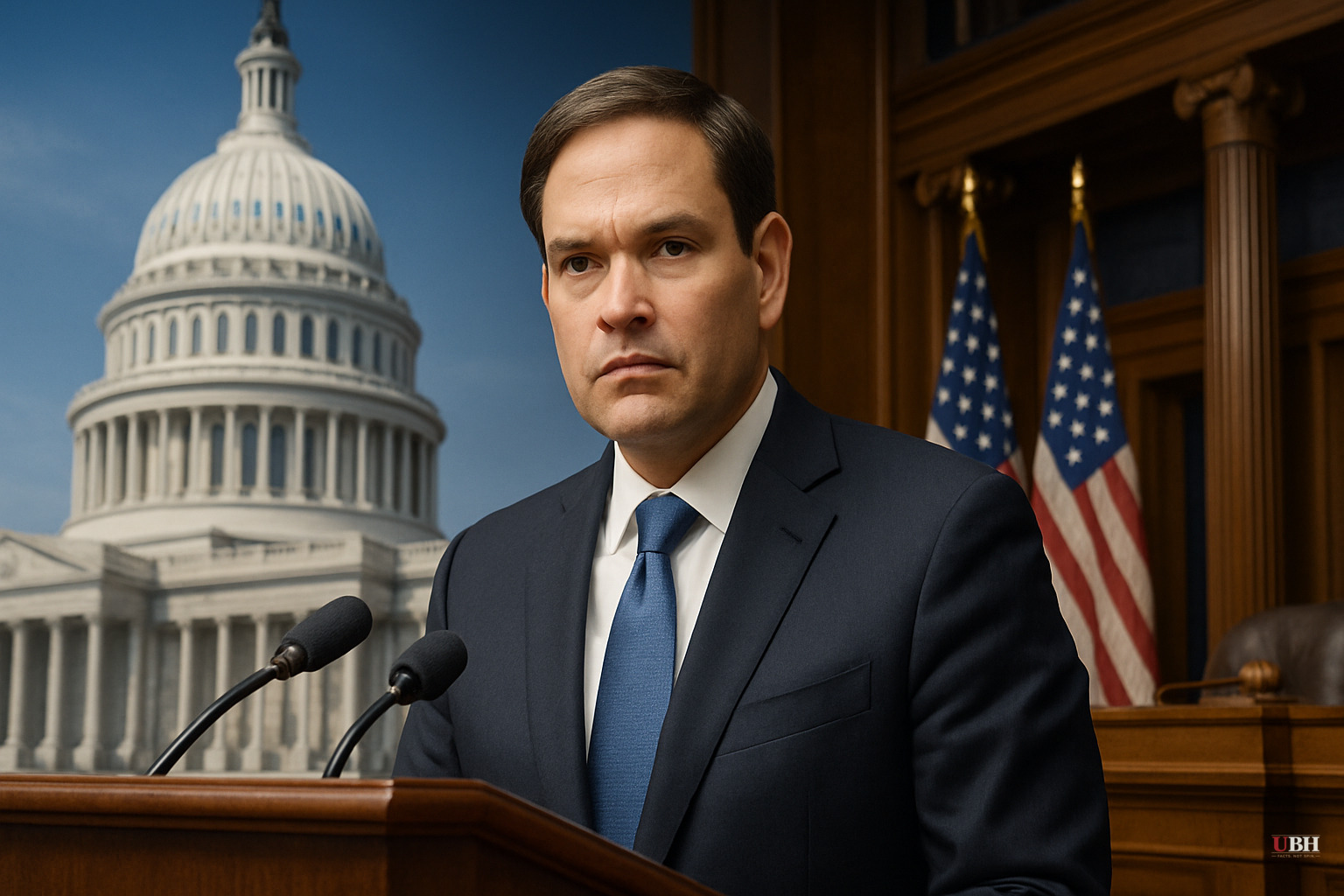
Rubio Confronts India on Immigration at Quad Summit
The Quad summit backdrop was already set. What happened Sunday was a different kind of confrontation — not military, not China-focused. It was India pushing hard on immigration, and Rubio pushing back.
Rubio said it plainly, according to Breitbart's reporting from the New Delhi press conference: "Everything that you do as a country needs to be in your national interest, and that includes your immigration policy."
The Secretary of State, on Indian soil, told India's government that America's migration rules exist for Americans.
India's Leverage Play
India's Foreign Minister Subrahmanyam Jaishankar didn't take that sitting down. He warned — politely, diplomatically, but unmistakably — that restricting legal migration could affect India's appetite for American goods.
His words, per Breitbart's coverage: "Our expectation is that legal mobility would not be adversely impacted as a consequence. After all, this is very relevant to our business, technology, and research cooperation."
In diplomat-speak, that means: ease up on H-1B and F-1 visa restrictions, or India buys less American grain, oil, and tech products.
The Numbers Behind the Pressure
Roughly 5 million Indians currently live in the United States, according to Breitbart. India has spent decades building a migration pipeline through programs like the L-1, H-1B, H4EAD, and OPT — a combined system that has embedded Indian nationals deep into American tech, finance, and healthcare.
The Indian government has a direct economic interest in keeping that pipeline open. New Delhi's strategy exports its educated workforce abroad, collects remittances, and builds political leverage in Washington through diaspora networks and corporate lobbying.
What the Rules Actually Do
The new Trump administration rules — announced Friday, just days before this press conference — effectively block legalization for migrants who broke U.S. laws to work in the country. That includes, according to Breitbart, many Indians who entered or stayed illegally to work in Indian-operated hotels, restaurants, and franchise outlets.
The white-collar H-1B crowd faces looser enforcement for tech sector workers, according to Breitbart's sourcing. But lower-wage and quasi-legal migrants — including many who received Biden-era parole or Temporary Protected Status at the border — are likely to face real pressure to leave.
The Standoff in New Delhi
Most outlets covering the Quad summit focused on the China angle, defense cooperation, and the optics of U.S.-India alignment. The immigration standoff received less attention.
The Indian press corps at the conference was not friendly. Rubio was asked directly whether U.S. visa changes were hurting Indian students, engineers, doctors, and researchers who have "contributed enormously" to the American economy.
Rubio's answer was careful — acknowledging "disruptions" and "hiccups" while making zero public concessions, per Breitbart's reporting. He held the line.
The Broader Conflict
India is simultaneously America's partner against China and a country with concrete interests that conflict with American workers.
The H-1B program has genuine defenders — there are real labor shortages in specific technical fields. But it also has real critics who point to displacement of American workers and wage suppression.
Rubio didn't resolve that tension Sunday. But he made clear the Trump administration isn't going to let India's diplomatic pressure rewrite that policy calculus.
Jaishankar's trade hint was a signal: this negotiation isn't over. Whether the administration holds firm when Wall Street lobbyists start making calls to Capitol Hill is the question worth watching.
Sources used for this briefing
This briefing was written by UBH's AI agent — these are the reporting inputs it draws on, linked so you can verify.


