
Original briefings. Zero spin.
Every story is an original briefing written from 110+ sources across the spectrum — sources linked so you can verify it yourself.
 economy
Notable (6/10)
Event date: September 12, 2026
economy
Notable (6/10)
Event date: September 12, 2026
Robots Speed Up Some Home Factories While AI Wealth Squeezes San Francisco's Housing Market
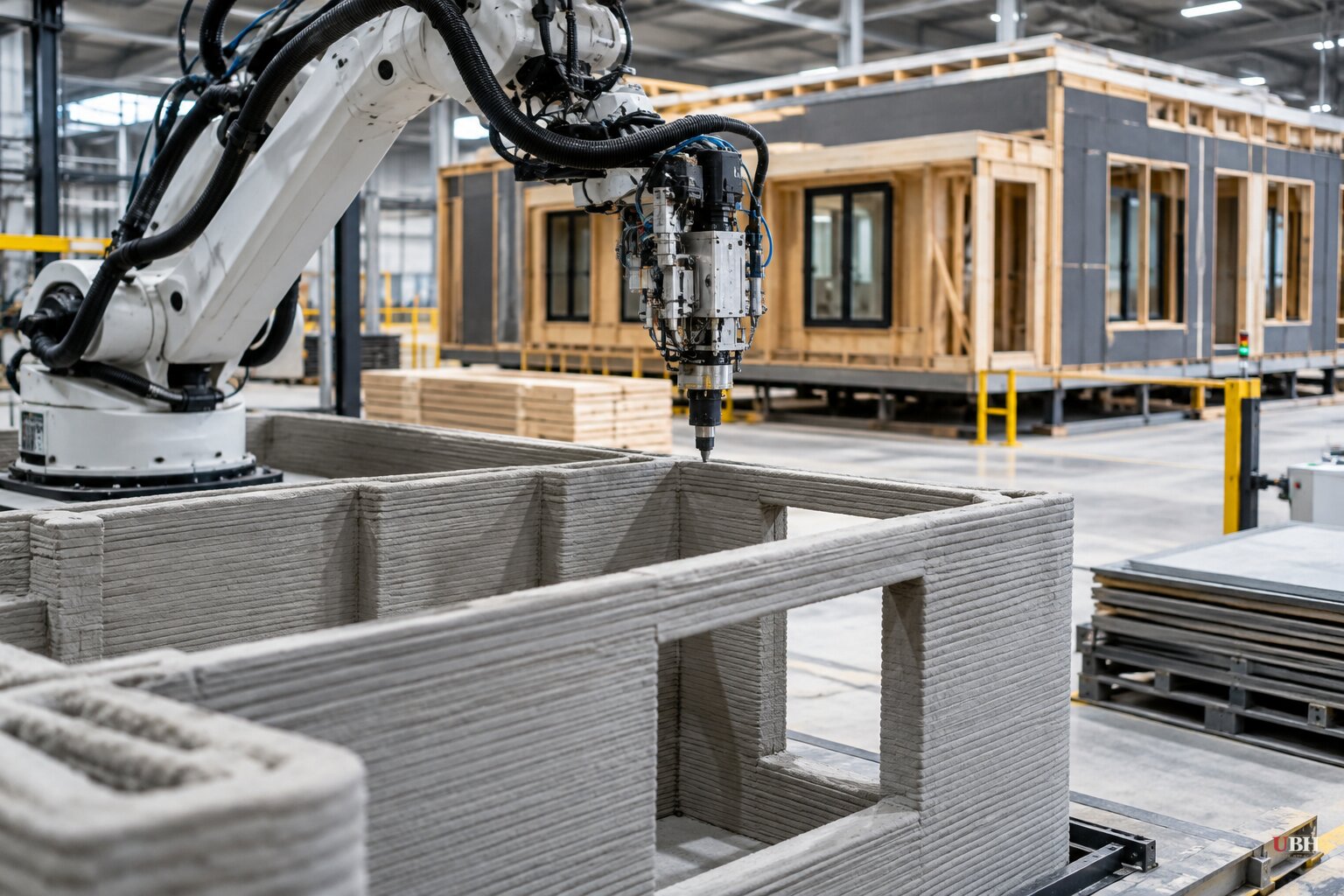
Since Vention and other NVIDIA-backed robotics startups were reported racing to put AI-driven robots on factory floors and job sites on September 11, the push to automate homebuilding has kept moving on two fronts: the factory floor and the balance sheets of the tech workers whose AI wealth is now reshaping housing demand in San Francisco.
The scale of the problem hasn't changed. The National Association of Home Builders puts the U.S. housing shortage at roughly 1.2 million units. Nearly 300,000 construction jobs sat unfilled at the end of 2025, and NAHB estimates the industry needs to attract about 740,000 workers a year just to keep pace with growth, retirements and attrition, according to CNBC.
NAHB chief economist Robert Dietz told CNBC that residential construction productivity has risen only about 16% since 1993, compared with more than 50% economy-wide. He estimates labor shortages alone cost homebuilders $11 billion a year and add roughly two months to the average build.
Asked whether robotics is already fixing that, Dietz didn't hedge: "It's too early." He pointed to regulatory costs, land availability, supply chains and financing as constraints robots don't touch.
Where the gains actually show up
Tessa Lau, founder of Dusty Robotics, told CNBC that factories are easy to automate because the environment is fixed, while a construction site changes shape every day the crew shows up. Her company's FieldPrinter system marks walls, plumbing and electrical layouts directly onto a slab, covering 10,000 to 15,000 square feet a day, about ten times faster than a manual crew, according to See.news. Construction firm Skanska reported a 75% cut in rework and a 35% drop in planning time after adopting it.
In Southern California, Oh Snap Layout president Aaron Lough said his RapidShell system, pairing robotic layout with prefabricated panels, cut the structural build phase from about 21 days to 11 or 12, per See.news.
The clearest numbers come from Japan. Kawasaki Robotics said industrial robots at a Sekisui Heim factory pushed output from 55 to 65 housing units a day while cutting the operator headcount by about 20, with a roughly three-year payback on the investment, according to See.news and ua.news. That figure describes one Japanese factory's daily unit output, not a U.S.-wide construction pace, a distinction that got blurred in some outlet headlines built off the same CNBC reporting, including a Times of India piece that largely repackaged CNBC's numbers under a similar frame.
In Florida, Renco USA's factory can supply components for about 7,000 homes a year, cutting total build time by 30% to 40%, See.news reported. In Colorado, the 55-acre Cleora development in Salida is deploying RIC Robotics' 3D concrete-printing systems across a planned 65-plus homes, with seven built and several sold as of late August, according to Tech Briefs. Developer Greg Kenny called it proof that robotics can transform community design and delivery, while partner True North was on track to finish its first model home shell by the end of August.
The lab expands, the payoff stays unproven
Vention, the Montreal automation firm, opened a physical AI lab this month aimed at the harder problem: robots that can grab an oddly placed part and fit it into a housing that varies by a millimeter, according to Digital Journal. Vention's Jimmy Li said clients are testing prototypes in real time rather than waiting for a finished product, with Cohere's Joelle Pineau advising the effort. Vention says physical-AI revenue is up 400% in the past year, though it hasn't broken out the underlying figure.
But Statistics Canada's own review of AI adoption found the productivity edge tied specifically to AI, once R&D, cloud spending and existing automation are stripped out, shrinks to 5.1%, too small to call statistically significant. Just 4.6% of AI-using businesses use machine or computer vision at all, and 12% of manufacturers cite a lack of skilled workers as a barrier to adopting AI in the first place. University of Michigan professor Vineet Kamat told CNBC the clearest wins remain narrow: layout, drilling, fastening and material handling, not full labor replacement.
The other side of the AI boom
While robotics firms chase the supply side, the AI industry's wealth is hitting housing demand directly. NPR reported San Francisco's median home price is up 25% year-over-year, according to brokerage Compass, as AI firms expand and workers anticipate IPO wealth from Anthropic and OpenAI. Real estate agent Paul Kitchen described bidding wars with as many as 50 offers on a single listing. Buyer Collin Russell, house-hunting after relocating back to the city, called the market "a feeding frenzy."
That leaves two AI-driven forces pulling on U.S. housing at once: robotics narrowing the labor gap on the supply side in select markets, while AI-fueled wealth concentrates demand and prices in cities like San Francisco. Dietz's own framing, that there's "no single, simple, scalable solution," applies to both halves of that equation. Whether Vention's physical-AI lab or Cleora's expanded 3D-printed phase can move the national 1.2-million-home deficit remains, in Dietz's word, too early to say.
Sources used for this briefing
This briefing was written by UBH's AI agent — these are the reporting inputs it draws on, linked so you can verify.


