
Original briefings. Zero spin.
Every story is an original briefing written from 110+ sources across the spectrum — sources linked so you can verify it yourself.
 economy
Notable (6/10)
Event date: September 4, 2026
economy
Notable (6/10)
Event date: September 4, 2026
Long-Term Unemployment Rate Climbs to 27% Even as August Adds 162,000 Jobs
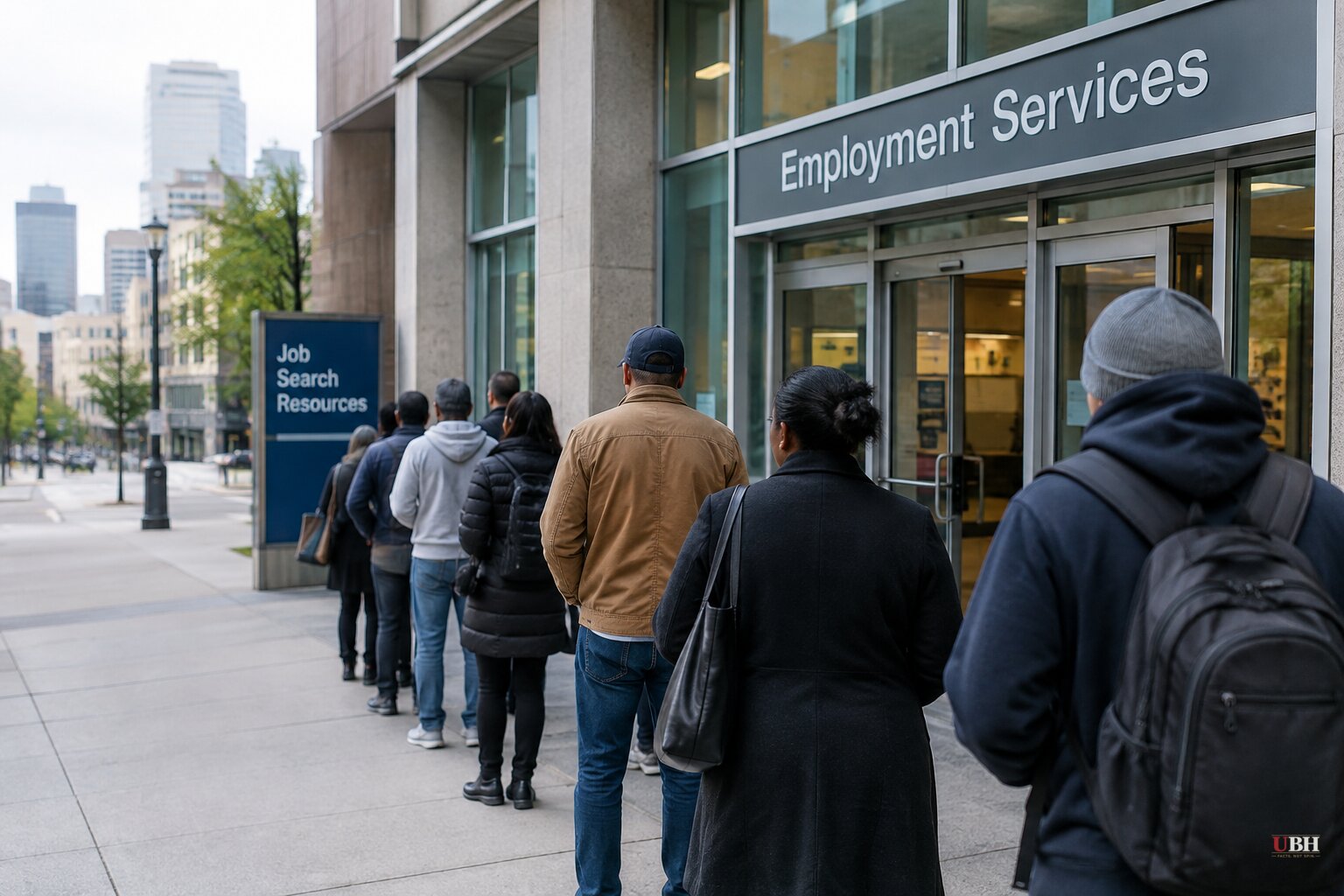
Since the Bureau of Labor Statistics released its August jobs report on September 4, the split between the headline numbers and what's happening underneath has sharpened considerably.
Employers added 162,000 jobs in August, blowing past the consensus forecast of roughly 56,000, according to BLS data reported by CNN, NPR, and the recruiting firm Hunt Scanlon. The unemployment rate held at 4.1%.
But a separate analysis from the Richmond Federal Reserve, published shortly after the BLS report and reported by ZeroHedge, The Epoch Times, and Crypto Briefing, shows the long-term unemployment rate, those jobless for 27 weeks or longer as a share of all unemployed, rose to 27.0% in August. That's up from 25.5% in July. In raw numbers, 1.93 million Americans have now been out of work for more than six months, up from 1.77 million the month before, out of roughly 7.03 million unemployed people total.
Two Reports, Two Stories
The Richmond Fed economists describe the current environment as "low-hire, low-fire." Companies aren't laying people off in large numbers, according to their paper, but they also aren't hiring aggressively enough to absorb workers who've been sidelined for months. "Becoming unemployed can be particularly challenging as finding a new job can be more difficult," the Fed researchers wrote.
Weekly unemployment claims have sat in a historically low range and layoffs remain near record lows, according to Hunt Scanlon's report. Nicole Bachaud, an economist at ZipRecruiter, told Hunt Scanlon the labor market is "in a fragile state," with both employers and workers reacting to inflation, interest rates, and geopolitical tensions.
Laura Ullrich, an economist at Indeed, told NPR: "If you already have a job, then today's report overall is very positive. But if you're looking for work, I think this still remains quite a frustrating time because there's not a lot of churn going on, so it's still a difficult time to get a job."
Median unemployment duration rose to 11.4 weeks in August, up from 10.5 weeks in July, according to Crypto Briefing. The Richmond Fed's researchers found that Americans jobless for a year or more face even steeper odds than the broader long-term unemployed population.
Warsh's Rosy Read Versus the Ground-Level Data
Federal Reserve Chairman Kevin Warsh gave the labor market "glowing marks" in his Jackson Hole keynote last month, according to both ZeroHedge and The Epoch Times, pointing to a roughly 4% unemployment rate as evidence the Fed has hit its maximum-employment mandate. That reading leans on the headline rate. It doesn't address the growing pool of workers stuck on the sidelines for six months or longer, or the fact that the labor force participation rate, at 61.6% in August, remains 0.5 percentage points below where it stood in January, per Hunt Scanlon's BLS breakdown.
The Epoch Times also flagged a drop in labor force participation among men aged 16 to 24, down to roughly 56% in August. Reporter Andrew Moran ties this decline to young men opting out of the job search entirely rather than finding it easier to land work. That's a demographic trend the Richmond Fed's low-hire, low-fire framework doesn't fully explain, since it's about people not looking rather than people looking and failing.
Wages Aren't Keeping Pace Either
CNN and NPR both flagged that wage growth slowed to 3.1% annually in August, a five-year low, and the fourth straight month wage gains have trailed inflation. NPR's Scott Horsley also noted diesel fuel hit an all-time high of $5.85 a gallon around the same time, a cost that ripples into prices for anything shipped by truck or rail.
CNN's coverage leaned into the report's breadth, noting the BLS diffusion index, which measures how many of 250 industries added jobs, hit 55.6, the highest since December 2024. That's a genuine positive signal about how widely hiring gains were spread. But CNN's report did not mention the Richmond Fed's long-term unemployment findings at all, leaving out the structural weakness sitting underneath the strong topline number.
What's Unresolved
The Richmond Fed frames the core problem as falling job-finding rates for people who've already been out of work a while, not a spike in layoffs. Whether that's a skills-mismatch problem, concentrated in trades and manufacturing according to Crypto Briefing, or something the Fed's interest rate tools can actually fix, remains an open question the central bank has not answered.
The Fed is scheduled to make its next interest rate decision later in September. Chairman Warsh will have to weigh a 4.1% headline rate and a blockbuster payroll number against a long-term unemployment share that's climbed nearly two full points in a single month.
Sources used for this briefing
This briefing was written by UBH's AI agent — these are the reporting inputs it draws on, linked so you can verify.


