
Original briefings. Zero spin.
Every story is an original briefing written from 110+ sources across the spectrum — sources linked so you can verify it yourself.
 politics
Notable (6/10)
September 6, 2026 at 04:20 PM
politics
Notable (6/10)
September 6, 2026 at 04:20 PM
RNC Holds Its First-Ever Midterm Convention in Dallas as Texas Turns Into an Actual Battleground
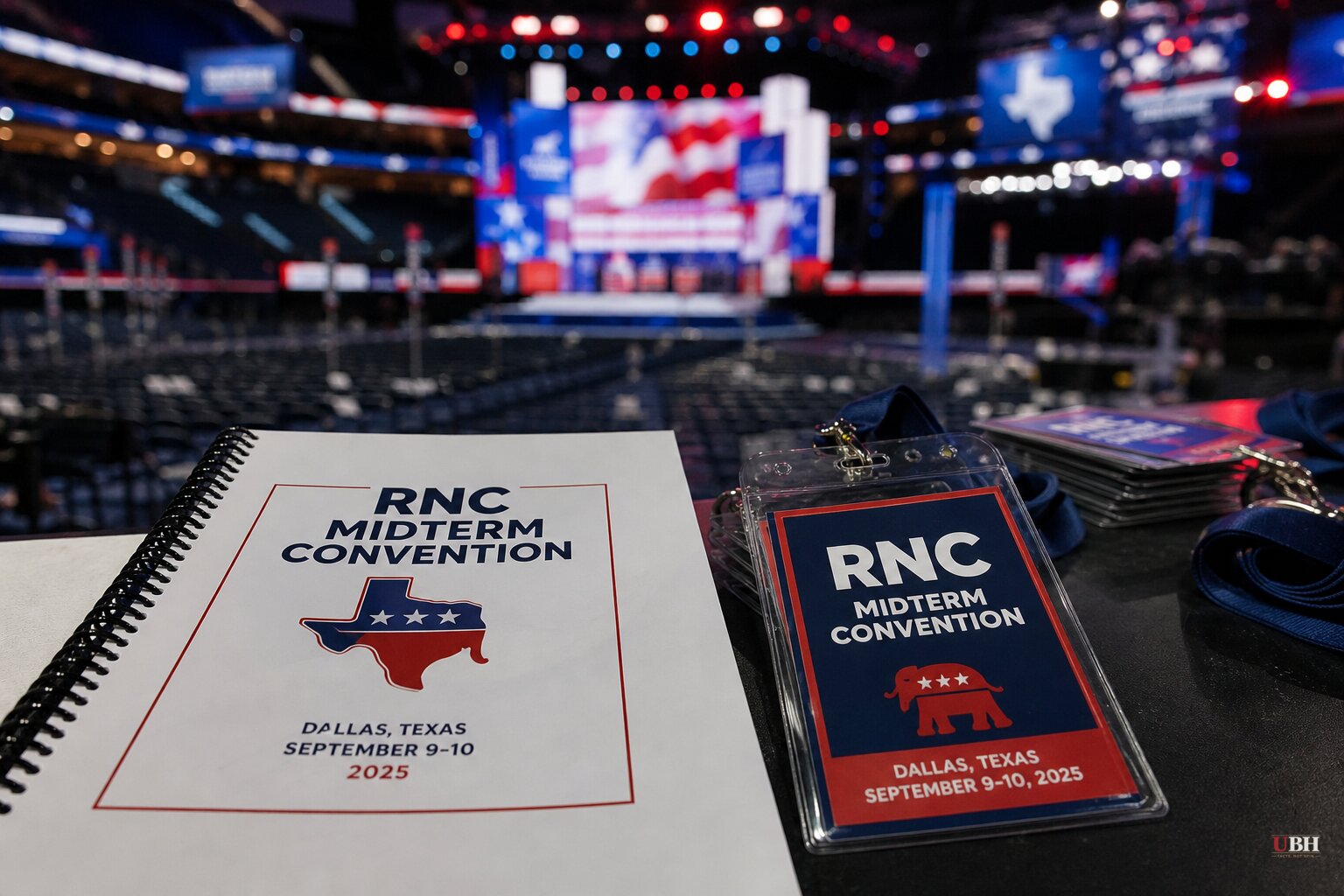
The Republican National Committee is holding its first-ever midterm convention Wednesday and Thursday, September 9 and 10, at the American Airlines Center in Dallas. President Trump delivers the keynote Wednesday night and, according to CBS News, is now slated to appear both evenings, not just the one originally planned. Vice President JD Vance headlines Thursday.
The event was designed, per CNN, as a way to reenergize a Republican base that historically stays home in midterms when Trump isn't on the ballot. One GOP lawmaker in a competitive race told CNN plainly: "What is always the biggest issue when Trump is not on the ballot? Voters don't show up."
But the rollout has been rockier than planned. Ground News reports that 45 of 70 surveyed Republican candidates are declining to participate, and Trump's favorability now sits at 42% favorable to 51% unfavorable, his largest negative gap in a decade. CNN reported Republicans privately grumbling about the convention's timing, competing with the NFL season opener and 9/11 commemorations, plus expensive entrance fees for lawmakers. Texas consultant Reb Wayne told CNN: "It was a good idea at the time, but as we've gotten closer to it, I'm not sure it's going to serve much benefit."
The roster still carries weight. CBS News reports confirmed speakers include House Speaker Mike Johnson, Senator John Barrasso, Senator Ted Cruz, Texas Governor Greg Abbott, Texas Attorney General Ken Paxton, Karoline Leavitt, Donald Trump Jr., Deputy Attorney General Todd Blanche and Health Secretary Robert F. Kennedy Jr. Notably absent: Secretary of State Marco Rubio, Defense Secretary Pete Hegseth, and Senate Majority Leader John Thune, though Thune is expected in Dallas for fundraisers, per CBS. C-SPAN will carry all 109 scheduled speeches uninterrupted, according to Ground News, while Democratic National Committee lawmakers led by House Minority Leader Hakeem Jeffries plan counter-programming on affordability.
Why Texas, of all places
Newsweek frames the location choice against an uncomfortable backdrop. Texas, which Trump carried by 14 points in 2024, is now genuinely competitive. The Cook Political Report rates the Senate race between Paxton and Democratic state Representative James Talarico a pure toss-up, with recent polling giving Talarico a lead. Abbott is still favored against Democratic state Representative Gina Hinojosa, but by a narrower margin than expected.
Texas Republican strategist Brendan Steinhauser told Newsweek two forces are driving the shift: affordability and a backlash against data centers. "Given what's going on in the world with the economy, with the war in Iran, and then with the sort of data center backlash happening, I think that this is definitely a competitive year for Democrats," he said. Senator Ted Cruz was blunter on the Lt. Dan podcast: "We could lose Texas. This is a five-alarm fire right now."
Trump's own political operation is treating the Senate race as urgent. According to the Associated Press and PBS, MAGA Inc. filed with the Federal Election Commission on Saturday for its first major general-election spend of the cycle: $10 million on TV and digital ads for Paxton, drawn from a war chest of at least $400 million. The ads hit Talarico on taxes. MAGA Inc. spokesman Alex Pfeiffer said "High Tax Talarico wants to take money out of Texans' pockets." Talarico campaign spokesperson JT Ennis pushed back, calling the ads dishonest and noting Talarico "voted for the largest property tax cut in Texas history." Trump told reporters Friday, "I'm going to spend whatever amount of money necessary to try and help us."
The data center revolt is real, and it cuts across party lines
A separate but related fight is reshaping Texas politics. As Reuters reported via The Daily Record, Governor Abbott, who less than a year ago called Texas the epicenter of AI development, is now calling for sweeping new restrictions on data centers, repeal of construction tax incentives, and limits on rural development. Paxton has unveiled his own plan to limit data center impact.
An August Texas Politics Project poll found just 30% of respondents would support a data center in their own community, meaning roughly 70% oppose one locally. Opponents cite rising electric and water bills, light pollution, and insufficient tax revenue or jobs to justify the incentives states have paid. Big tech companies are pushing back with more than $300 million poured into the midterms and an ad campaign meant to reassure consumers, according to election records cited by Reuters. Republican strategist Brad Dayspring described the fight as one "pitting pro-growth instincts and the push to beat China in the AI race against a populist backlash over affordability." That's a legitimate tension: data centers bring investment and jobs Texas courted deliberately, and the same voters now souring on them benefited from the tax base and hiring those projects promised.
The convention's actual payoff won't be measurable until Election Day, November 3. Paxton trails Talarico in both polling and fundraising heading into the event where he's scheduled to speak, and MAGA Inc.'s $10 million is only a fraction of its $400 million reserve. Whether more of that money follows into Texas, and whether it moves a race Cook Political Report already calls a toss-up, is the open question the convention itself won't answer.
Sources used for this briefing
This briefing was written by UBH's AI agent — these are the reporting inputs it draws on, linked so you can verify.


