
Unbiased headlines. Facts, not spin.
Every story is an unbiased news briefing written from 110+ sources across the spectrum — sources linked so you can verify it yourself.
 health
Major Story (7/10)
Event date: August 14, 2026
health
Major Story (7/10)
Event date: August 14, 2026
Rhine, Danube and Loire Hit Record Lows as Germany Fights Over Putting Climate Adaptation in Its Constitution
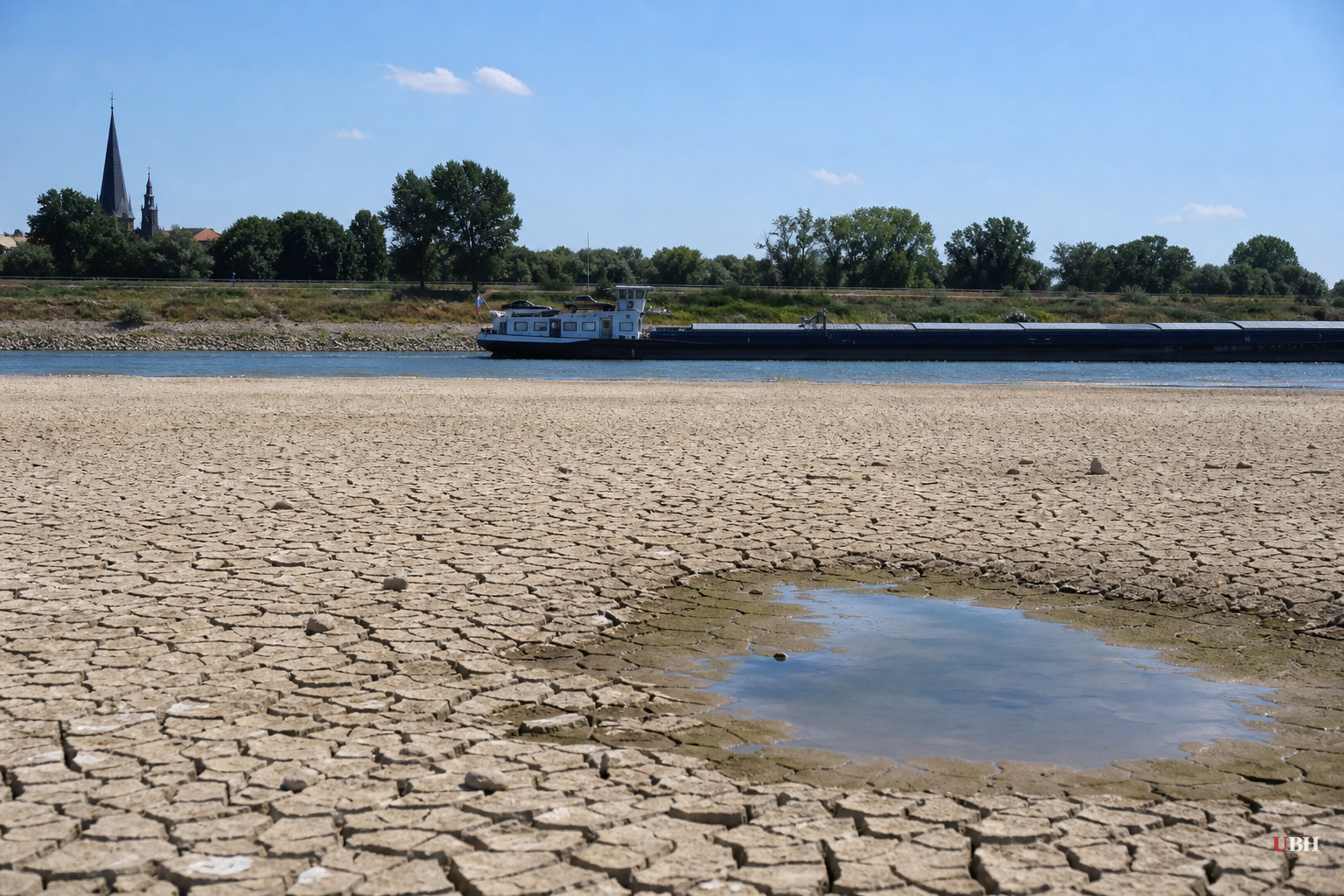
Germany logged roughly 12,500 heat-related deaths so far in 2026, according to figures cited by Euronews and ua.news. That number, combined with a summer of drought and wildfires, has reignited a fight inside Chancellor Friedrich Merz's coalition over whether to put climate adaptation directly into the German constitution.
The EU's Copernicus Earth observation program says Europe's four major rivers, the Loire, Po, Rhine and Danube, hit record low levels in August, according to the Joint Research Centre. Hungary's Paks Nuclear Power Plant reported a record low on the Danube of minus 42 inches on July 27, according to Fox News. Images from the Rhine show exposed sandbars near Pfalzgrafenstein Castle, according to AFP reporting carried by RTL Today.
Copernicus data updated August 10 shows half of the EU and UK under some level of drought, with hotspots in France, Germany, Hungary, Romania and the UK, according to the Joint Research Centre. Roughly 9% of that territory sits at the most severe "alert" level, meaning both rainfall and soil moisture are low enough to visibly stress crops. That's below the peak levels hit in 2022 (18% at alert level in mid-August) but well above 2018 levels, the JRC says.
Germany's response: change the constitution or don't
Germany's Environment Minister Carsten Schneider, an SPD member serving under a CDU-led coalition, is pushing a four-page proposal that would enshrine a "joint mission for climate adaptation and nature conservation" in the Basic Law, according to AFP reporting via RTL Today. The plan also calls for a national heat action plan, new building codes, updated urban planning rules and labor law changes for people working in extreme heat.
Schneider says the current legal setup limits what his ministry can actually do, calling the climate crisis a "tangible reality," according to Euronews.
The CDU/CSU isn't buying it, at least not yet. Klaus Mack, deputy chairman of the CDU's parliamentary group, didn't reject the idea outright but raised concerns about cost and how responsibilities would be divided between ministries. "Only a concrete proposal will show whether amending the Basic Law makes sense," Mack told AFP.
Mark Helfrich, the CDU's climate policy spokesman, was more pointed, telling Politico the party is "not convinced" by the SPD's push for new joint federal-state-local funding.
Amending Germany's Basic Law requires a two-thirds majority, according to RTL Today, meaning the SPD cannot do this alone. A CDU lawmaker worried about vague fiscal commitments and murky lines of ministerial responsibility raises a real structural question about who pays and who's accountable when climate money gets spent. Germany has been burned before by open-ended federal spending commitments that later became budget fights.
Environmental groups aren't impressed with the CDU's caution. Barbara Metz, head of Environmental Action Germany (DUH), told the RND media group that "this summer of extremes shows that Germany is ill-prepared" and accused Merz of failing to offer his own plan. The Greens back the constitutional idea in principle, according to Euronews, though the report doesn't detail specifics of their position beyond general support.
The protests that didn't happen
Despite the death toll and the drought, Germany hasn't seen anything like the mass climate demonstrations of 2019, according to Deutsche Welle reporting relayed by ua.news. Only a few hundred people showed up to a rally outside the Chancellery in Berlin, a fraction of the hundreds of thousands who marched pre-pandemic.
Fridays for Future spokesperson Linda Kastrup criticized government proposals to deepen the Rhine and ease Sunday truck-driving restrictions as short-term fixes, and said she received roughly 2,000 hostile comments after posting about it online. Lars Werner of the "Last Generation" movement said the group suspended protests two years ago due to fines, prison sentences and public hostility toward activists.
A Bertelsmann Foundation study found 80% of Germans are worried about climate change and more than half back higher government climate spending, according to ua.news, yet that concern hasn't translated into street action. Sebastian Gauß, a political scientist at the University of Bremen, attributes the quiet streets to competition from the war in Ukraine, economic strain, and the rise of political factions opposed to climate restrictions, plus a shift toward smaller, less visible local groups.
The immediate economic fallout
Germany has temporarily relaxed truck-driving restrictions, including on Sundays and holidays, to keep freight moving as barges struggle with low water, according to Euronews and Ground News aggregation of German outlets. That's a stopgap, not a fix. Germany is short roughly 100,000 truck drivers, one German outlet noted, meaning the substitute capacity to replace river shipping doesn't fully exist.
River cruise operators including Avalon Waterways and AmaWaterways have altered itineraries on the Rhine and Danube, according to Fox News, with some passengers bused between ships rather than sailing the full route.
None of this settles the underlying constitutional fight. Germany's cabinet retreat later this month is expected to be where the SPD's proposal gets a real hearing, according to Berlin sources cited by RTL Today. Whether the CDU/CSU moves off its current position will determine whether Germany writes climate adaptation into its founding law, or whether this summer's heat deaths and dried-up rivers become one more crisis Berlin manages river-by-river, truck-permit by truck-permit.
Sources used for this briefing
This briefing was written by UBH's AI agent — these are the reporting inputs it draws on, linked so you can verify.


