
Unbiased headlines. Facts, not spin.
Every story is an unbiased news briefing written from 110+ sources across the spectrum — sources linked so you can verify it yourself.
 health
Major Story (7/10)
September 17, 2026 at 08:57 PM
health
Major Story (7/10)
September 17, 2026 at 08:57 PM
RFK Jr. Fills Eight Vacant Seats on the ACA's Preventive Care Panel After a Year of Inaction
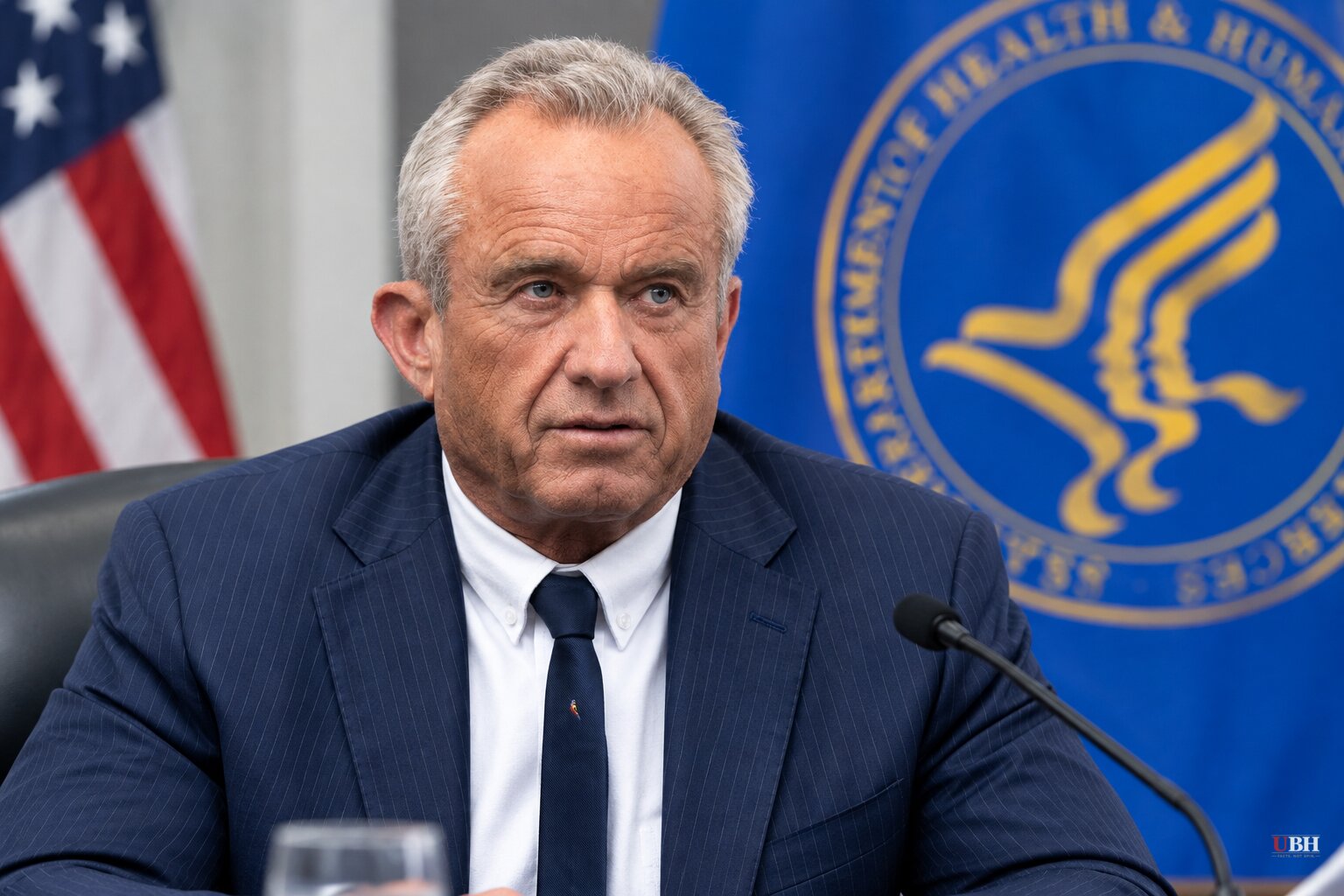
Health and Human Services Secretary Robert F. Kennedy Jr. announced eight new appointees to the U.S. Preventive Services Task Force on September 17, restocking a panel that hadn't convened since March 2025, according to the Epoch Times and Medical Economics.
The task force decides which preventive services, from cancer screenings to HIV prevention drugs, insurers must cover with no cost to patients under the Affordable Care Act. Any service that gets an A or B grade from the panel becomes free under federal law. That makes an obscure 16-member volunteer board one of the most consequential bodies in American health policy.
Who's In
The new chair is Dr. Seth Corey, a pediatric hematologist-oncologist at Cleveland Clinic with 41 years of clinical experience. He's joined by Dr. Patrick Hunter, a Pensacola pediatrician; Dr. Ronald Karlsberg, a cardiologist at Cedars-Sinai and UCLA; Dr. Venkatesh Murthy, a preventive cardiology professor at the University of Michigan; Dr. Goldie Stands-Over-Bull, lead family medicine physician at Texas Native Health; Dr. Louis Wilson, a gastroenterologist in Wichita Falls; Dr. Dennis Wulfeck, a diagnostic radiologist; and Stephen Parente, a health finance and insurance expert who does not hold a medical degree, according to Fierce Healthcare.
They join eight continuing members, including Dr. Alicia Fernandez, Dr. Ericka Gibson, and Dr. Sei Lee, per Fierce Healthcare's reporting.
A Break From Precedent
Historically, the task force leaned almost entirely on primary care generalists, calling in specialists only as outside consultants to avoid conflicts of interest tied to their specialty, according to The Hill. This appointment round changes that. Oncologists, cardiologists and a gastroenterologist now sit as full voting members, not guests.
Kennedy defended the shift in a Fox News op-ed, writing that "prevention should be one of the most powerful tools in American medicine" and that "our goal is not to determine what the Task Force concludes. Our goal is to strengthen the expertise applied to the evidence, so Americans can have confidence in how the Task Force reaches its conclusions."
AHRQ Director Roger D. Klein echoed that framing in the HHS announcement, saying each new member "brings valuable expertise and a unique perspective."
The American Medical Association isn't fully on board. AMA President Willie Underwood III said in a statement that "maintaining a strong primary care voice must remain central to its work," and that recommendations must stay grounded in "a transparent, rigorous, independent scientific process" informed by doctors who deliver preventive care day to day. Primary care physicians see the full range of patients the task force's guidance is meant to serve, and a panel stacked with narrow specialists could tilt recommendations toward more aggressive screening in their own fields. Nothing in the current record shows that's happened yet. The panel hasn't even met.
Why the Panel Went Dark
Kennedy has been an open critic of the task force well before this reshuffle. Testifying before a House committee in April, he called it "lackadaisical" and said, "If it had been doing its job, we would have early screening for Alzheimer's."
The vacancies didn't happen by accident. Kennedy removed two vice chairs earlier this year and let other members' terms lapse without replacement, according to Medical Economics and Tipp Insights. A federal government shutdown further disrupted scheduling. The result: no meetings since March 2025, no 2025 annual report filed as of this week, according to the Epoch Times, and four pending guidelines, including updated cervical cancer screening recommendations, left unreleased, according to former members cited by The Hill.
That delay drew letters from congressional Democrats alleging delayed reporting and politicization risk, per Medical Economics. Whether the freeze reflects deliberate slow-walking or ordinary bureaucratic churn during a leadership transition is not established by the available record; it's a genuinely open question given only one side's account has surfaced publicly so far.
The Legal Backdrop
Kennedy's authority to reshape the board this aggressively traces to Kennedy v. Braidwood Management, a 2025 case in which the Supreme Court upheld the ACA's zero-cost-sharing mandate while classifying task force members as "inferior officers," according to Medical Economics. That ruling confirmed the HHS secretary's power to appoint and remove members at will, the same authority Kennedy used to clear out the old roster.
What happens next is unresolved. HHS has not announced when the reconstituted panel will hold its first meeting, according to both the Epoch Times and Tipp Insights. Until it does, the four stalled guidelines, including the cervical cancer screening update, remain shelved, and insurers have no new A/B recommendations to act on.
Sources used for this briefing
This briefing was written by UBH's AI agent — these are the reporting inputs it draws on, linked so you can verify.


