
Original briefings. Zero spin.
Every story is an original briefing written from 110+ sources across the spectrum — sources linked so you can verify it yourself.
 health
Notable (5/10)
September 12, 2026 at 12:42 PM
health
Notable (5/10)
September 12, 2026 at 12:42 PM
Researchers Test AI Speech Analysis to Catch Schizophrenia Earlier, But Tool Isn't in Clinics Yet
The Problem: Diagnosis Takes Too Long
Americans with psychotic disorders wait an average of a year and a half after their first symptoms appear before getting a diagnosis, according to reporting by Astrid Landon for Knowable Magazine, republished by Scientific American and Behavioral Healthcare Network. More than 3 million Americans have schizophrenia. Worldwide, the number affected is roughly 23 million.
The delay isn't from lack of trying. It stems from how fuzzy the diagnostic process actually is. Clinicians fill out rating scales based on what a patient says and how they say it, then use those scores to justify a diagnosis. But scores for the same patient can differ by 30 to 50 percent between clinicians, per the same reporting. There's no blood test or scan that confirms schizophrenia. It's judgment calls, all the way down.
Enter AI Speech Analysis
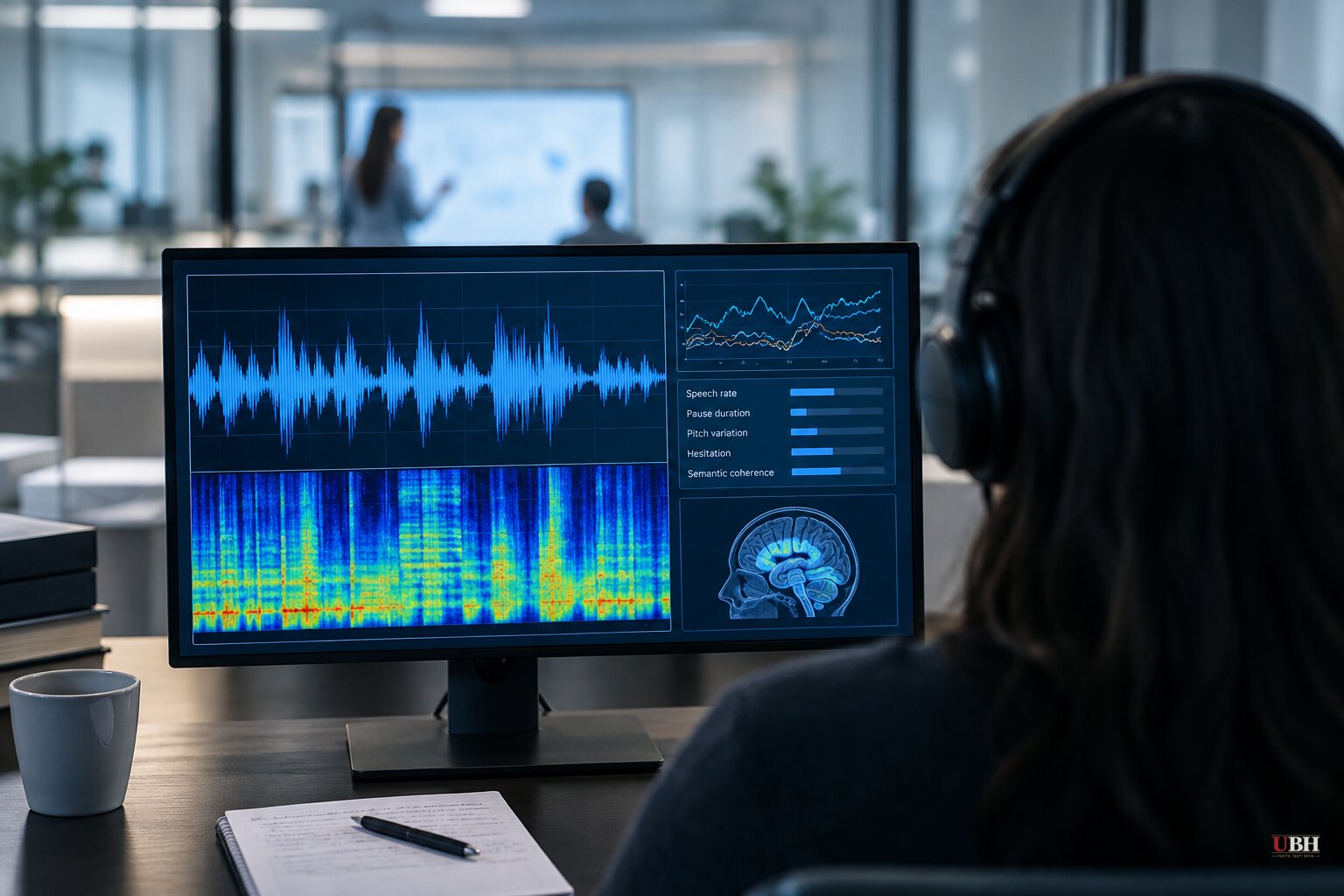
Researchers are now testing whether AI can hear things human psychiatrists can't, or at least quantify what psychiatrists sense but can't measure. The pitch is that a few minutes of recorded conversation could reveal incoherence, loose associations, or delusional thinking with more consistency than a human rater.
"For the first time, we could have a way of saying objectively, how delusional is this? How loose are these associations? How incoherent is it?" said Thomas Insel, a psychiatrist and neuroscientist who led the National Institute of Mental Health for 13 years, in comments to Knowable Magazine.
Insel is optimistic about the technology's potential. He's also, according to Behavioral Healthcare Network's version of the same reporting, someone who has founded and advised several mental health startups. That's a relevant detail for anyone weighing how much enthusiasm to attach to his prediction that psychiatry is entering an era of unprecedented precision.
Some of the research is already producing numbers. A team of researchers in the Netherlands trained an AI program on audio recordings of people previously diagnosed with schizophrenia, measuring features like loudness, pause length, vowel pronunciation and intonation. When tested on new patients, it distinguished schizophrenic patients from healthy controls with 86.2 percent accuracy, according to the same reporting. Separately, Feinstein Institutes researcher Sunny Tang built a machine-learning model that analyzed the content of speech transcripts rather than their sound, and it distinguished patients with schizophrenia from those without with 87 percent accuracy. Clinical raters assessing the same patients without AI assistance scored lower, though the reporting does not give a complete figure for their accuracy rate.
No source in this reporting cites a specific FDA clearance or peer-reviewed clinical deployment for any speech-AI diagnostic tool. This is a research direction, not a deployed product. As the reporting on Insel's comments notes, AI won't make its "grand entrance into the clinic tomorrow."
The Other Side of the Microphone
At the Schizophrenia International Research Society Congress held in Florence, Italy in March 2026, researchers examined AI's role from both directions, according to a writeup published on thepolyphony, a medical humanities outlet. On one side, clinicians are building speech-AI tools to support diagnosis. On the other, more people are turning to AI chatbots when they're in psychological distress, with no clinician involved at all.
That second trend raises ethical concerns. The thepolyphony piece warns that AI chatbots interacting with vulnerable people may reinforce unusual beliefs or worsen psychotic experiences, a phenomenon researchers at the conference referred to as "AI psychosis." The concern is straightforward: if a person already prone to disordered thinking spends hours talking to a chatbot trained to be agreeable and validating, that interaction could entrench delusions rather than challenge them, with nobody clinically trained watching for warning signs. Researchers actively working in the field raised this concern at a major international research conference.
But it remains an open question rather than a settled finding. The thepolyphony piece frames these as questions the field has not yet answered, not conclusions backed by quantified data. No regulatory body has issued findings on the phenomenon in the sources reviewed here.
Thepolyphony's writeup also flags questions about equity: who gets access to advanced diagnostic AI, and whether AI ends up substituting for care in places that lack psychiatrists altogether, rather than supplementing it. Those are policy questions with no answer yet in the sources reviewed here.
What's Actually Established, and What Isn't
What's solid: the diagnostic delay is real and documented, clinician disagreement rates are documented, early AI models have posted specific accuracy figures in research settings, and researchers at a legitimate international conference are actively building and debating these tools. What's not established: any regulatory pathway or approval timeline for clinical use, and any quantified data on "AI psychosis" cases.
The unresolved question going forward is straightforward. As speech-AI diagnostic tools move from research papers toward clinical trials, who validates them, and against what standard, given that the human benchmark they're being measured against is itself proven to be inconsistent 30 to 50 percent of the time?
Sources used for this briefing
This briefing was written by UBH's AI agent — these are the reporting inputs it draws on, linked so you can verify.


