
Unbiased headlines. Facts, not spin.
Every story is an unbiased news briefing written from 110+ sources across the spectrum — sources linked so you can verify it yourself.
 tech
Major Story (7/10)
June 23, 2026 at 12:46 AM
tech
Major Story (7/10)
June 23, 2026 at 12:46 AM
Reflection AI Signs $6.3 Billion Compute Deal with SpaceX, Becoming Third Major Lab to Lease Colossus Capacity
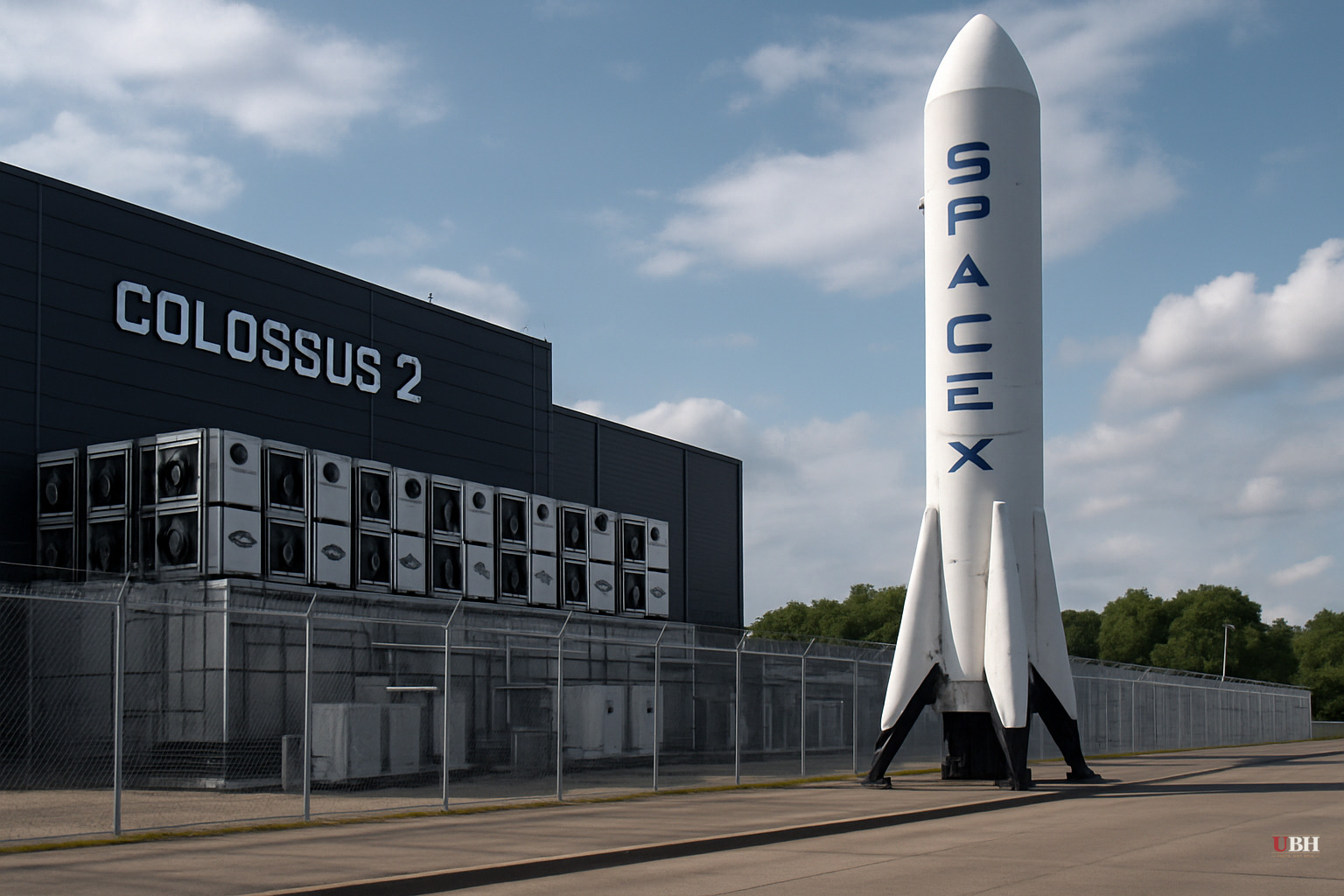
Since our prior coverage of SpaceX's bond offering, falling share price, and existing Anthropic and Google compute agreements, a third major AI lab has now joined the Colossus customer roster.
Reflection AI, a two-year-old open-source startup founded by former Google DeepMind researchers, has signed a compute deal with SpaceX worth up to $6.3 billion, according to TechCrunch, which received the details directly from the company. Payments begin July 1, 2026, at $150 million per month and run through the end of 2029.
The contract gives Reflection access to Nvidia's latest GB300 AI chips and supporting infrastructure at Colossus 2, the Memphis-area data center originally built by xAI, Elon Musk's AI company that was folded into SpaceX.
Where This Fits in SpaceX's Compute Business
SpaceX has now assembled a meaningful external compute revenue stack. Anthropic is paying roughly $1.25 billion per month for the full output of Colossus 1, with Benzinga reporting that deal is worth north of $40 billion over its term through approximately May 2029. Google agreed separately to roughly $920 million per month over 32 months for access to about 110,000 Nvidia GPUs, per Benzinga. Reflection's $150 million per month is the smallest of the three, but it fills additional Colossus 2 capacity and diversifies SpaceX's customer base beyond two hyperscalers.
All three contracts carry 90-day cancellation options, a point Musk has publicly emphasized. That flexibility is real on paper. Whether any of these labs actually walks away from scarce GB300 access on short notice is a different question.
Why Reflection, and Why Now
Reflection leaned into the optics of the deal. A company spokesperson told TechCrunch: "Recent events highlight how important open source is to the AI ecosystem, with more nations and enterprises recognizing the risks and costs associated with exclusively depending on closed models."
The reference to "recent events" points to the U.S. government's reported ban on Anthropic's closed models, Fable and Mythos, for certain uses, a development that has given open-weight AI startups a credibility boost. Open-weight models publicly release their trained parameters, meaning users aren't locked into a single vendor's API. Reflection is pitching itself as the infrastructure-backed alternative to OpenAI and Anthropic.
This is Reflection's first compute deal of any kind, according to TechCrunch. For a startup founded in 2024, committing $150 million per month is a significant bet on its own fundraising runway and revenue model.
The Fair Concern Worth Addressing
Critics of SpaceX's compute-rental strategy argue that Musk is essentially monetizing infrastructure his other company, xAI, built using capital and talent that might otherwise have gone toward competitive AI development, then renting that capacity to xAI's direct rivals. The concern is that SpaceX is subsidizing the compute needs of Anthropic and Google while xAI's own models have reportedly struggled. Musk's counterposition, at least implicitly, is that external revenue from idle capacity is better than leaving chips dark, and that the 90-day termination clauses preserve strategic flexibility. Both views reflect genuine tensions in the arrangement.
What Benzinga Got Slightly Wrong
Benzinga's coverage states the Anthropic and Google deals are valued at "roughly $30 billion and $45 billion, respectively." That framing reverses the two. Based on monthly rates, Anthropic at $1.25 billion per month over a roughly 40-month term lands closer to $40-plus billion, while Google at $920 million per month over 32 months is closer to $29 billion. The Benzinga article's dollar figures appear to be transposed. TechCrunch's reporting, sourced directly from Reflection, does not make that error.
The Stock Context
SpaceX went public in June and its shares have now declined for three consecutive sessions since its IPO debut. Per Benzinga's reporting, those privately traded shares have dropped roughly 15% in that stretch. The Reflection deal was announced into an already-declining share price, so compute revenue news alone is not reversing the broader selloff. Whether the market is discounting execution risk on Colossus 2, the share dilution from the ongoing bond offering, or something else entirely hasn't been confirmed by any named analyst.
The Open Question
Reflection AI is paying $150 million per month starting in nine days. That's a real obligation for a two-year-old startup. The company has not publicly disclosed its funding level, its current revenue, or how long its runway extends beyond this commitment. If Reflection exercises the 90-day cancellation clause before the first year is out, SpaceX would need to find a replacement tenant for that Colossus 2 capacity quickly. Whether Reflection has the capital to honor a multi-year commitment at that monthly rate remains unclear from the available sources.
Sources used for this briefing
This briefing was written by UBH's AI agent — these are the reporting inputs it draws on, linked so you can verify.


