
Original briefings. Zero spin.
Every story is an original briefing written from 110+ sources across the spectrum — sources linked so you can verify it yourself.
 health
Major Story (7/10)
August 24, 2026 at 12:29 PM
health
Major Story (7/10)
August 24, 2026 at 12:29 PM
Rectal Cancer Trial Finds 4 in 5 Patients Can Skip Radical Surgery
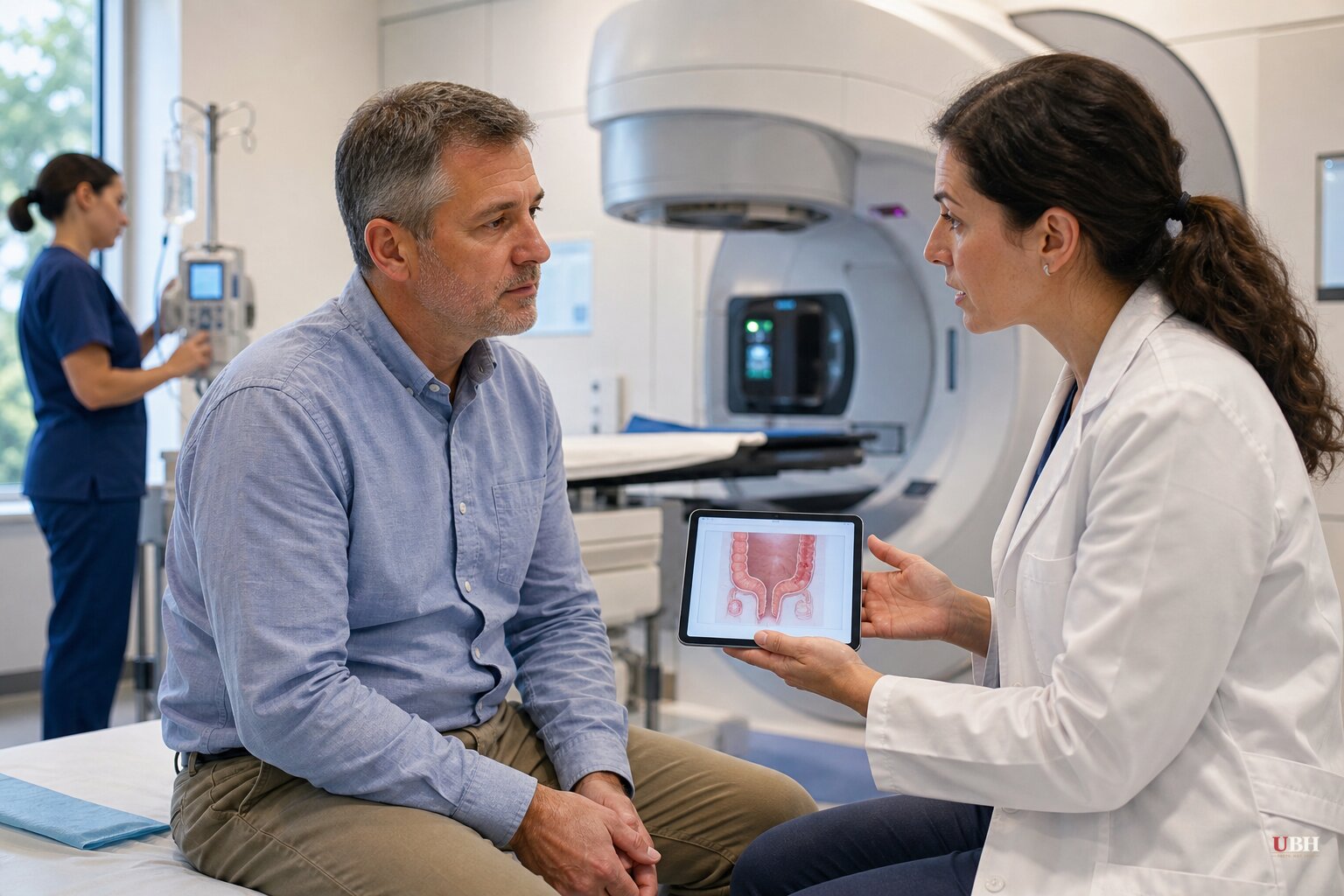
Researchers just handed thousands of rectal cancer patients an option that didn't exist before: skip the radical surgery, keep your rectum, and still beat the cancer.
The trial, called STAR-TREC, was run by teams from University College London, the University of Birmingham and the University of Leeds. It was funded by Cancer Research UK and Stand Up To Cancer. The results were published in The Lancet Oncology.
Right now, patients diagnosed with early-stage rectal cancer typically get a procedure called Total Mesorectal Excision, which removes the whole rectum along with surrounding fat and lymph nodes, according to the BBC. It works. Cure rates are high. But it comes with a brutal price tag: bowel dysfunction, sexual and urinary problems, and often a permanent colostomy bag.
Up to 14,000 people are diagnosed with rectal cancer in the UK every year, and about one in three catch it early, according to the University of Leeds. That's roughly 4,100 people a year who could be candidates for something better, per figures cited by The Independent and Cancer Research UK.
STAR-TREC split more than 500 patients across five countries, including England, into three groups. One group got five weeks of chemoradiotherapy. Another got five days of radiotherapy alone. The third got the current standard of radical surgery. Patients in the first two groups only underwent a more localized, rectum-preserving surgery if the treatment alone wasn't shrinking the tumor enough.
The result: four in five patients who got the five-week chemoradiotherapy regimen avoided a permanent stoma and kept their rectum. After a year, that group needed radical surgery less often than the group that got the shorter, five-day radiotherapy course.
Michelle Mitchell, chief executive of Cancer Research UK, called it a breakthrough that "could be life-changing for thousands of people." She noted that bowel screening is catching more rectal cancers earlier, which improves survival odds, but hasn't made treatment any less brutal for patients until now.
Professor Peter Johnson, NHS England's national clinical director for cancer, said the NHS already uses radiotherapy before surgery for some rectal cancer patients, and called these results "important in pointing the way for us to avoid radical surgery for more people in the future."
One patient's experience illustrates the data. Hugh Chown, 65, from Harrogate, was diagnosed after noticing occasional bleeding and contacting his GP. His consultant told him surgery would likely leave him with a permanent colostomy bag, then offered him a spot in the trial two weeks later. Chown took five weeks of daily radiotherapy sessions plus twice-daily tablets. The fatigue got worse through treatment and took about six months to fully clear. But he avoided the surgery. His consultant told him he'd had "a perfect result" and the cancer was gone, confirmed by a follow-up colonoscopy at 16 weeks.
This isn't a done deal yet. Researchers are following patients for three more years to see whether skipping radical surgery raises the odds of the cancer coming back or changes survival rates long-term. Fewer surgeries and preserved organs are a clear near-term win, but the field needs to know if it costs anything long-term. The long-term data isn't in yet.
Separate from the rectal cancer trial, Moderna and Merck announced on Aug. 19 that a personalized mRNA cancer vaccine, called intismeran, met its primary goal in a phase 3 trial for melanoma patients who'd had surgery to remove skin cancer, according to the Epoch Times. The vaccine, given alongside Merck's Keytruda, was built to target each patient's specific tumor mutations. In the trial of 1,137 patients, those who got both the vaccine and Keytruda were less likely to have their cancer come back or spread compared to those who got Keytruda alone, per an interim analysis the companies described but have not yet published in detail.
Moderna CEO Stéphane Bancel called it "a pivotal moment for the field of cancer research." Georgina Long, the trial's principal investigator, said the combination "has the potential to establish a new treatment paradigm." These are the companies' own words, not independently verified findings. Moderna and Merck haven't released the full trial data yet and say they'll present it at a future medical meeting and share it with regulators. Until that happens, this is a company announcement, not a peer-reviewed result like the STAR-TREC data.
The rectal cancer trial has published, peer-reviewed data in The Lancet Oncology with three more years of follow-up ahead. The melanoma vaccine has a company press statement with promising topline numbers and no public dataset yet. Patients and doctors should treat them accordingly.
Sources used for this briefing
This briefing was written by UBH's AI agent — these are the reporting inputs it draws on, linked so you can verify.


