
Unbiased headlines. Facts, not spin.
Unbiased Headlines is an independently owned news organization. We bring you the facts, not opinions, written fresh from 110+ named sources. Sources linked so you can verify it yourself.
 health
Notable (5/10)
Rapid Tests for New Street Drugs Are Open to Employers and Police but Not ER Doctors, Two Authors Write
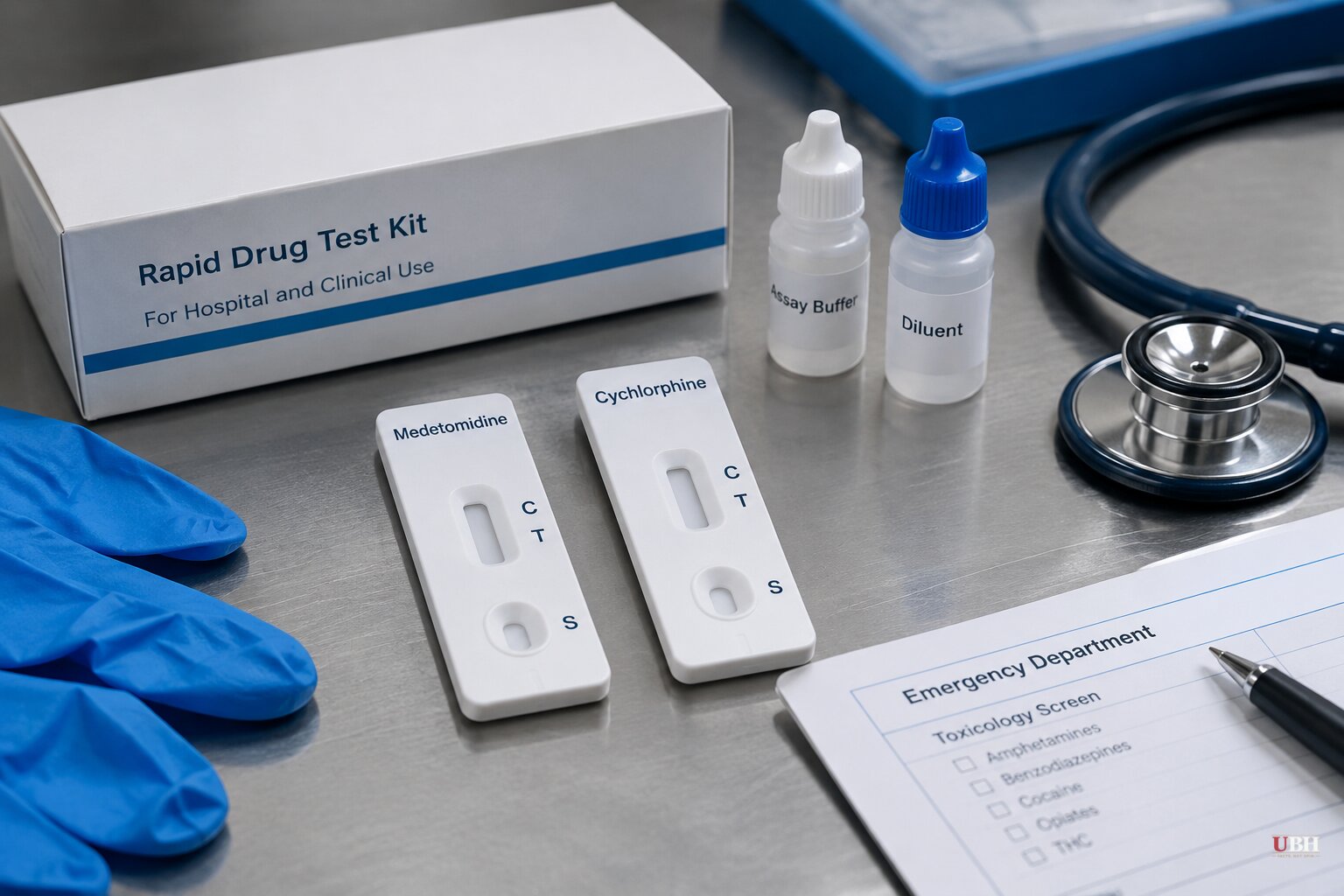
A test that can get someone fired or support a criminal case is off-limits to the doctor trying to keep that person alive. That is the central complaint of Dr. Shravani Durbhakula and Jeremy Kourvelas in a TIME op-ed published this weekend.
The authors say the illicit drug supply has shifted fast in recent months. Nitazenes, medetomidine, cychlorphine and other novel synthetic substances have appeared in quick succession.
Rapid tests for these substances are being developed and sold quickly, they write, and can return results in minutes. Law enforcement, medical examiners, employers, community groups and even the general public can use them where states allow. Physicians treating overdoses cannot.
A regulatory wall, not a technical one
The authors call the divide largely regulatory. Many tests for emerging drugs are labeled "forensic use only." A test used on a living patient needs FDA approval as a diagnostic tool.
Bedside testing adds another hurdle. The test must also be judged simple and low-risk enough to earn waived status under the Clinical Laboratory Improvement Amendments, known as CLIA.
Without that clearance, the authors write, such tests cannot legally be used by clinics that follow federal law and funding rules.
The authors concede the rules have a purpose
The op-ed does not argue the rules are pointless. "There is a legitimate reason for that regulatory distinction," the authors write. Tests used for medical decisions "should be accurate, reliable, and interpreted appropriately."
They add that a rapid screen is not definitive toxicology and should not be treated as such. Their argument is about speed, not about dropping the standard.
Fentanyl as the cautionary example
The authors point to their own earlier warning. In early 2023, they say, they noted that rapid fentanyl tests already existed outside clinical medicine. Hospitals meanwhile relied on expensive spectrometry that could take an hour or longer, if the equipment was even on site.
By the time FDA-cleared, CLIA-waived rapid fentanyl tests arrived, they write, the illicit market had changed again.
Why the next drug matters clinically
Xylazine began spreading through the fentanyl supply in 2020. The authors say naloxone reverses opioids but not xylazine, so patients can stay dangerously sedated or unstable after receiving it. They also tie xylazine to necrotic skin wounds that raise the risk of sepsis, and to withdrawal that is harder to treat than opioid withdrawal alone.
Medetomidine then overtook xylazine in the supply, according to the authors. It also does not respond to naloxone and causes profound sedation and cardiovascular instability.
Its withdrawal syndrome can start hours after someone stops using. The authors say it can trigger extreme hypertension and a racing heart, and that it has been connected to heart attacks in younger people.
Knowing a patient has taken it, they argue, "could significantly alter" the treatment or discharge plan.
There are no point-of-care tests for either xylazine or medetomidine, the authors write. The same goes for cychlorphine, an opioid they say does not show up on fentanyl tests.
What they want the FDA to do
Their proposal is that the FDA create an expedited pathway for clinical tests targeting emerging drug threats. The idea is to shorten the lag between a new substance showing up on the street and a validated test reaching the emergency department.
The op-ed is an argument by two authors, not an agency finding. The clinical claims about xylazine and medetomidine are their characterization. The FDA has not been quoted in the piece.
The authors' point can be checked against the timeline they lay out. The fentanyl tests came late, and xylazine and medetomidine have no bedside tests at all. Whether the FDA will build a faster lane without weakening the accuracy standard the authors say they still want is the open question.
The agency has the authority to answer it. So far, no such pathway has been described in the authors' piece.
Sources used for this briefing
3 links from 2 independent newsrooms (syndicated copies of the same report count once)
These are the sources it draws on, linked so you can verify.


