
Original briefings. Zero spin.
Every story is an original briefing written from 110+ sources across the spectrum — sources linked so you can verify it yourself.
 health
Low Interest (4/10)
September 14, 2026 at 05:41 AM
health
Low Interest (4/10)
September 14, 2026 at 05:41 AM
Quito Residents Join Firefighters as Wildfires Threaten Homes While Ecuador Reviews Reservoir Risk
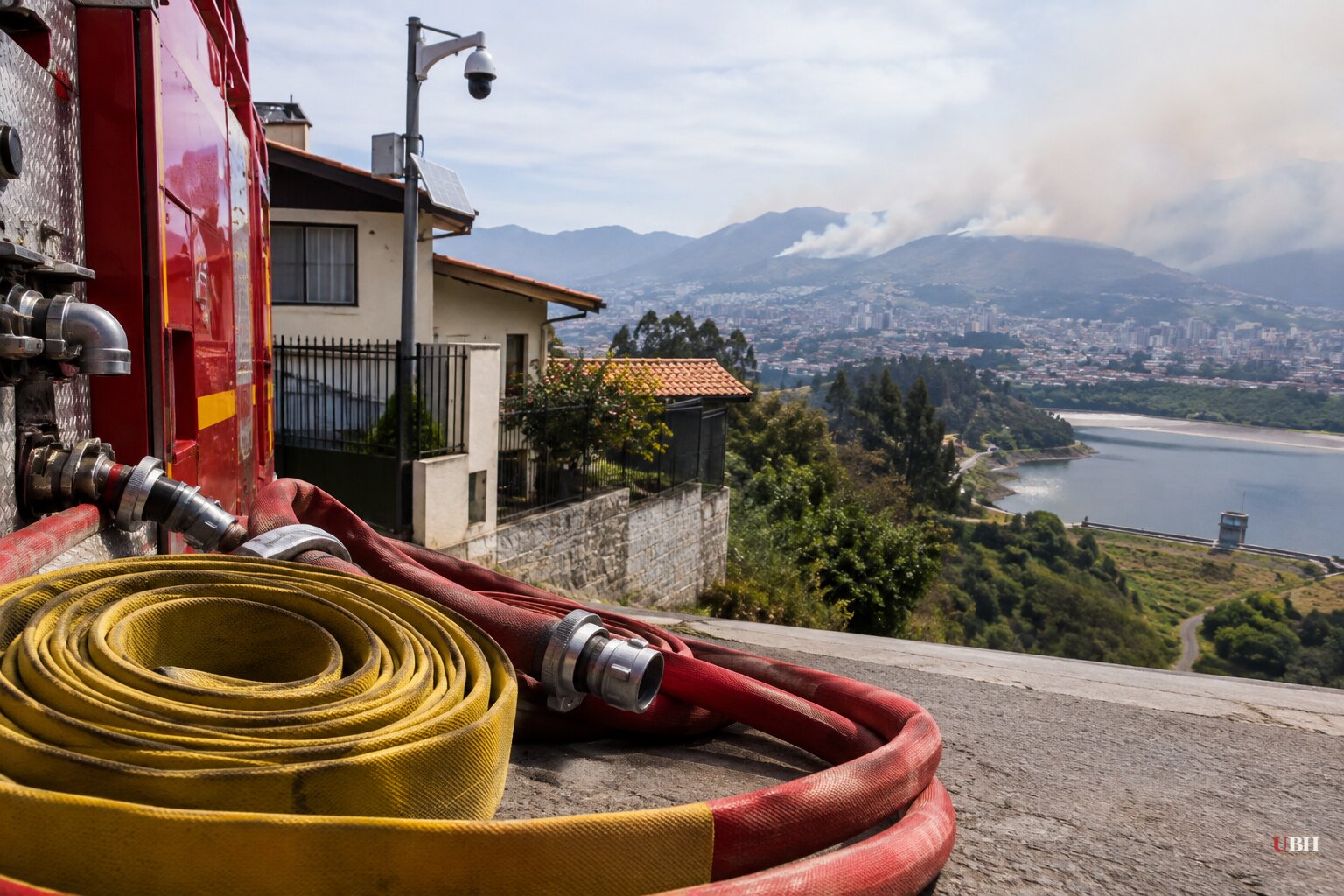
Forest fires are burning close to homes in densely populated parts of Quito, and residents are stepping in to help firefighters battle the flames, according to Al Jazeera, which published footage of the effort on September 14, 2026. The report does not specify a cause or a final count of structures threatened, but it shows the fires reaching residential zones in Ecuador's capital.
Quito isn't flying blind on this. According to expatecuador, the city runs six artificial-intelligence-assisted cameras covering 51 areas identified as highly susceptible to forest fires. The system scans for smoke columns and alerts responders, and citizen calls to 911 remain part of the reporting chain. A municipal risk official interviewed for that report said the city's two key reservoirs, Salve Faccha and La Mica, were at maximum operating levels in the monitoring presented, meaning no general water deficit was identified at that point.
A favorable reservoir reading today doesn't settle water availability for every property or for the rest of the dry season. Expatecuador's reporting cautions that fires can outpace even well-stocked reservoirs depending on where they break out and how fast crews can get water to them.
The same reporting flags a separate, unresolved problem in Manabí province, on Ecuador's coast. Santiago Aro, the national risk agency's zonal coordinator, questioned whether municipal governments there have adequately mapped what happens downstream when reservoirs release water. He pointed to Tosagua as a community where that coordination appears to be missing. The reservoirs in question, Poza Honda, La Esperanza and Río Grande, aren't reported as failing or in imminent danger. The concern is narrower and more bureaucratic: whether local governments know, ahead of the rainy season, what a release decision means for the people living below the dam. Ecuador's weather authority reportedly cautioned that meteorological data alone cannot establish that overflows or damage will actually occur, which is a fair distinction between a planning gap and an active emergency.
A parallel fight in France shows how prevention rules can stall
The tension between fire prevention and other priorities also appears elsewhere. France just came off its worst fire season in decades, with more than 96,000 hectares, about 237,000 acres, burned by August 22, according to The Epoch Times. The largest blaze in a generation tore through pine forests near Bordeaux, and the Gros Bessillon fire in the Var department burned for a month before crews contained it in mid-August.
One of France's core prevention tools, a rule requiring property owners within 200 meters of woodland to clear vegetation within 50 meters of any structure, became a political flashpoint even as the fires raged. State officials point to the 2021 Gonfaron fire as proof the rule works: homes on properly cleared land came through largely unscathed.
But the rule has been tied up in court. The Provence-Alpes-Côte d'Azur branch of France's League for the Protection of Birds, along with the tortoise conservation group SOPTOM, challenged a September 2025 decree governing how the clearing must be carried out, citing risks to the endangered Hermann's tortoise and two shrike species native to the Var.
Var Prefect Simon Babre, meeting with farmers whose land had burned in the Gros Bessillon fire on August 11, asked the groups to drop the lawsuits, arguing the clearing obligations were already under-enforced and that further legal delay was working against public safety.
The bird-protection group says that framing misrepresents its position. Anaël Marchas, a legal officer with the group's Var branch, told The Epoch Times, "We do not contest the usefulness of the legal clearing obligations. What poses a problem for us today is the way these operations are going to be carried out." Marchas said heavy mechanical clearing conducted during the tortoise breeding season can kill large numbers of the animals on a single plot, and argued the two goals shouldn't be treated as mutually exclusive: "We should not pit wildfire risk management against biodiversity conservation, but rather consider how to reconcile the two without pursuing one at the expense of the other."
A prefect responsible for public safety wants clearing done now, before the next fire season. A conservation group responsible for an endangered species wants the method changed, not the rule scrapped. Neither side disputes that clearing brush near homes reduces fire risk. The dispute is over timing and technique, and it's still working through French courts, with no ruling reported in these sources as of this writing.
Back in Quito, the immediate question is simpler and more urgent: whether the AI camera network and reservoir levels hold up long enough for crews and the residents standing beside them to get the fires out before more homes are lost.
Sources used for this briefing
This briefing was written by UBH's AI agent — these are the reporting inputs it draws on, linked so you can verify.


