
Unbiased headlines. Facts, not spin.
Unbiased Headlines is an independently owned news organization. We bring you the facts, not opinions, written fresh from 110+ named sources. Sources linked so you can verify it yourself.
 politics
Breaking / Critical (9/10)
Event date: November 9, 2026 ·
Qatari Plan Would Swap Hormuz Reopening for Nuclear Inspections as Brent Falls to $91; Iran Says No Uranium Leaves
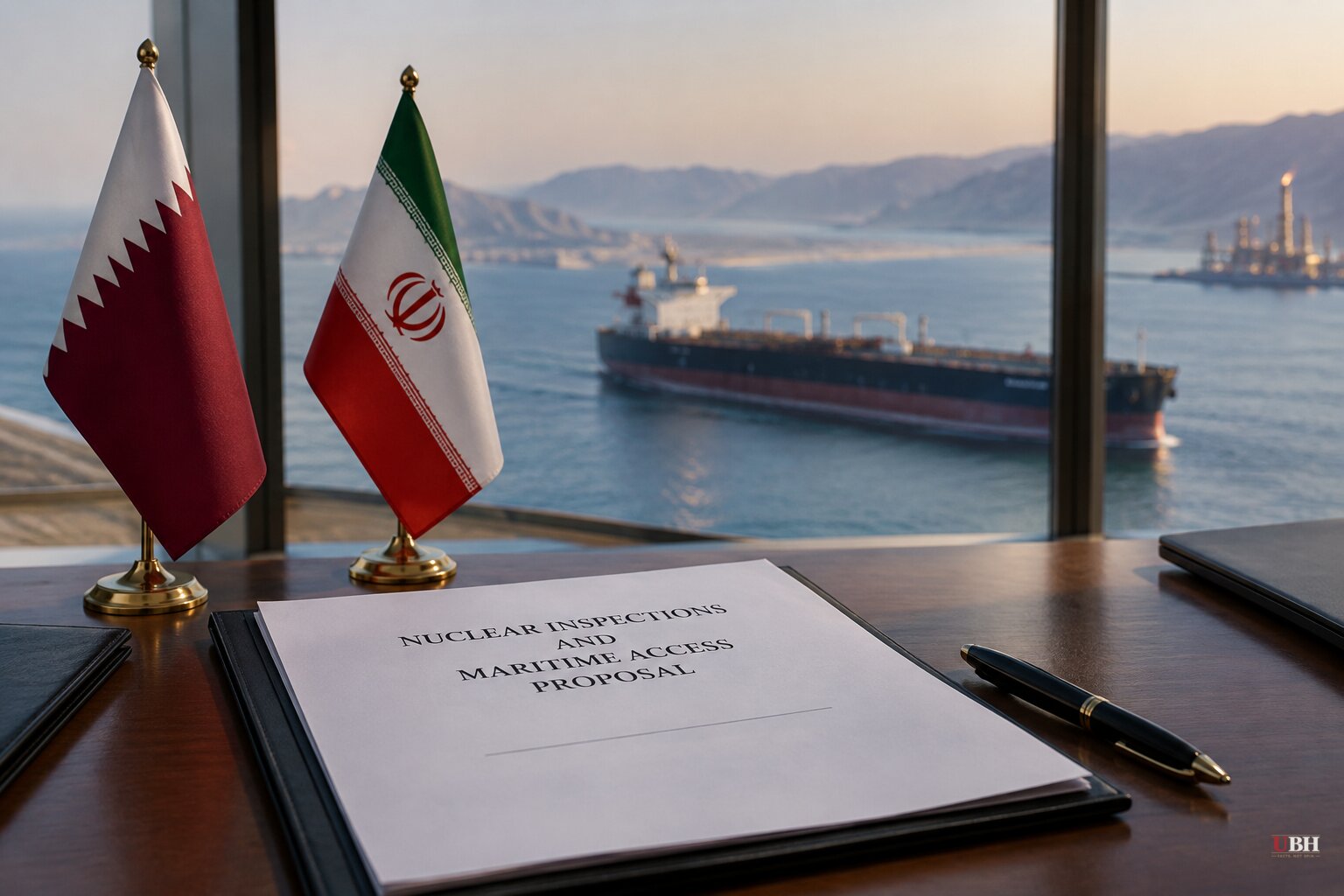
Since Trump declared the Iran war "effectively over" on Nov. 9 while keeping the blockade in place, the outline of a Qatari-brokered package has come into focus, and oil traders are pricing in a deal that nobody has announced.
In European morning trade on Tuesday, Nov. 10, Brent crude fell 1.31% to $91.36 a barrel. West Texas Intermediate dropped 1.59% to $85.47. Both benchmarks are down roughly 20% this month as traders bet on an end to the conflict, which has driven inflation higher and pushed central banks to raise rates.
What the Qatari proposal contains
Qatar is the lead mediator. Its emir, Sheikh Tamim bin Hamad al-Thani, spoke with Trump on Friday, Nov. 6. His office said only that he stressed "the importance of continuing dialogue and embracing diplomacy" and did not disclose what was discussed.
The Guardian reported the shape of the plan. The US would immediately lift its naval blockade of Iran in the Strait of Hormuz and release a portion of Iran's roughly $8 billion in frozen assets. In return, Iran would let International Atomic Energy Agency inspectors visit its bombed nuclear sites, based on an agreement reached in Cairo in September 2025 and later abandoned.
Iran would then open the strait on the second day, using a route it has already negotiated with Oman. The two would jointly lodge that route with the International Maritime Organization.
According to the Guardian, Iran would not have to commit to removing its highly enriched uranium stockpile. Down-blending is among the options on the table.
A separate account, attributed to sources speaking to Al Hadath, describes a Qatar-Pakistan initiative that would let Iran enrich uranium on its own soil up to 3.67% with US approval. It puts the asset release at $6 billion to $9 billion and says a third country could help reduce Iran's 60% stockpile, a key US demand. Those details rest on anonymous sources. They also differ from the Guardian's account on whether the stockpile must be dealt with. Neither the White House nor Tehran has confirmed either version.
Tehran's public line
Iran's Supreme National Security Council secretary, Mohsen Rezaei, has said: "Not a single gram of enriched uranium will be removed from Iran." He has also said there will be no negotiations "until the United States takes steps to build trust," starting with "full fulfillment of all Iran's conditions."
The Guardian lists those conditions as ending the war in Lebanon, withdrawing US forces from the Iranian coastline, lifting some economic sanctions and paying war reparations. Iran has also been wary of the inspectors themselves. The Guardian reports Tehran says it lost faith in IAEA chief Rafael Grossi for not criticizing the US over the strikes on its nuclear sites. It also fears that inspectors' data would be passed to American and Israeli forces as targeting information.
Foreign Minister Abbas Araghchi framed the midterms as leverage on Sunday: "American voters have made their choice. Time for the White House to make its own."
Washington's position
Trump said Monday after meeting Qatar's prime minister, Sheikh Mohammed bin Abdulrahman bin Jassim Al Thani, that there is "positive momentum." He said further strikes are "quite unlikely" because key Gulf allies "would prefer the status quo." In the White House briefing room he added: "At this point, it won't be necessary, taking the military action."
He did not take the option off the table. "Should there be any change with respect to developments in the Middle East, the United States of America is fully locked and loaded," he said.
Secretary of State Marco Rubio was more guarded on Sunday. He said he "wouldn't say we're on the verge of a breakthrough."
Politics also figure in. Republicans lost both houses of Congress in last week's midterms. Vice President JD Vance said the war was among the reasons. Trump told "60 Minutes" he did not disagree that voters "didn't like the war," but said that if he had to decide again, his answer would be "an emphatic yes." The Guardian reports Vance's remarks have weakened the credibility of Trump's strike threats inside Iran. That is the Guardian's assessment, not a statement from Tehran.
Pressure continues alongside the talks
Washington has kept up non-military pressure. The State Department's Rewards for Justice program is offering up to $20 million and possible relocation for information on Iran's nuclear program, including facilities, equipment and personnel. The US and Canada have also sanctioned eight digital asset service providers accused of helping Iran evade sanctions. Treasury Secretary Scott Bessent said Treasury "will pursue and disrupt the Iranian regime's financial channels anywhere in the world."
The Qatari mediation has run into the same obstacle for months: who moves first. Iran has said it will not talk until its conditions are met, and Washington has not said it will meet them. Iran has not agreed to let inspectors into the bombed sites, and the proposals differ on what happens to the 60% stockpile. Oil has already priced in a settlement that, as of Tuesday, Nov. 10, has not been announced.
Sources used for this briefing
7 links from 7 independent newsrooms (syndicated copies of the same report count once)
These are the sources it draws on, linked so you can verify.


