
Unbiased headlines. Facts, not spin.
Unbiased Headlines is an independently owned news organization. We bring you the facts, not opinions, written fresh from 110+ named sources. Sources linked so you can verify it yourself.
 politics
Major Story (7/10)
Event date: October 2, 2026 ·
Supreme Court Lifts Injunction, Letting Big Bend Border Construction Resume in 8-1 Ruling
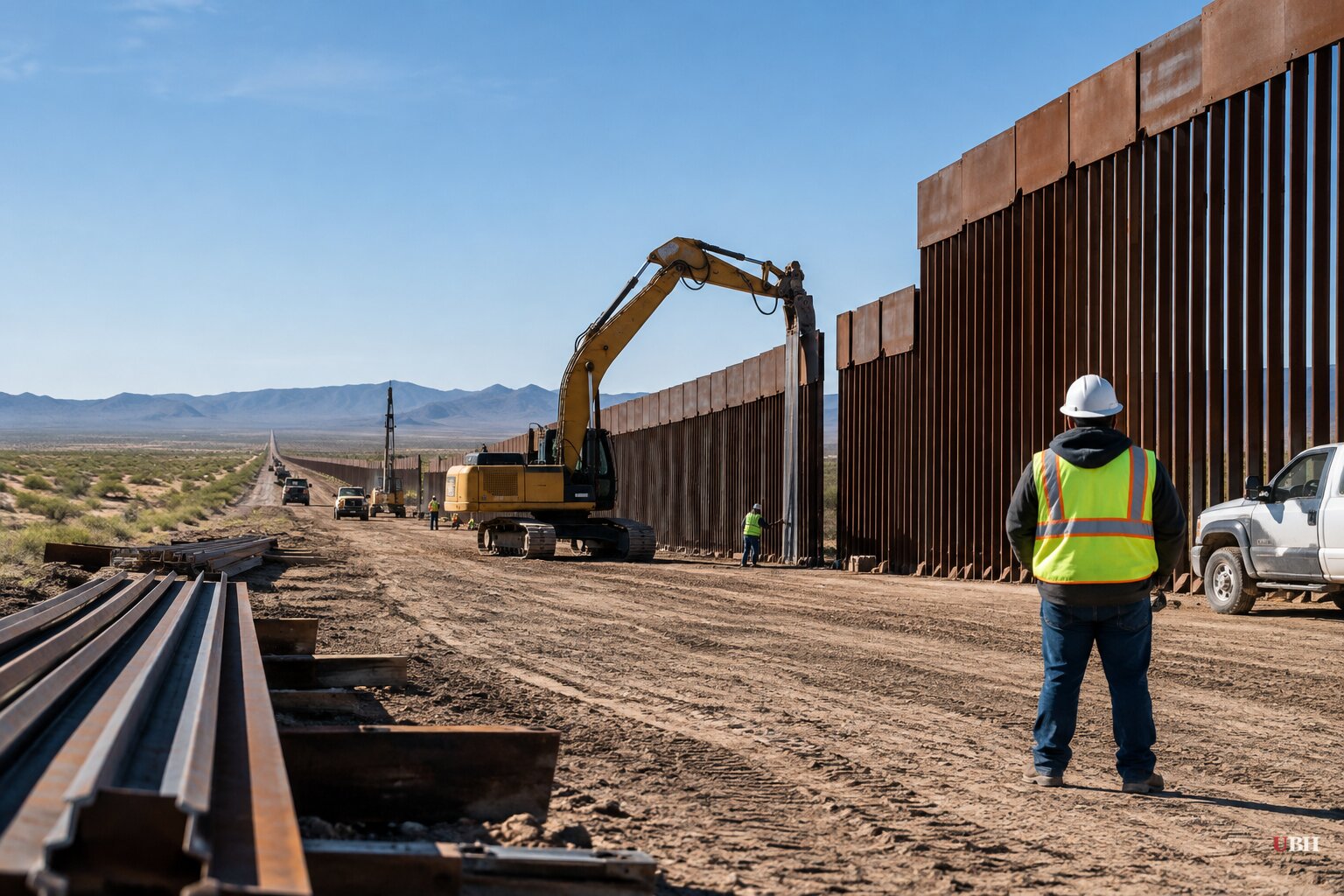
The Supreme Court on Monday, Nov. 9, allowed the Trump administration to resume building border barriers, roads and surveillance infrastructure in the Big Bend region of West Texas. The unsigned, five-page decision stays a preliminary injunction issued by U.S. District Judge Kathleen Cardone in El Paso.
Justice Ketanji Brown Jackson was the lone dissenter. She wrote no explanation, noting only that she would deny the government's application. Department of Homeland Security General Counsel James Percival put the tally at 8-1 on X.
A ruling about who can hear the case
The decision turns on jurisdiction, not on whether the wall belongs in Big Bend. A 1996 immigration law lets the Homeland Security secretary "waive all legal requirements" needed to speed border construction. It allows court challenges to those waivers only when they allege a constitutional violation.
The justices said the government is "exceedingly likely to prevail" on its argument that the district court had no authority to hear the challenge. They rejected the plaintiffs' framing outright: "There is no such thing as a 'constitutional' major-questions claim." The major-questions doctrine is a rule for reading statutes, the court said, and the plaintiffs' claim is that the secretary exceeded his statutory authority.
On the balance of harms, the court wrote that Congress, in allowing waivers of environmental and conservation laws, showed "a clear preference for expeditious border construction over the very harms respondents assert." The government's interest, it said, "outweighs any aesthetic, recreational, and environmental harm alleged by respondents."
A Customs and Border Protection official had told the court the halt was costing nearly half a million dollars per day that could not be recouped if the government ultimately won.
What Cardone found
Cardone blocked the waivers and construction on Oct. 2, finding the challengers likely to succeed. She found that the Big Bend Sector has "the lowest rate of illegal entry along the entire U.S.-Mexico border."
The Big Bend Sector spans more than 500 miles, roughly a quarter of the southern border. Reuters reported it accounted for just 1.3% of all border apprehensions in 2025, and CBP statistics put the figure at about 1% of encounters.
The administration says otherwise. Solicitor General D. John Sauer warned the court that blocking construction would disrupt "the government's ability to secure a quarter of the southern border against cartel incursions, drug trafficking, and illegal entry." He said it would also create "a massive vulnerability" that risks "funneling illegal entry and trafficking into the unsecured Big Bend Sector." The administration says 89,000 people have been detained trying to enter the United States in the sector in recent years.
The plaintiffs respond
The challengers are the Center for Biological Diversity, Friends of the Ruidosa Church (a nonprofit restoring a historic church in Ruidosa, Texas) and river guide Danny Miller, who owns property in the area. They told the court the work would cause "the permanent alteration of an irreplaceable landscape" that includes Big Bend National Park, Big Bend Ranch State Park and nearly 200 miles of the Rio Grande Wild and Scenic River corridor.
"This horrific decision clears the way for contractors to bulldoze pristine desert and dynamite canyon walls before the courts have even decided whether this destruction is legal," said Laiken Jordahl, the center's national public lands advocate.
What is being built
The Daily Signal reported that Congress approved $46 billion for construction of the wall, with the Texas portion in question just one section. The government says the Big Bend work would involve 341 miles of construction. The dispute centers on three waivers issued by then-Homeland Security Secretary Kristi Noem in February and her successor, Markwayne Mullin, in May and July.
The plan has drawn opposition across party lines. When photos and videos shared on social media in August showed bulldozers arriving at Big Bend National Park, Republican and Democratic lawmakers, cattle ranchers and local law enforcement in Texas pushed back. CBP Commissioner Rodney Scott announced that construction inside the park would be paused until the end of September.
CBP says the proposed 30-foot border wall will not cut through Big Bend National Park, but other infrastructure would, including more than 200 miles of patrol roads and roughly 17 miles of a vehicle-barrier system. Administration officials have said the park barrier will not feature the 30-foot steel fencing planned elsewhere. Most Big Bend construction would be on private land, officials said. One landowner, Charlie Angell of Redford, has said a map of the administration's plans would split his riverfront outfitting property in half and cut him off from the Rio Grande.
Mullin has told Congress the primary border wall will be finished by June 2027 and the secondary wall by summer 2028.
What comes next
The stay is temporary. It lasts until the government files its petition for certiorari and the Supreme Court disposes of it. If the court denies review, the stay ends automatically. If it takes the case, the stay ends when the court's judgment goes back to the lower court.
The unresolved issue is whether any court can test the claim that a sector accounting for roughly 1 percent of apprehensions qualifies as an area of "high illegal entry" under a waiver law that sharply limits judicial review.
Sources used for this briefing
13 links from 13 independent newsrooms (syndicated copies of the same report count once)
These are the sources it draws on, linked so you can verify.


