
Unbiased headlines. Facts, not spin.
Unbiased Headlines is an independently owned news organization. We bring you the facts, not opinions, written fresh from 110+ named sources. Sources linked so you can verify it yourself.
 politics
Major Story (8/10)
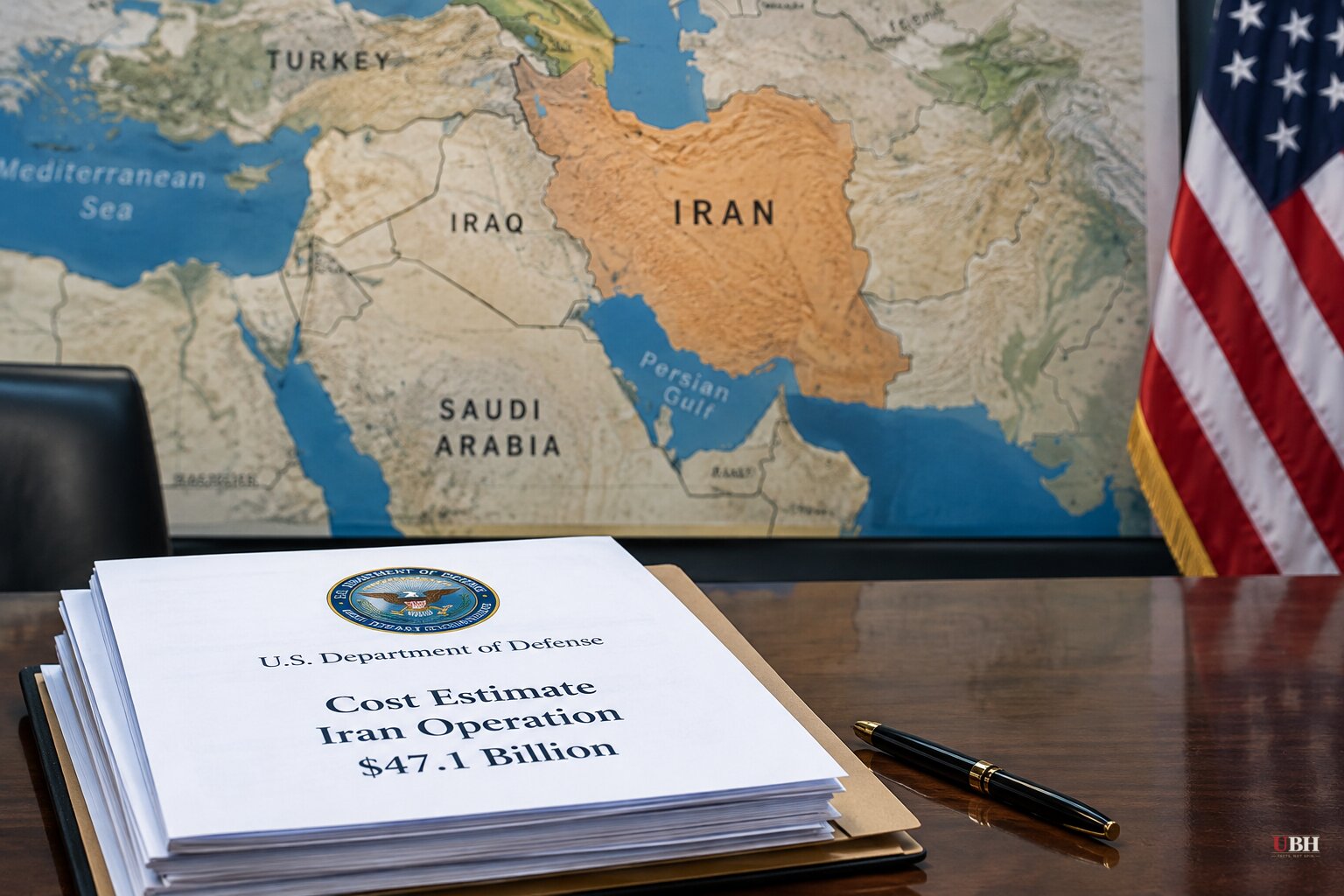
Trump Says Protected Nations Will Repay 'Any and All Costs' of Iran War, Which Pentagon Puts at $47.1 Billion
President Donald Trump says someone else is getting the bill for the Iran war.
"Those countries that we've protected are going to pay us back any and all costs that we've had for the war," Trump said in a CBS "60 Minutes" interview that aired Sunday, Nov. 8. "Because without us, they wouldn't exist. Without us, Israel would not exist."
He did not say which countries, how much, or how the money would be collected.
What the war has cost so far
The latest Pentagon figure is $47.1 billion, according to a U.S. Central Command estimate given to Congress and current as of Oct. 16. That is up $3.5 billion from about $43.6 billion in early September.
The biggest line item is replacing munitions, at roughly $29 billion. Missile interceptors fired from Patriot and THAAD batteries are the most drawn-down stockpiles. A single Patriot interceptor costs roughly $4 million.
The Congressional Budget Office put the cost at about $38 billion from February through early August. It said more than $13 billion of that went to air defense interceptors.
The Wall Street Journal, citing unnamed U.S. officials, reported that by mid-July the U.S. had used more than 1,700 Patriot interceptors and over 200 THAAD missiles in the Middle East.
Any bill to allies would be hard to itemize. Iran has attacked at least 11 countries since the U.S. and Israel struck it on Feb. 28, with the UAE and Israel hit hardest. It is unclear how many interceptors defended which country, or how many were fired at a single incoming missile.
Trump on the midterms
Republicans lost control of Congress last week. Trump first said he was not on the ballot and that the result would have been "much different" if he were.
Then he added: "There's something beyond that. They didn't like the war. They didn't like the fact that gasoline went up, 'cause I had it down at a low, and there's a great dislike, incredibly, for Israel."
Vice President JD Vance had said the day after the election: "If you'd like to argue it was worth it, that losing the Senate for the next 6 years was worth it, then do so." Asked about Vance blaming the war, Trump replied, "I don't disagree with it."
Gas prices rose after Iran closed the Strait of Hormuz, through which about 20 percent of global oil previously moved.
An AP-NORC poll taken before the election found most voters wanted Congress to prioritize ending the conflict.
Trump defends the decision
Trump said he does not regret launching the war. "You can't let Iran have a nuclear weapon," he said. "I think, historically, this will be a very good decision. Is it a good decision for today and tomorrow? Maybe not. But I have to go with what's right for our country."
The International Atomic Energy Agency says Iran holds 440.9 kilograms of uranium enriched to 60% purity, a short technical step from the 90% weapons-grade level. Iran says its nuclear program is peaceful.
Senate Minority Leader Chuck Schumer takes the opposite view. "Trump and his ego led us into this war with no plan, no authority, and no exit strategy," he said in a news release. Democrats have tried to end the war through legislation that failed in the Republican-controlled Congress.
Israel and the aid question
Trump's remarks come as support for Israel has become a liability for both parties. Vance has suggested Republicans will have to rethink their long-standing backing. CNN reported that Trump said on Election Day he would end $4 billion in annual aid to Israel.
Israeli journalist Amir Tibon warned on X that "the new Congress will start holding up arms sales" unless Israel acts quickly.
Iranian Foreign Minister Abbas Araqchi answered Trump's interview by blaming Israel. "Americans are fed up with Israel maneuvering the US into being dragged into endless wars," he said.
Fighting and talks continue
Trump said he is "not looking to" escalate. He told CNN that if Tehran signs a "strong agreement," resuming strikes is "highly unlikely." He added that the U.S. has identified infrastructure targets, including 38 bridges, if fighting resumes.
The U.S. military has still carried out limited strikes on Iran at least twice in the past week, including against air defenses. On Saturday it disabled a commercial ship the U.S. says was trying to breach its naval blockade of Iranian ports.
Secretary of State Marco Rubio said talks are not close to a breakthrough. Before leaving for the G7 summit in Paris, he called some of Tehran's demands "outrageous, ridiculous" and "not really realistic."
Iran's state broadcaster said four tankers were halted in the Strait of Hormuz over the past 24 hours. Authorities in the UAE city of Khor Fakkan, about 20 miles south of the strait, closed a beach Monday after an oil spill was found on the coastline.
What comes next
The administration is asking Congress for a $95 billion package to help fund the Iran war and other priorities, along with a $1.5 trillion military budget. That request now goes to a Congress whose control has flipped.
Whether any government writes a check for the war's costs is untested. Trump has not said what a repayment would be measured against, and no country has been named as agreeing to one.
Sources used for this briefing
7 links from 7 independent newsrooms (syndicated copies of the same report count once)
These are the sources it draws on, linked so you can verify.


