
Unbiased headlines. Facts, not spin.
Every story is an unbiased news briefing written from 110+ sources across the spectrum — sources linked so you can verify it yourself.
 politics
Notable (6/10)
August 13, 2026 at 03:06 PM
politics
Notable (6/10)
August 13, 2026 at 03:06 PM
Putin Visits Disputed Kuril Islands, Japan Summons Russian Ambassador in Protest
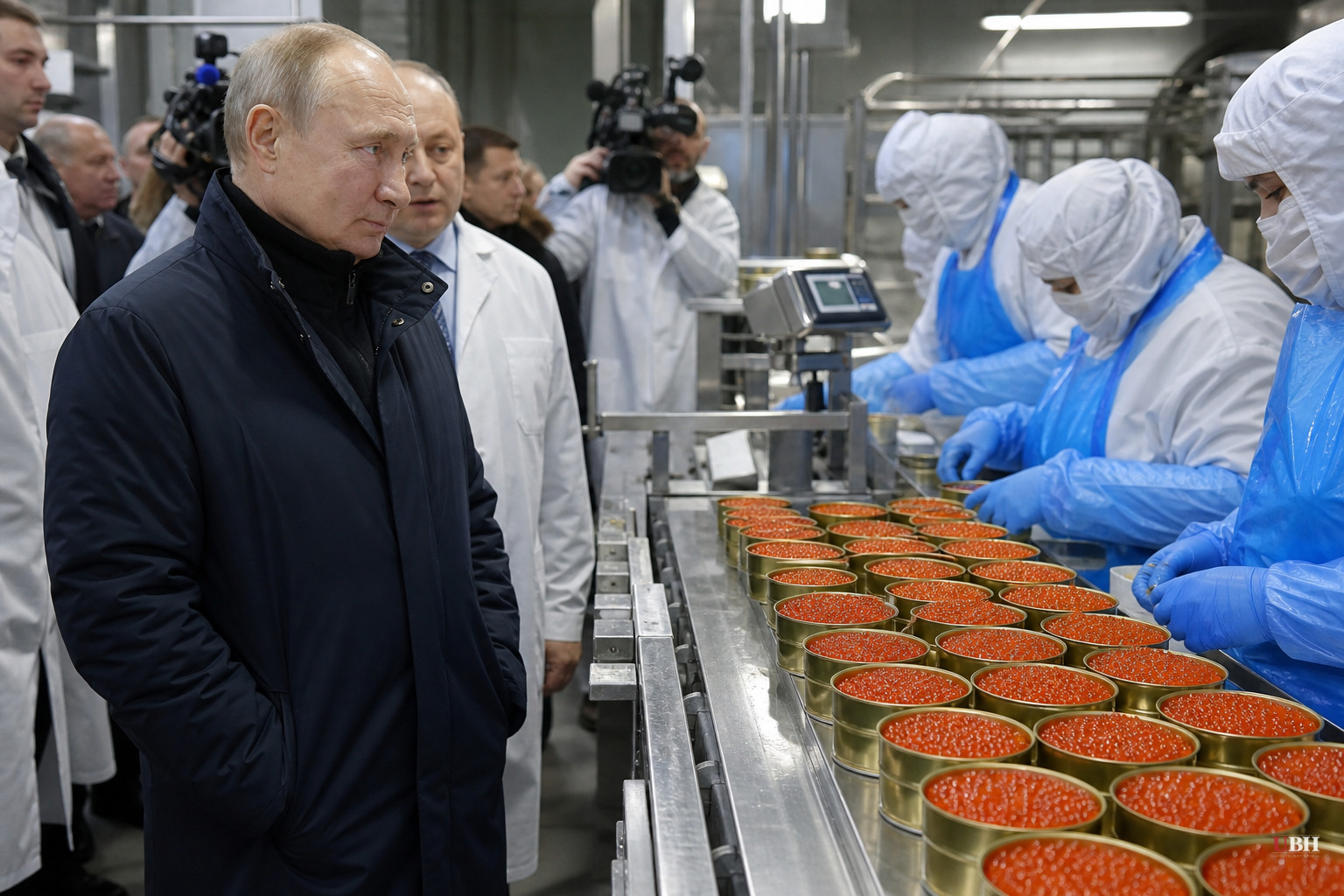
Vladimir Putin set foot on the Kuril Islands for the first time as Russian president on Thursday, August 13, touring a fish-processing plant, a hospital and a school on the island of Iturup, according to Russian state media cited by Al Jazeera. He sampled caviar at the Yasny fish complex, met with the regional governor, and made a point of doing it all in front of cameras.
Japan wasted no time responding. Prime Minister Sanae Takaichi called the visit "absolutely unacceptable," telling reporters in Tokyo it "offends the sentiments of the Japanese people" and runs against Japan's consistent position on what it calls the Northern Territories, according to Al Jazeera. Foreign Minister Toshimitsu Motegi summoned Russian ambassador Nikolay Nozdrev to lodge a formal protest, per Japan's Ministry of Foreign Affairs.
The islands, known as Kunashiri, Etorofu, Shikotan and the Habomai group in Japanese, were seized by the Soviet Union in the final days of World War II. The Soviets didn't even declare war on Japan until August 8, 1945, two days after Hiroshima and a week before Japan's surrender. Around 17,000 Japanese residents were deported when Moscow took control. Today about 20,000 Russian citizens live there instead.
Japan's position rests on more than sentiment. Tokyo argues the islands are Japanese territory "both historically and under international law," as Motegi put it. The dispute has blocked Russia and Japan from ever signing a formal peace treaty ending World War II, eight decades later. It's an unresolved war.
Putin's counter-argument
Putin didn't stay quiet. Speaking Wednesday on Sakhalin before heading to the Kurils, he called Japan's sanctions on Russia "unprovoked" and pushed back on the idea that Moscow is the aggressor here. "Japan has identified Russia as a major source of threats. I would like to point out that we are not threatening Japan. On the contrary, it has territorial claims against our country," Putin said, according to The Guardian.
He also declared the four islands are recognized as Russian "in international documents" — a claim Japan flatly rejects, and one that conveniently ignores the circumstances under which the Soviets took the territory in 1945.
Not the first Kremlin visit, but a first for Putin
Putin's trip is a milestone for him personally, but not for Russian leadership generally. Dmitry Medvedev visited Kunashiri in 2010 while serving as president, and returned multiple times afterward as prime minister, according to Euronews. Medvedev was widely seen as a Putin loyalist, so the earlier visits already signaled Moscow's intent to treat the islands as settled Russian territory. Putin going in person adds symbolism, not new policy.
There was a moment when this looked like it might actually get resolved. The late Japanese Prime Minister Shinzo Abe built a working relationship with Putin that included resumed visits by former Japanese residents to family graves on the islands and real talk of a peace treaty, according to The Guardian. That thaw is dead. Russia's full-scale invasion of Ukraine in 2022 pushed Japan to join G7 sanctions against Moscow and to send Kyiv money and non-lethal aid, and relations have been cold ever since.
Strategic stakes beyond symbolism
The islands aren't just a historical grievance. Euronews notes they've become increasingly important strategically since the war, giving the Kremlin military bases in the Pacific. The chain also sits on rich fishing grounds and mineral deposits, and Putin's Sakhalin stop involved inspecting live navy drills and a meeting explicitly billed by Russian state outlet RIA Novosti as being about "ensuring the security of Russia's eastern borders."
Coverage across outlets was largely consistent on the facts here. Al Jazeera, The Guardian and Euronews all confirmed the same sequence: Sakhalin drills, then the Iturup visit, then Tokyo's protest. None of the three offered independent legal analysis of the competing sovereignty claims. Both sides' positions were reported largely through their own officials' statements rather than outside international-law experts.
None of this changes anything on the ground. Russia isn't returning the islands, Japan isn't dropping its claim, and Putin's visit paired with Moscow's deepening ties to China and North Korea, as Euronews noted, suggests Tokyo should expect more provocation, not less. The open question is whether Japan escalates beyond diplomatic protests, given it has no realistic military option and Washington has shown no sign of getting directly involved in this specific dispute.
Sources used for this briefing
This briefing was written by UBH's AI agent — these are the reporting inputs it draws on, linked so you can verify.


