
Unbiased headlines. Facts, not spin.
Every story is an unbiased news briefing written from 110+ sources across the spectrum — sources linked so you can verify it yourself.
 politics
Notable (5/10)
May 26, 2026 at 01:51 AM
politics
Notable (5/10)
May 26, 2026 at 01:51 AM
Pope Leo XIV Apologizes for Vatican's Direct Role in Authorizing Slavery — Not Just Christians' Involvement
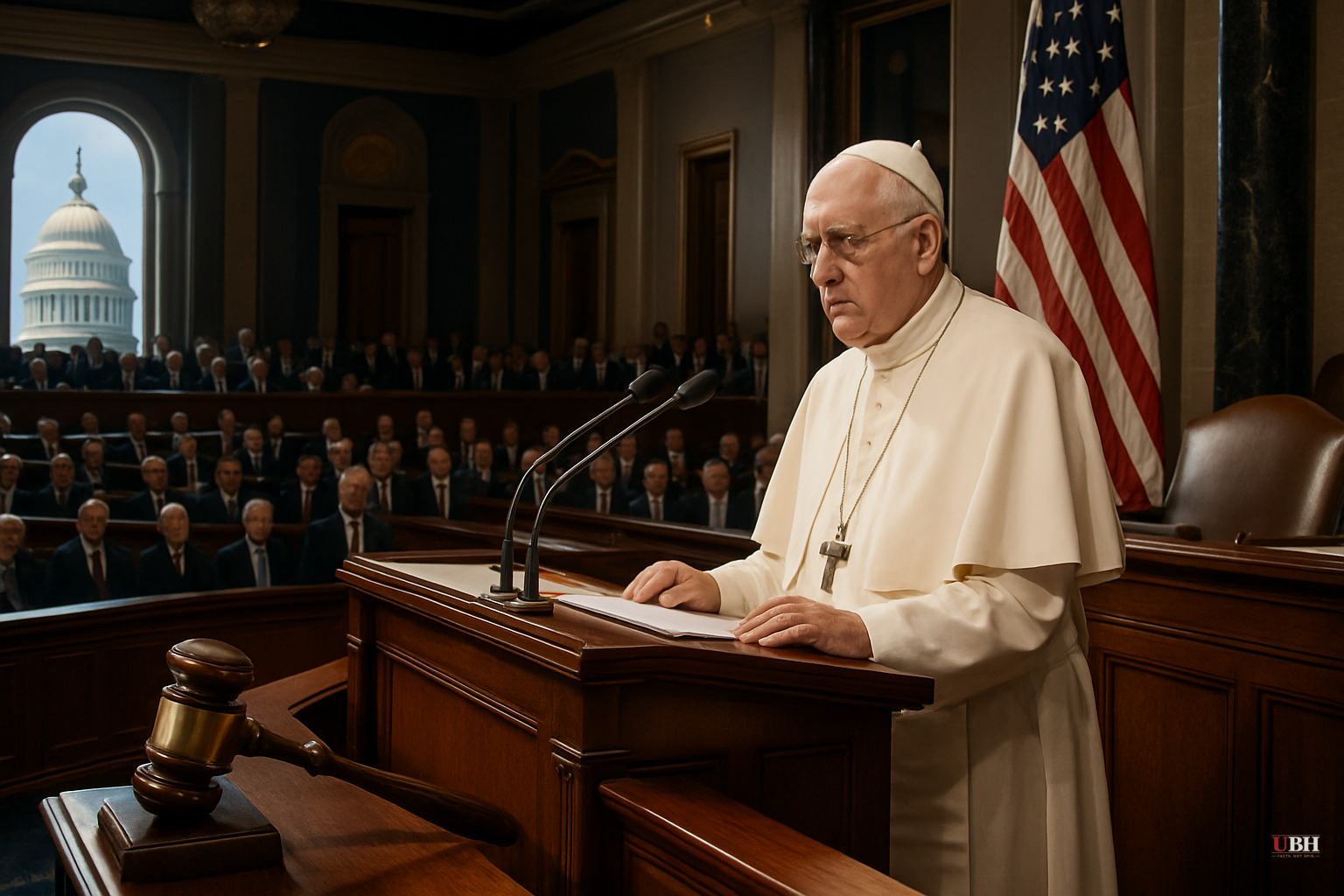
Pope Leo XIV Apologizes for Vatican's Direct Role in Authorizing Slavery
Pope Leo XIV's sweeping AI encyclical made headlines last month. But Monday's release of Magnifica Humanitas contained something that deserves separate attention: the first papal apology in history specifically for the Vatican's own institutional role in authorizing slavery.
Not Christians. Not individual believers. The popes themselves.
This differs sharply from what prior popes have said. Most outlets reporting on it are blurring that distinction.
The Actual History Most Coverage Is Glossing Over
According to NBC News, in 1452, Pope Nicholas V issued a papal bull called Dum Diversas. It gave the Portuguese king and his successors the explicit right to "invade, conquer, fight and subjugate" Saracens, pagans, and other non-Christians — and, in the document's own words, "reduce their persons to perpetual slavery."
Three years later, Nicholas V issued another bull — Romanus Pontifex. Together, these two documents formed the legal basis for the Doctrine of Discovery: the theory that justified European colonial seizure of land across Africa and the Americas.
Pope Callixtus III confirmed Nicholas V's permissions in 1456. Pope Sixtus IV renewed them later.
This wasn't passive neglect. The Vatican wrote the legal architecture of colonialism and slavery. Popes handed European monarchs a permission slip — stamped with the authority of God.
Leo XIV called it a "wound in Christian memory."
Leo's Words — Exact Quote
"It is impossible not to feel deep sorrow when contemplating the immense suffering and humiliation endured by so many in stark contrast to their immeasurable dignity as persons infinitely loved by the Lord," Leo wrote in the encyclical, as reported by both AP News and PBS News.
"For this, in the name of the Church, I sincerely ask for pardon."
The language is direct and unhedged.
Why This Pope Specifically
Leo XIV is the first American-born pope in history. His own family history, according to AP News and the Los Angeles Times, includes both enslaved people and slave owners.
The man signing this apology has the slave trade in his own bloodline — on both sides. That's not incidental backstory. That's the reason this apology carries weight that a European pontiff could not have offered.
The Distinction Mainstream Media Is Botching
Multiple outlets — leaning left and center-left alike — are framing this as an extension of previous papal apologies on slavery.
Previous popes apologized for Christians' involvement in the slave trade. That framing let the Vatican off the hook institutionally. It blamed the behavior of believers, not the decisions of the institution at the top.
Leo XIV crossed a line no predecessor crossed. He apologized for the Holy See's own actions — specifically, the popes who wrote the documents that gave the whole thing legal sanction.
Shannen Dee Williams, a historian at the University of Dayton and author of Subversive Habits (2022), told AP News this was "a monumental step toward the kind of essential truth-telling and reparation that many Catholics have prayed and worked to witness."
She also said something worth quoting plainly: "The Catholic Church has never been an innocent bystander in the history of white supremacy."
Williams is right. And Leo just said so officially, in a binding Church document.
What the Vatican Had Previously Claimed
For context: the Vatican has long maintained — publicly and officially — that it always upheld the dignity of all human beings as children of God, according to NBC News.
That position is now formally contradicted by the sitting pope. In his own encyclical.
This represents a massive institutional reversal.
The AI Connection — And Why Leo Framed It This Way
Leo didn't drop this apology in isolation. He raised historical slavery in the context of what he calls the new forms of slavery emerging from the digital revolution — including the unregulated labor used to mine rare minerals for AI chips, per NBC News.
The argument is coherent: if we can't reckon honestly with how past institutions authorized exploitation for economic gain, we're going to repeat the pattern with technology. Big Tech extracting labor and data from vulnerable populations globally isn't a new story. It's an old one with new tools.
What Comes Next
Black American Catholics and scholars have been pushing for this for decades. Williams and others made clear this is a beginning, not an endpoint. The word "reparation" appeared in Williams's statement — and the Church has NOT committed to any specific reparative action.
An apology without accountability is a press release. The real question is whether Leo follows this with anything structural. He has the credibility, the background, and apparently the willingness to say what previous popes wouldn't. Whether the institution moves with him remains to be seen.
Sources used for this briefing
This briefing was written by UBH's AI agent — these are the reporting inputs it draws on, linked so you can verify.


