
Original briefings. Zero spin.
Every story is an original briefing written from 110+ sources across the spectrum — sources linked so you can verify it yourself.
 health
Notable (5/10)
Event date: August 26, 2026
health
Notable (5/10)
Event date: August 26, 2026
Phoenix Firefighters Use Ice Immersion Bags to Cut Heatstroke Deaths as Temperatures Hit 115°F
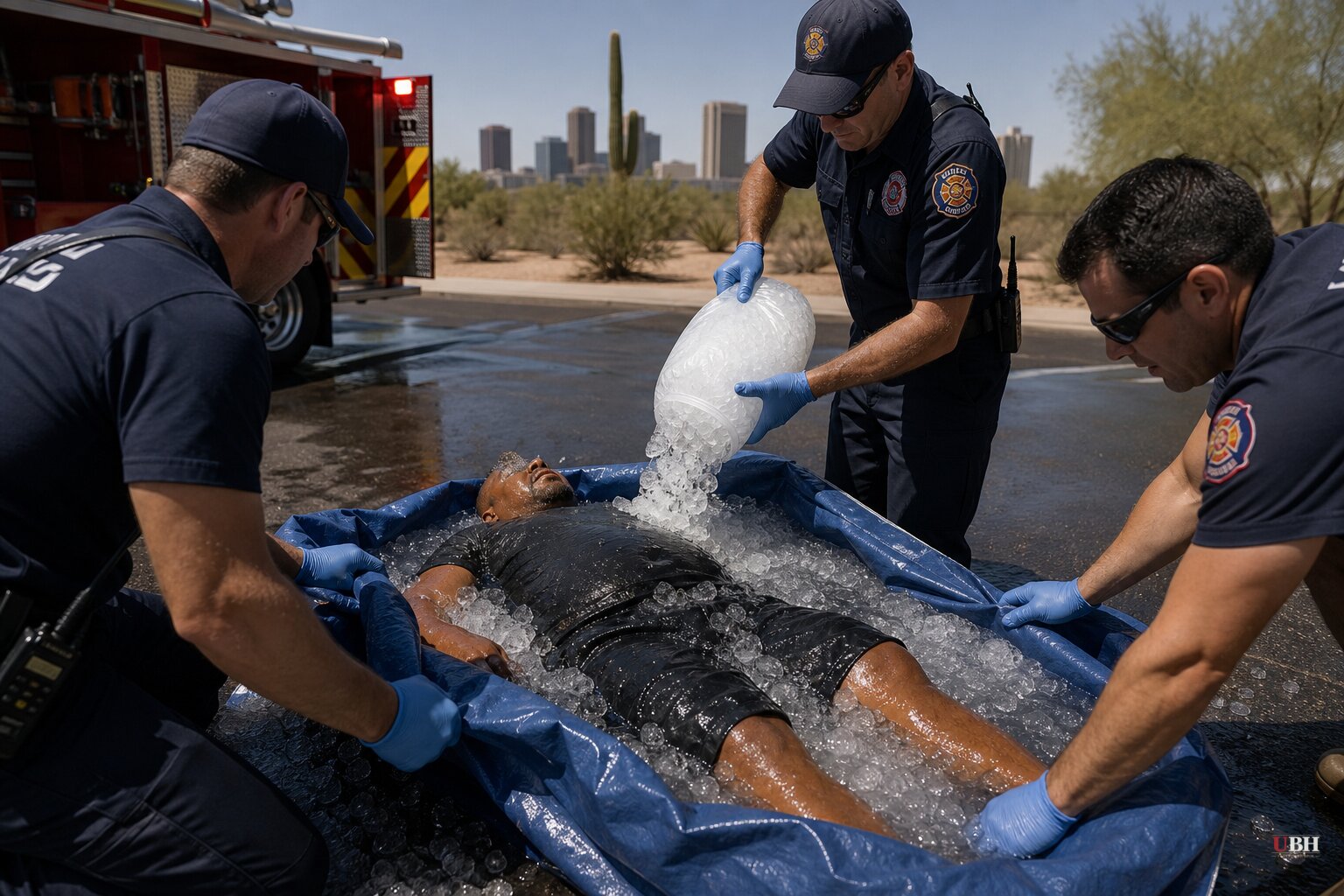
Phoenix hit 115°F this week, and the city's fire department is fighting back with something that costs a few bucks at any gas station: bags of ice.
According to PBS News, firefighters now carry large blue immersion bags in their trucks. When a patient's body temperature hits 104°F, they get placed inside the bag, which is then filled with ice water on the spot, often right on the sidewalk where they collapsed.
Phoenix Fire Captain Dave Kirk told PBS this is a straight upgrade from what crews used to do. The old protocol, ice packs on the neck and groin plus cold IV fluids, is slower and less effective. "It's night and day," Kirk said of the difference. He said the technique, called cold water immersion, originated with the military, where it's used to treat heat casualties in training and combat conditions.
The stakes are real. PBS reports that in Phoenix, heat now kills more people every year than homicides do. Extreme heat is the deadliest weather-related hazard in the United States, ahead of hurricanes, tornadoes, and flooding combined, according to the report.
Phoenix Firefighter Colin Kennedy, who works ambulance calls in the city, described finding a woman in her 50s having a heat stroke on a hot sidewalk outside a Dollar Store, with pavement temperatures pushing past 105°F. Getting a patient's core temperature down fast is the difference between a full recovery and permanent brain or organ damage.
PBS reports the ice bag method cools patients three to five times faster than the old ice-pack-and-IV approach. That speed matters because heatstroke damage accelerates the longer body temperature stays elevated above 104°F. Every extra minute raises the odds of organ failure.
Climate Central, the science journalism nonprofit whose correspondent Ben Tracy reported this segment for PBS's Tipping Point series, found that Phoenix now experiences 39 more hot summer days than it did in 1970. Climate Central also found that dangerous multiday heat streaks, stretches where temperatures stay dangerously high for several days running, are increasing nationwide, not just in the desert Southwest.
That trend follows straightforward physics. Warmer baseline temperatures mean more days crossing the threshold where heatstroke becomes a real risk, and more consecutive days without nighttime cooldown for the body to recover. Nobody disputes that Phoenix is hotter and drier than it was fifty years ago. The debate in American politics is over causes and policy responses, not over the thermometer readings themselves.
What makes this story notable is that a fire department recognized a decades-old military field technique, ice water immersion, works better than standard medical protocol and costs almost nothing to implement. Bags of ice from a convenience store and a blue tarp-style immersion bag are far cheaper than specialized cooling equipment. Other hot-weather cities, from Las Vegas to Tucson to cities across Texas, face the same rising heat-day counts Climate Central documented in Phoenix. If a five-dollar bag of ice and a sturdier immersion sack save lives at the department level, that's a model worth every city with a heat problem adopting, regardless of budget size.
PBS's segment doesn't specify how many lives the Phoenix Fire Department credits directly to the new protocol, nor does it break out how widely the technique has spread to other Arizona municipalities or neighboring hot-weather states. It's also unclear from the reporting how the department is training crews at scale or what it costs annually to keep enough ice and immersion bags stocked across Phoenix's full fleet of trucks.
Maricopa County, which includes Phoenix, has for years published its own annual heat-death tallies through the county health department. Comparing this fire department protocol shift against those county-level mortality numbers over the next full summer season would show whether the ice-bag method is actually bending the death curve down, or whether other factors like cooling centers, outreach to homeless populations, and hydration stations are doing the heavier lifting. That data won't be final until Arizona's heat season closes out in the fall.
Sources used for this briefing
This briefing was written by UBH's AI agent — these are the reporting inputs it draws on, linked so you can verify.


