
Unbiased headlines. Facts, not spin.
Unbiased Headlines is an independently owned news organization. We bring you the facts, not opinions, written fresh from 110+ named sources. Sources linked so you can verify it yourself.
 health
Notable (6/10)
Event date: October 25, 2026 ·
Pfizer-Valneva Lyme Vaccine Shows 73% Efficacy but Misses Success Threshold in Main Analysis
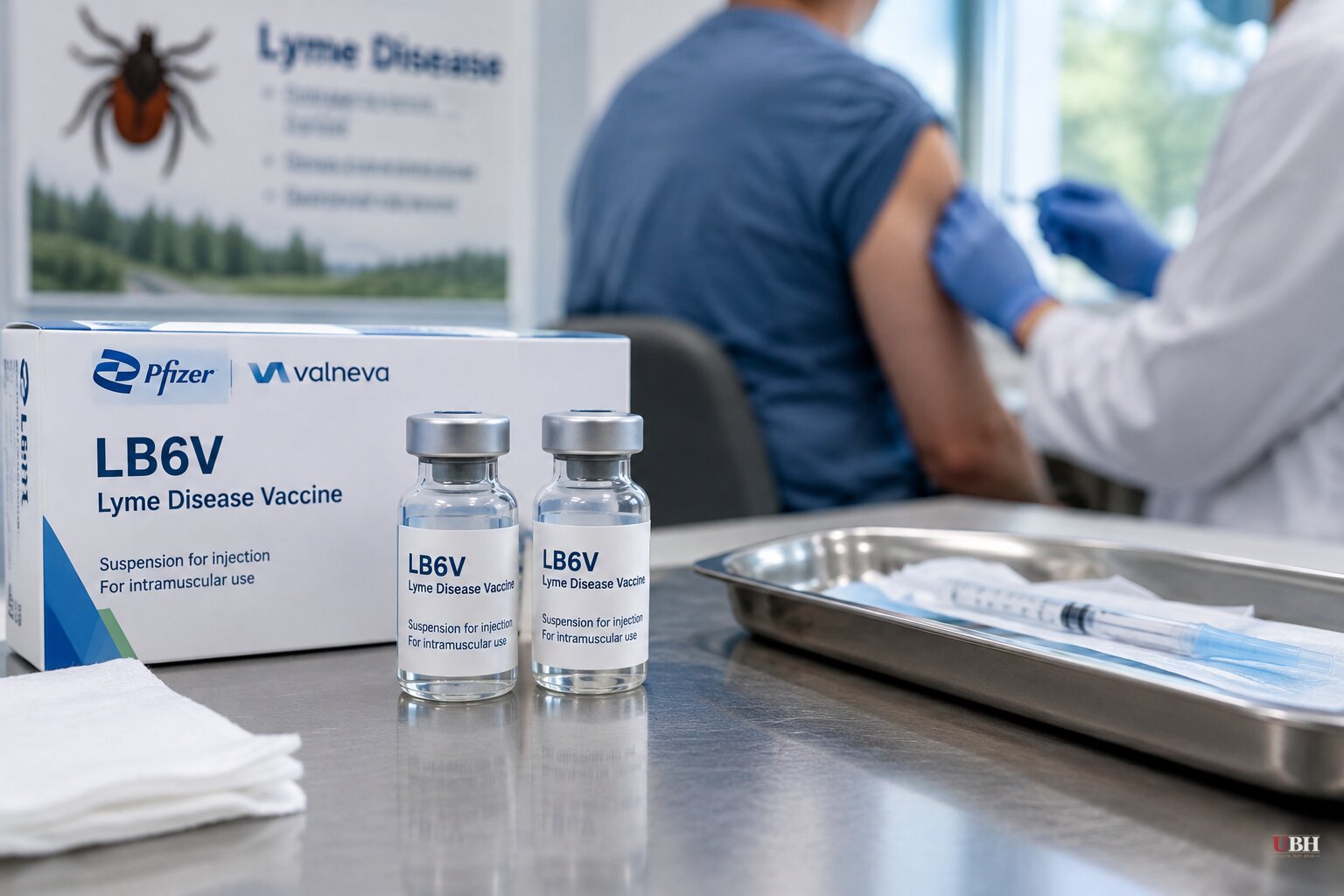
A Lyme disease vaccine from Pfizer and Valneva cut cases by roughly 73% in a large phase 3 trial. It still failed its own primary success test.
The results from the VALOR trial were presented at the IDWeek meeting in Washington, which ran Oct. 21-24, by Paul Auwaerter, MD, of Johns Hopkins University School of Medicine. The vaccine is called LB6V and was formerly known as VLA15.
The numbers
In the evaluable population of participants ages 5 and older, four people who got the full four-dose vaccine series developed Lyme disease. Fifteen people on placebo did. That works out to vaccine efficacy of 73.2%, with a 95% confidence interval of 15.8% to 93.5%.
The trial's predefined success threshold required the lower end of that interval to be above 20%. It was 15.8%. Miss.
A second look produced a different verdict. In a modified intent-to-treat analysis, which counted cases starting one day after the fourth dose, efficacy was 74.8% (95% CI 21.7% to 93.9%). That clears the 20% bar by 1.7 points.
Auwaerter said the primary endpoint "just missed." He attributed the miss to the limited number of cases. With only 19 cases in the evaluable population, one or two cases either way would shift the confidence interval noticeably.
What was tested
LB6V is an adjuvanted protein subunit vaccine aimed at six serotypes across the four most common Borrelia species in Europe and North America. Vaccinated people pass antibodies to biting ticks. Those antibodies inhibit the bacteria inside the tick and block transmission to humans.
The trial enrolled roughly 9,400 to 10,000 people ages 5 and up at elevated risk through work, home environment or recreation. Sites were in five European countries, Canada and the U.S. Of those enrolled, 8,011 completed the trial.
Participants got four doses of vaccine or saline placebo, at baseline, 2 months, between 5 and 9 months, and about 18 months. The study covered three Lyme seasons from 2022 to 2025.
Median age was 47. About 52% were female and 95.8% were white. Some 97% had at least two Lyme risk factors.
Safety
Adverse events occurred in 58.8% of vaccine recipients and 52.6% of placebo recipients. Adverse events that were treatment-related and led to withdrawal were rare: 0.3% in the vaccine group and 0.1% on placebo.
"I believe that LB6V is safe and has a favorable side-effect profile," Auwaerter said. He called the efficacy "clinically meaningful" and said that overall the vaccine "has the potential to lower the Lyme disease burden."
Safety carries extra weight for this disease. The FDA approved a Lyme vaccine, LYMErix, in 1998. Its manufacturer pulled it from the market in 2002 amid side-effect worries and falling sales.
Lyme is the most reported vector-borne disease in the U.S. More than 80,000 cases go to the CDC each year. The estimated number of people treated annually is about 476,000. Untreated infection can spread to the joints, heart and nervous system.
No Lyme vaccine is currently available.
The regulatory question
The industry digest Pharmadigest, in commentary on the data, called a near-miss on one of two analyses "a weak footing for a first-in-class Lyme vaccine" that "hands regulators room to ask hard questions." It also said Pfizer carries commercial risk alongside Valneva and that any launch timing should be treated as unsettled.
The counterpoint comes from the trial's own lead presenter. Auwaerter argues that the efficacy is real and the shortfall reflects too few cases, not a weak vaccine. The two sides are arguing over the same 19 cases.
Both analyses put the point estimate near 73% to 75%. They differ only in where the lower confidence bound lands relative to a threshold set before the trial. How the FDA weighs a result that passed on one definition and failed on another has not been announced.
A product that works in roughly three of four cases, in a disease with no available vaccine, will draw attention. So will a trial that cleared its own bar by 1.7 points in one analysis and missed it by 4.2 in the other. Regulators will also have the safety history of LYMErix in front of them. The open question is whether Pfizer and Valneva can take a split verdict to the FDA, and on what terms.
Sources used for this briefing
5 links from 5 independent newsrooms (syndicated copies of the same report count once)
These are the sources it draws on, linked so you can verify.


