
Unbiased headlines. Facts, not spin.
Unbiased Headlines is an independently owned news organization. We bring you the facts, not opinions, written fresh from 110+ named sources. Sources linked so you can verify it yourself.
 economy
Major Story (7/10)
economy
Major Story (7/10)
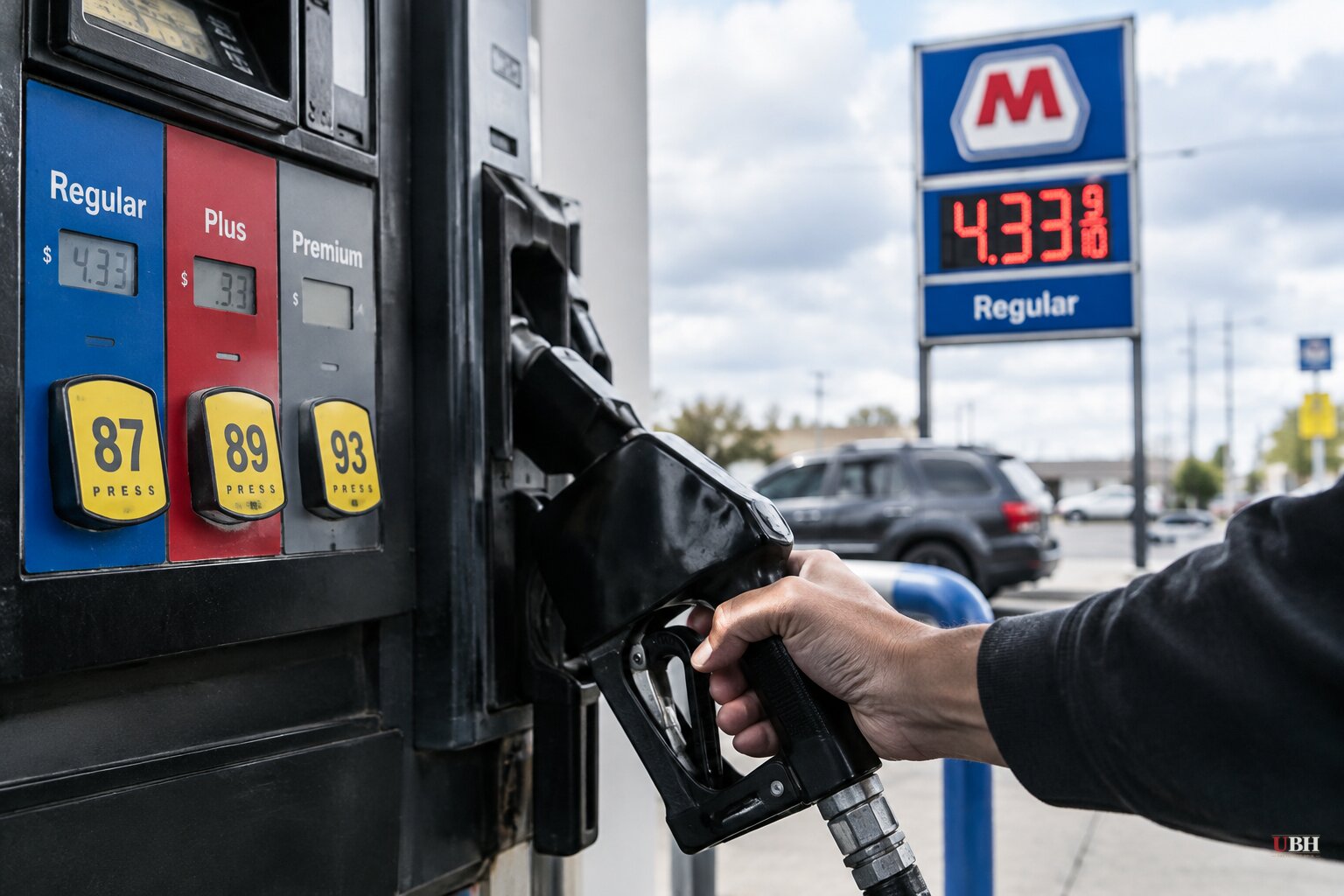
Pew: 44% of Americans Had Trouble Paying for a Basic Necessity, With Gas at $4.33 Weeks Before Midterms
Since this morning's September inflation report showed prices up 3.7% from a year ago, driven by a 9.1% monthly jump in gasoline, the Pew Research Center has published a survey on how households are coping. The answer, in numbers: not well.
Pew found that 44% of U.S. adults had trouble paying for at least one basic necessity in the past year. The survey of 5,166 adults ran Aug. 24-30, with some questions from a July 20-Aug. 9 survey. It was conducted before September's price data existed.
Who is hurting
The gap by income is huge. Seventy-one percent of lower-income adults reported at least one hardship, versus 39% of middle-income and 13% of upper-income adults.
The specifics:
- 28% had trouble paying for medical care for themselves or family.
- 20% got food from a food bank or pantry.
- 27% said they could not pay some monthly bills in full, or paid only part.
- 53% said they lack a three-month emergency fund.
- 60% said their income is not enough for the kind of life they want.
- 70% cut back on extras like dining out or streaming. 54% could not save for the future.
Among adults who struggled with a necessity, 50% borrowed from friends or family and 31% used a payday or other short-term loan. For people without those hardships, the figures were 8% and 4%.
Nineteen percent of parents with children under 18 had trouble paying for childcare. That rose to 30% among lower-income parents.
These are self-reported experiences, not an audit of anyone's finances.
Not just the poor
Juliana Horowitz, Pew's senior director of social trends research, said the "key takeaway" is that many Americans are experiencing economic instability, including just over half with no emergency funds and about a quarter who cannot pay their bills in full. She noted that even middle- and higher-income people are cutting back. Pew has no comparable data from the 2008 recession or the COVID downturn, she said.
Pew gave The Midwest Newsroom regional figures. In the Midwest, 26% said they can't pay some of their bills, close to the national number.
There is a partisan split, though Pew cautions that age, income and other traits also differ between the groups. Republicans and Republican leaners were more likely than Democrats and Democratic leaners to say they pay all bills in full each month (78% versus 69%). They were also more likely to have a three-month emergency fund (51% versus 45%).
Gas is the pressure point
A separate Pew survey of 5,062 adults, conducted Sept. 28 to Oct. 4, found 74% are very concerned about gasoline and energy prices. That was 60% in July and 43% in January, before the U.S.-Israel conflict with Iran began. Concern was 81% among Democrats and Democratic leaners and 65% among Republicans and Republican leaners.
The same survey found only 21% of Americans rate national economic conditions as excellent or good, down from 28% at the start of the year. Among Republicans, 36% rate the economy positively, down from 41% in July.
Sixty-five percent say President Trump's policies have made conditions worse, and 19% say better. Among Republicans, 39% say the policies improved conditions, down from 57% in January, and 35% say they made things worse, up from 18%. On tariffs, 56% of all adults expect a mostly negative impact in coming years and 20% a mostly positive one.
Regular gas averaged about $4.33 a gallon on Wednesday, according to AAA, versus about $3.08 a year ago. Diesel is above $6, more than $2 higher than last year. Crude, which traded at just over $70 a barrel before the war, is over $100, according to the BBC.
The Bureau of Labor Statistics said vehicle fuel prices rose 34.2% over 12 months and accounted for more than half of September's increase in the overall index. Food inflation was flat in September and 2.5% over the year. Core inflation, which strips out food and energy, was 2.6%.
What the White House has said
The administration has repeatedly called the energy spike temporary. Then-White House Press Secretary Karoline Leavitt said in March that "the recent increase in oil and gas prices is temporary." In April, Trump said gas would "drop like a rock" as soon as the war is over. In June he wrote on Truth Social that gas prices "will plummet."
At a campaign rally this week, Trump said prices are coming down "very fast right now." The September data show consumer prices rose 0.6% in the month.
At a Tuesday rally in Alaska, Trump gave no sign the war is nearing an end. He said he has "had it" with Iran's leaders and that his administration is "going to do a number" on the country. The administration's promise of lower gas prices is tied to the war ending.
What comes next
The September report is the last inflation release before the midterms next month. The Social Security Administration announced a 3.6% cost-of-living increase for 2027 benefits shortly after the data came out.
The open question is whether energy costs spread into prices that have so far held steady. Experts cited by the BBC say the Federal Reserve is watching for that, with food as the obvious test. For now, food inflation at 2.5% has not moved.
Sources used for this briefing
8 links from 8 independent newsrooms (syndicated copies of the same report count once)
These are the sources it draws on, linked so you can verify.


