
Unbiased headlines. Facts, not spin.
Unbiased Headlines is an independently owned news organization. We bring you the facts, not opinions, written fresh from 110+ named sources. Sources linked so you can verify it yourself.
 economy
Major Story (8/10)
economy
Major Story (8/10)
UN official says US and Iran must agree within weeks on Hormuz fertilizer plan or risk food crisis
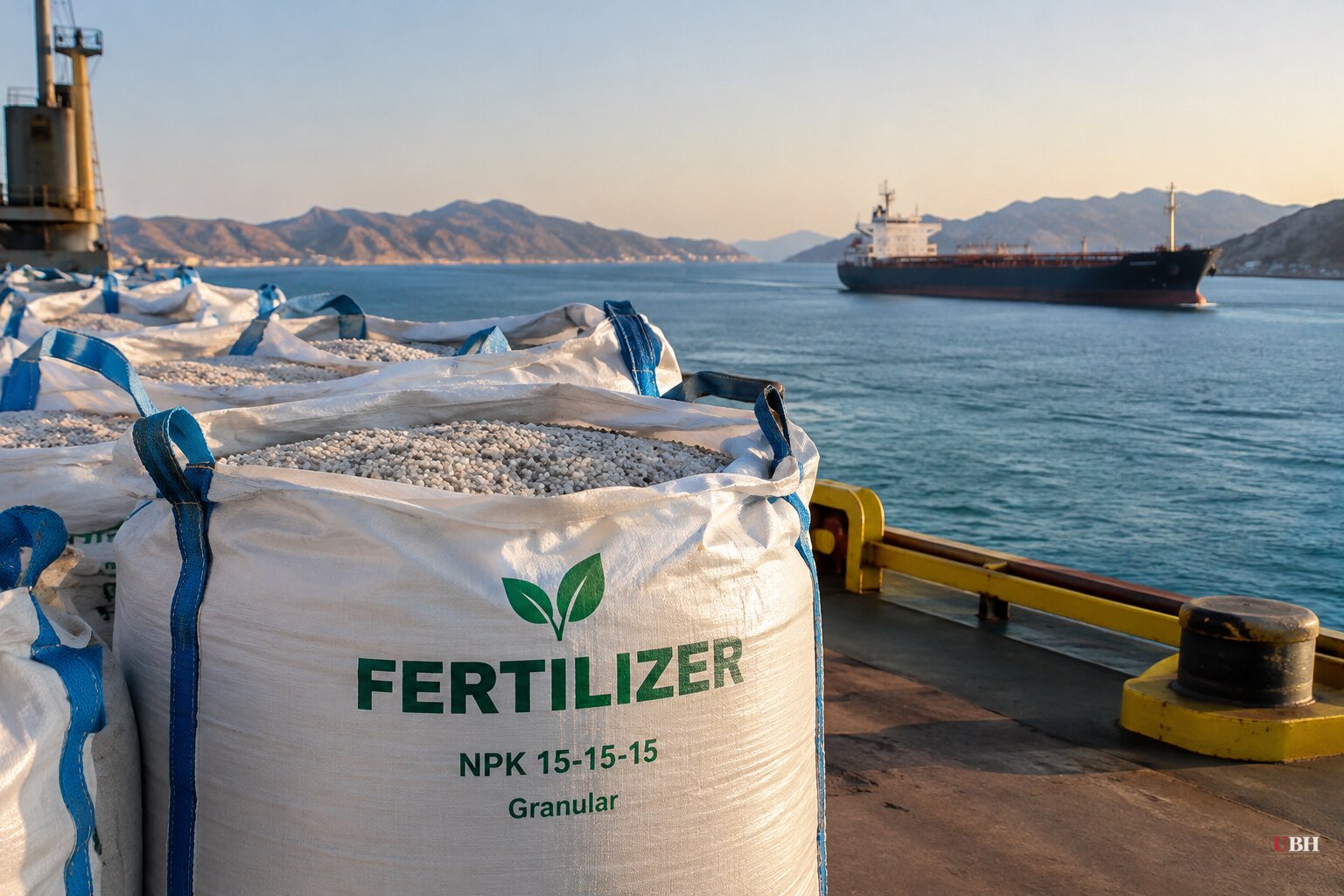
A senior United Nations official says the clock is running on fertilizer flows through the Strait of Hormuz, and neither Washington nor Tehran has agreed to the plan that would restart them.
Jorge Moreira da Silva, a UN Under-Secretary-General overseeing the proposal, said in Bangkok on Wednesday, Oct. 14, that a deal is "absolutely crucial" within weeks. "Otherwise, we will miss the planting season," he said, speaking on the sidelines of the IMF and World Bank annual meetings.
The White House, the State Department and Iran's embassy in Bangkok did not immediately respond to requests for comment.
What the UN plan would do
The UN set up a taskforce in March to get fertilizer through the strait. It drew up a mechanism but has never put it into operation.
Moreira da Silva said it could be running within seven to 10 days of an agreement between the United States and Iran.
The design is simple. A UN-staffed coordination centre in Oman would register vessels and coordinate safe passage. UN monitors would work alongside local authorities at Gulf ports to verify what is loaded. Ships would be tracked in transit, and extra inspections could be ordered if a country raised concerns about a vessel or its cargo.
The volume needed is small. Moreira da Silva said as few as five vessels a day could keep fertilizer reaching the countries in the most critical need.
Why Hormuz matters for crops
Before the war, roughly a third of globally traded urea, the world's most widely used fertilizer, moved through the strait. So did nearly half of seaborne sulphur, a key input.
Traffic has been badly disrupted since US and Israeli strikes on Iran on Feb. 28. Iran has used its hold on the waterway as leverage against Washington, which is running its own naval blockade of Iranian ports.
Some ships have moved through. The Washington-based International Food Policy Research Institute said in a note last month that fertilizer made up a "very negligible" share of the shipping that resumed during the mid-June to mid-July ceasefire. Gulf fertilizer exports remained largely halted more than six months into the conflict, it said.
Moreira da Silva warned that missing the planting window would cut farm productivity and push prices higher. "The impact on prices will significantly increase," he said.
An August report from the International Chamber of Commerce put numbers on the downside. If the disruption continues, it said, prices could rise by up to 81% for cereals, 66% for oil crops and 30% for animal products.
Prices are already moving
The UN Food and Agriculture Organization said Oct. 2 that its Food Price Index averaged 136 points in September. That was up 1.5% from August and 5.8% above a year earlier.
Wheat rose 6.3% on the month, tied to transport problems in the Black Sea and dry weather in parts of North America. Maize rose 5.6%. Sugar jumped 6.1%, the largest gain among major commodity groups. Meat prices fell 1.1%.
The FAO said uncertainty over Hormuz shipping helped support maize prices. FAO chief economist Maximo Torero said the pressures come from Hormuz and the Black Sea disruptions combining with climate shocks. "If sustained, these pressures will soon pass through to consumer food prices, especially in food- and energy-import-dependent countries," he said.
Hormuz also carries about 35% of seaborne crude shipments and around a fifth of global LNG trade in normal times, according to the FAO.
Diesel adds to the squeeze
Farmers pay for fuel as well as fertilizer. The International Energy Agency said Wednesday that diesel markets could stay tight well into 2027.
Combined diesel export losses from the Middle East and Russia reached 1.3 million barrels a day in September, about 4.5% of the global diesel and gasoil demand the agency forecasts for this year. Diesel refining margins hit a record of almost $95 a barrel that month.
"Record diesel prices are already having broad economic consequences by raising the cost of goods and impacting real incomes, economic activity, and inflation," the IEA said.
The Trump administration has told European Union countries to draw down inventories or face a potential US diesel export ban.
The diplomatic stalemate
Iran and the United States have traded proposals through intermediaries since the June interim ceasefire collapsed. Efforts to reopen the strait have stalled over Tehran's conditions and Washington's insistence on addressing Iran's nuclear issue.
Neither government has publicly tied the fertilizer corridor to those talks or said whether it can be split off as a humanitarian carve-out. That is the practical question. Five ships a day is a sliver of pre-war traffic, but it still needs both sides to say yes.
The IEA's governing board meets Thursday, Oct. 15, to settle the pace of the remaining release of about 100 million barrels from the 426 million-barrel emergency stock pledge, which began with a 400 million-barrel commitment in March and was later raised. That addresses fuel. It does nothing for fertilizer, which still waits on a US-Iran agreement.
Sources used for this briefing
7 links from 7 independent newsrooms (syndicated copies of the same report count once)
These are the sources it draws on, linked so you can verify.


