
Original briefings. Zero spin.
Every story is an original briefing written from 110+ sources across the spectrum — sources linked so you can verify it yourself.
 health
Major Story (7/10)
September 4, 2026 at 09:35 PM
health
Major Story (7/10)
September 4, 2026 at 09:35 PM
Pentagon Sought Access to Billions in NIH Disease-Research Funds Amid Iran War Cost Overruns, Democrats Say
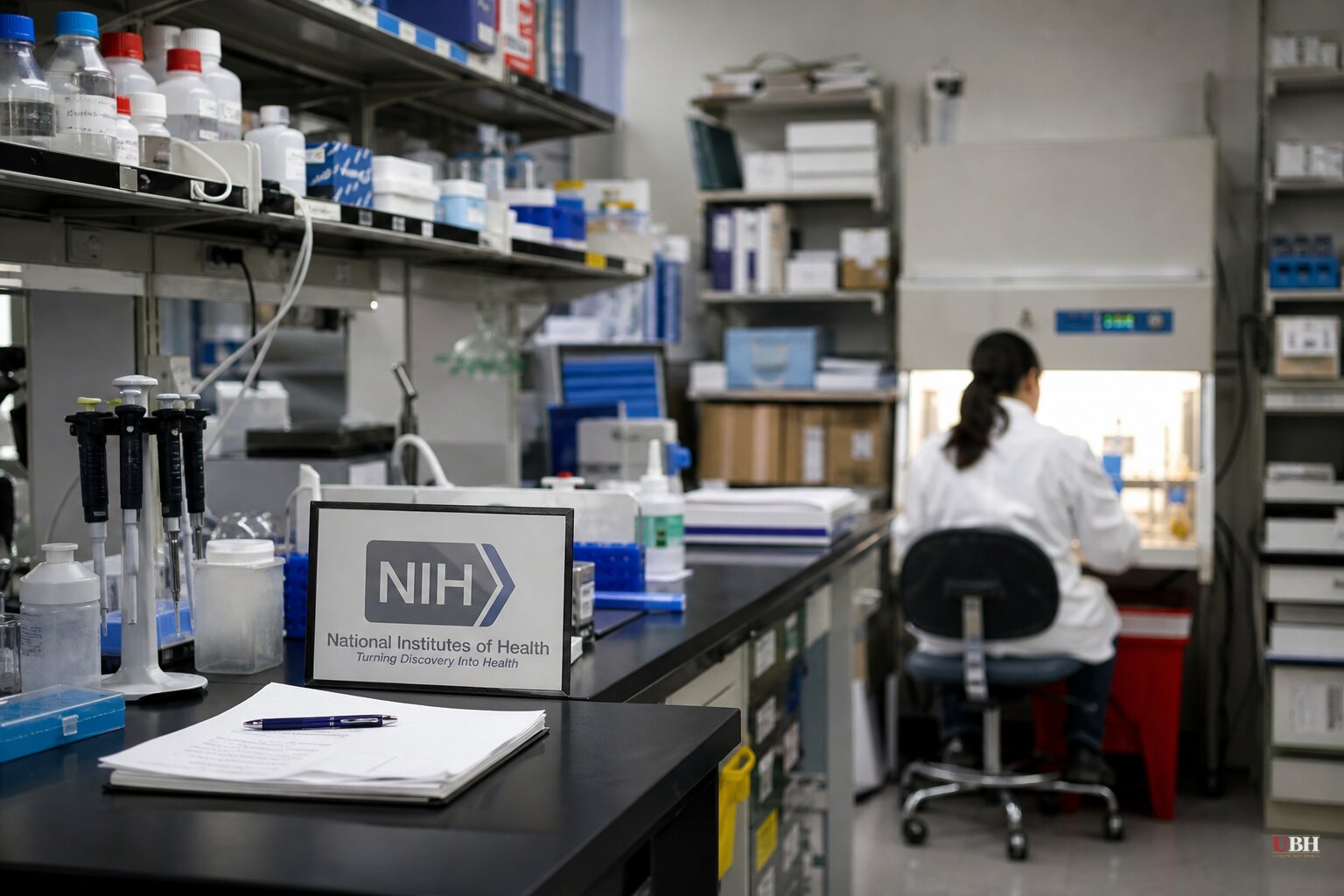
Congressional Democrats say the Pentagon is trying to raid the National Institutes of Health's infectious-disease research budget to help plug a hole blown open by President Trump's war with Iran. The administration says it's just a public-health partnership. Nobody outside a small circle has actually seen the agreement.
Rep. Rosa DeLauro (D-Conn.), ranking member of the House Appropriations Committee, said in a Thursday, September 3 statement that the Department of Defense signed an interagency agreement giving it a shot at billions of dollars appropriated for research on HIV, influenza, tuberculosis, malaria, and Ebola through the National Institute of Allergy and Infectious Diseases (NIAID), according to The New Republic and Positively Aware. "This secretive attempt to siphon research funds away from NIH is outrageous," DeLauro said. "The interagency agreement needs to be terminated immediately."
Sen. Patty Murray (D-Wash.), vice chair of the Senate Appropriations Committee, made a parallel accusation the same day, saying the arrangement was "not proactively shared" with Congress and calling on Republicans to help kill it, per MedPage Today and Traders Union. NIAID's total budget runs about $6.6 billion, according to Ground News.
DeLauro tied the move directly to the Pentagon's finances. "It is no secret that the Department of Defense is facing enormous financial pressure because of President Trump's war of choice with Iran," she said, according to scanx.trade. Ground News reported the Navy alone faces a shortfall of $6 billion to $8 billion, with Congress weighing a $95 billion supplemental spending request. Separately, scanx.trade reported the White House sought $87.6 billion in supplemental funding back in June, including $67.1 billion for Defense and $21 billion specifically to replenish munitions. Defense Secretary Pete Hegseth told senators in July the conflict had cost an estimated $37.5 billion. The gap between those figures, and which request is current, is not resolved in the available reporting.
A Department of Health and Human Services spokesperson pushed back on the framing that this is a raid, telling scanx.trade that NIH and the Pentagon explored partnership on therapeutics, diagnostics, and protective equipment for infectious disease. Such collaboration would let multiple agencies respond faster to public health emergencies like the recent Ebola outbreak. NIAID and the military have a documented history of joint work, including NIAID's own Infectious Disease Clinical Research Program, according to Positively Aware. Interagency funding transfers under the Economy Act of 1932 are also not unusual on their face, since the law lets agencies share resources for actual services rendered.
The legal question becomes whether this arrangement is a genuine service agreement or a workaround to move appropriated money without Congress signing off. Positively Aware noted the Economy Act "is not a process for shifting funds without a real service arrangement," and the terms of the specific deal haven't been made public. Neither the Pentagon nor NIH responded to requests for comment, according to scanx.trade, and DeLauro herself has not confirmed whether NIH has actually signed the agreement.
The funding fight lands alongside a separate NIAID shake-up. NIH published a two-page Federal Register notice on August 28, signed by NIAID Acting Director Dr. John Powers III, proposing to abolish the agency's Division of Clinical Research and several other offices, according to MedPage Today. The Infectious Diseases Society of America and the HIV Medicine Association issued a joint statement objecting to the short comment window, saying "changes of the magnitude suggested deserve a lengthier and meaningful opportunity for input from researchers, clinicians, community partners, and other stakeholders including Congress." Rep. DeLauro linked the two moves, saying the administration is "cancelling lifesaving medical research and clinical trials and firing cancer researchers en masse" while also going after NIAID's budget directly.
The Pentagon has been active on the research-security front more broadly. On August 17, the War Department directed 30 universities, including Harvard, MIT, Johns Hopkins, and Duke, to audit their financial and research ties to China, Russia, and Iran and report findings by August 31, according to the Epoch Times. Under Secretary of War for Research and Engineering Emil Michael said the department has "zero tolerance for academic partnerships that compromise our national security." That effort targets foreign influence in university research funding rather than the NIH-Pentagon dispute directly, but it reflects the same administration pushing harder scrutiny and control over where federally funded research dollars go.
No dollar figure for the NIH-Pentagon agreement has been confirmed by either agency, and no vote or hearing has been scheduled to force disclosure. Punchbowl News reporter Samantha Handler said the dispute will likely become a bigger flashpoint if Democrats win the House majority in the 2026 midterms, according to Ground News. Until then, the agreement's actual terms remain known only to the officials who signed it.
Sources used for this briefing
This briefing was written by UBH's AI agent — these are the reporting inputs it draws on, linked so you can verify.


